
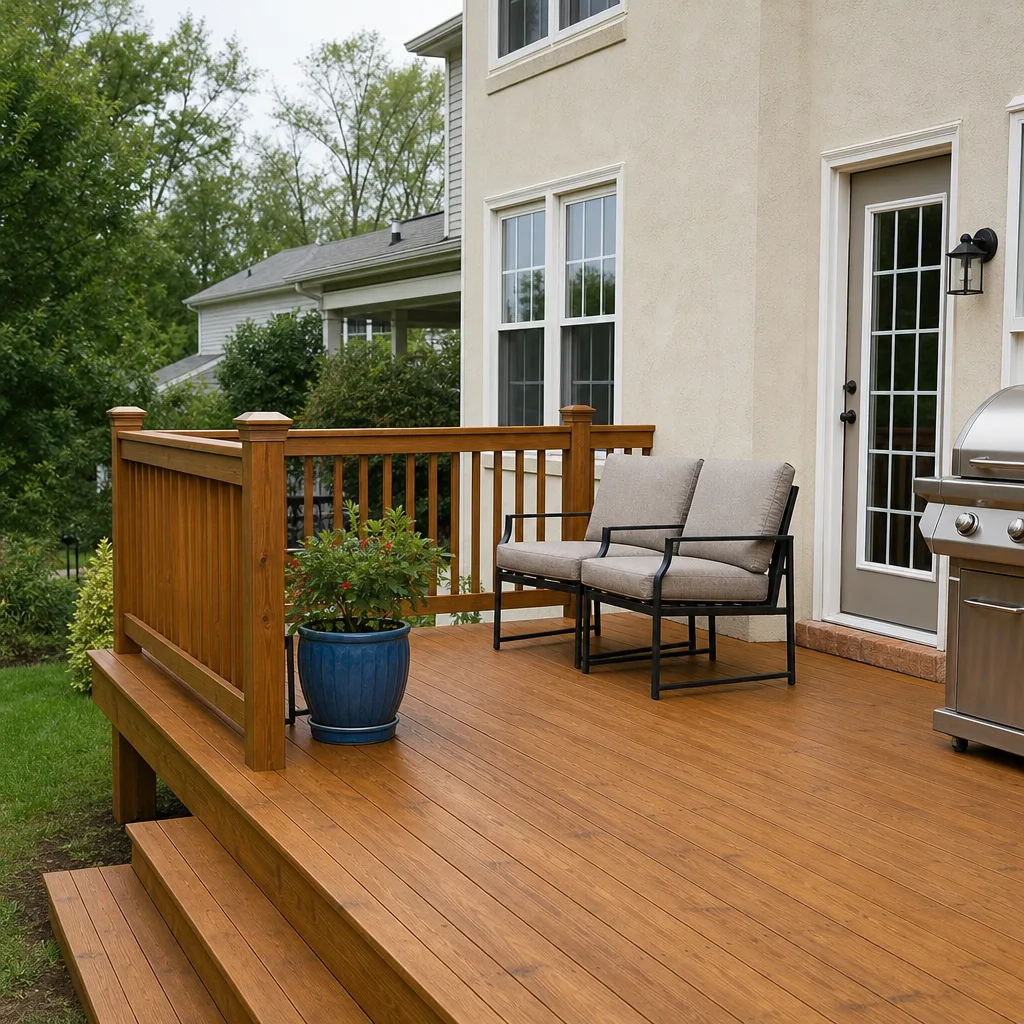
Repair, Replace, or Build New: How to Decide
How your deck looks on top doesn't decide whether to repair, replace, or build new. What's going on underneath does. Worn boards on a solid frame can be fixed, but soft framing, a loose ledger, or shifting footings mean it's time to start over.
Most folks judge a deck by its surface. Gray boards, peeling stain, and a few splinters can make a deck look like it's done. Those are skin-deep problems, though. The real answer lives under the boards, in the joists, beams, posts, and footings that carry the weight. If those parts are sound, you've got options. If they're not, no amount of new decking will make the deck safe.
A repair usually makes sense when the frame is solid and the trouble is limited to parts you can see and swap out:
- A handful of cracked, cupped, or splintered boards
- Loose or popped nails and screws
- A wobbly section of railing with solid posts underneath
- Faded or worn finish on wood that still feels firm underfoot
- One damaged stair tread or riser
Say your deck feels steady when you walk across it, but the boards have turned gray and rough. That's not a teardown. Replacing a few boards and refreshing the finish with deck staining can buy you years. We'd rather tell you that than sell you a project you don't need.
Replacement is the safer call when the problems reach the bones of the deck:
- Soft, spongy spots that give when you step on them
- Rot in the joists, beams, or posts, not just the top boards
- A ledger board, the piece that ties the deck to your house, that's pulling away or showing water stains behind it
- Posts that lean, or footings that have sunk or heaved
- A deck that sways or bounces when people move around on it
- So many repairs needed that you'd be rebuilding it one piece at a time anyway
Pay close attention to the ledger. It's where a deck meets the house, and water that gets in there can damage both. If you notice stains on your siding or rim board near the deck, or a gap that's growing, don't wait on it.
Building new is the right move when there's no deck yet, or when the old one doesn't fit how you live. Maybe it's too small for your table, the stairs land in the wrong spot, or you'd like a second level off the kitchen. When the frame needs to come out anyway, it often makes sense to rethink the whole layout instead of copying an old design that never quite worked.
There's also a middle ground. Sometimes the framing is in good shape and only the decking and railings are worn out. In that case, keeping the frame and putting new boards on top can save you money. That only works if a close look underneath confirms the structure is truly sound, so it's worth having someone check before you decide.
Because we handle deck repair, deck replacement, and new wood deck construction, we don't have a reason to steer you one way. Our job is to look underneath, show you what we find, and help you pick the option that fits your deck and your budget. That's what being your home's best friend looks like.
Signs Your Deck Needs Full Reconstruction, Not Just Cleaning
Cleaning fixes color, not structure. A good wash takes off mildew, dirt, and that gray film, and a fresh coat of stain can make an old deck look close to new. Neither one can put strength back into wood that's breaking down or hardware that's rusting away. If your deck shows any of the signs below, cleaning it is like washing a car with a cracked frame. It'll look nicer, but it's not safer.
Some of the clearest warnings show up while you're cleaning. Watch for these:
- Wood fibers that lift, fuzz up, or wash away in chunks instead of just getting brighter
- Dark stains that come right back within weeks, even after a careful wash
- Boards that split along the nail or screw lines when they get wet
- Mushrooms, shelf fungus, or white, stringy growth on the boards or framing
- Water that soaks in and sits instead of drying off in a day or so
Fungus is the one to take most seriously. Mildew sits on the surface and wipes off. Mushrooms and shelf fungus grow out of wood that's already rotting inside. By the time you see them, the damage under the surface is usually much bigger than the spot you can see.
Next, look at the metal. Every deck is held together by nails, screws, bolts, and metal brackets called joist hangers. When those parts rust, they get thinner and weaker, and the wood around them starts to stain and soften. Orange streaks running down your posts, heads that crumble when you touch them, or brackets that look flaky are all signs the connections that hold your deck together are failing. You can't stain your way past that, and swapping a few screws won't fix a whole frame of rusted hardware.
Our weather plays a part here. Winters around Ashburn swing above and below freezing, and summers are humid. Water gets into small cracks, freezes, and widens them. Then the damp summer air keeps the wood from drying out. Over many seasons, that cycle works on a deck from the inside, which is why a deck can look fine on top while it's wearing out underneath.
Age matters, too. Many older decks were built before today's rules for railings, stairs, and how a deck connects to the house. A deck can be in decent shape for its age and still have railings that are too short, balusters spaced wide enough for a small child to slip through, or stairs without a solid handrail. Cleaning won't change any of that. If you've got kids, grandkids, or a dog that likes to squeeze through gaps, older railings are worth a hard look.
Picture this. You rent a pressure washer, start on the deck, and halfway through you notice the wood near the house is turning soft and stringy while the rest brightens up. That's your sign to put the washer down. You haven't ruined anything. You've found the problem before it found you. That's when it makes sense to have someone look underneath and tell you whether a cleaning, a repair, or a full rebuild is the right next step.
Wood deck construction in Ashburn.
Permits and HOA Approval Before Work Begins in Ashburn
Yes, most new decks in Ashburn need a building permit, and if you live in a neighborhood with a homeowners association, you'll likely need HOA approval too, according to Loudoun County.[1] It's best to have both in hand before anyone digs a single footing. Skipping either one can stop a project halfway through or cause headaches when you sell your home.
Ashburn isn't its own town. It's part of unincorporated Loudoun County, so deck permits and inspections go through the county, not a town hall. Attached decks, raised decks, and decks with stairs almost always need a permit under Virginia's statewide building code. Some very small, low platforms may not need one, but the rules on size and height are specific. It's worth checking with the county before you assume your project is exempt.
A permit usually means the county wants to see drawings showing the deck's size, where it sits on your lot, how it attaches to the house, and how the frame and footings are built. Then an inspector typically checks the work at key points, such as before the footings are poured, once the framing is up, and when the deck is done. Those checks are a good thing. They're a second set of eyes on the parts you can't see once the boards go down.
Many Ashburn neighborhoods have an HOA with an architectural review step. That means a committee looks at your plans before you build. They may care about:
- How far the deck sits from your property lines
- The type of wood and the stain or paint color
- Railing style and height
- Whether the deck can be seen from the street or neighbors' yards
- Lighting, pergolas, or other add-ons
HOA review can take a few weeks, depending on how often the committee meets. Because they may ask you to change the size, color, or layout, it often makes sense to get HOA approval first. That way the plans you send to the county match what you're allowed to build.
There's one more step before digging. Footings go deep enough that you could hit buried gas, power, or cable lines. In Virginia, underground utilities need to be marked through Virginia 811 before digging starts. It's a free call, and it protects you, your crew, and your neighbors.
Before you hire anyone, ask who will pull the permit. If a contractor asks you to pull it in your own name, you become the person responsible for the work meeting code. A licensed contractor should be willing to take that on. Salty Dog Remodeling is a Virginia Class A Contractor, license number 2705175838, and permitting assistance is one of the services we offer. We'd rather help you get the paperwork right up front than have you worry about it later.
A permitted, HOA-approved deck is easier to insure, easier to sell, and built to a standard someone outside the project has checked. That's peace of mind you'll keep long after the sawdust is swept up.
What the Wood Deck Construction Process Looks Like
A new wood deck goes up in a clear order, and most of the work that keeps it safe happens before the first board goes down. Knowing the steps helps you ask good questions and spot a builder who's cutting corners.
- Plan the layout. It starts with how you'll use the space. Where will the table go? Where should the stairs land? Do you want shade, a grill spot, or room for a second level later? Good custom deck design answers those questions on paper first, because changing your mind after the footings are in costs real money.
- Get approvals and mark utilities. Once the plan is set, it goes through the HOA and county steps covered above, and buried lines get marked before any digging starts.
- Dig and set the footings. Footings are the concrete bases that carry the whole deck. They have to go deep enough to sit below where the ground freezes. That matters in Ashburn, where winters swing above and below freezing. Shallow footings can heave in a cold snap and leave you with a deck that tilts or bounces.
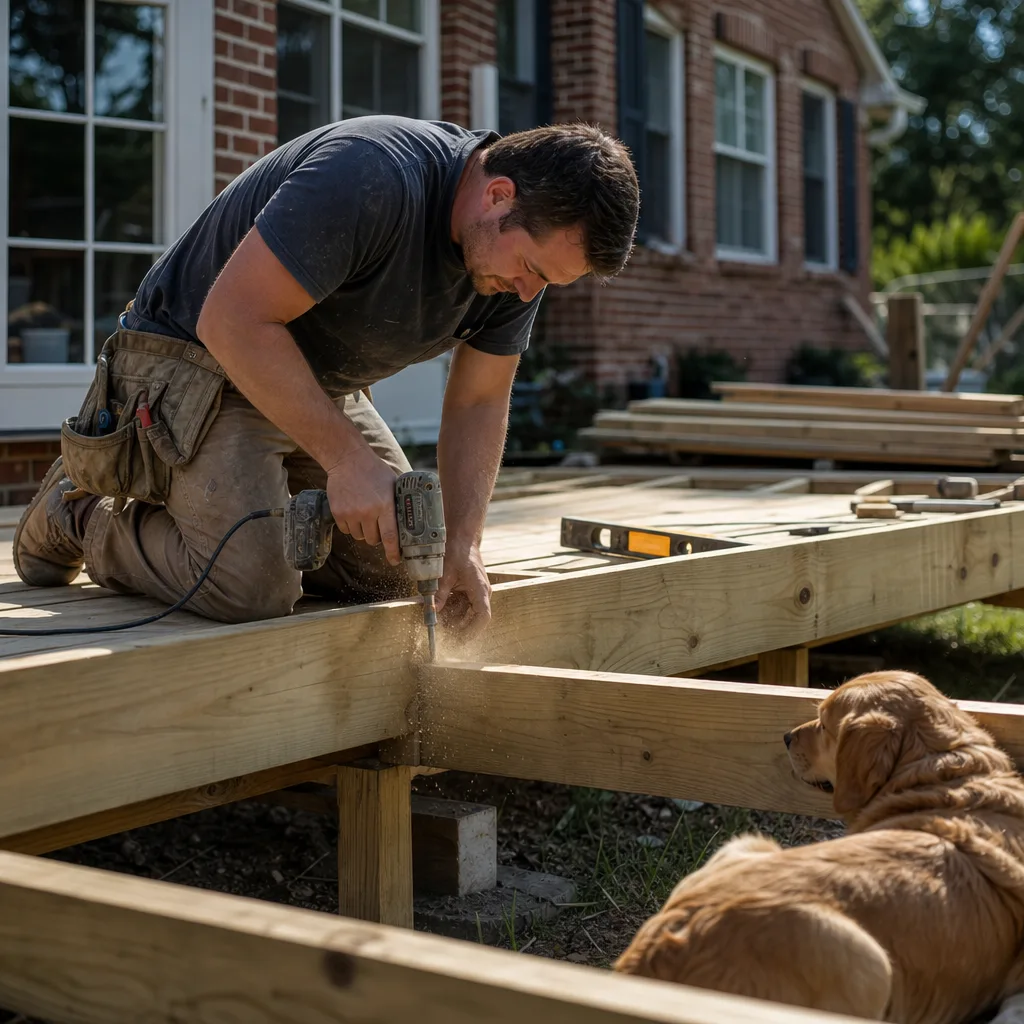
- Build the frame. This is the backbone: posts, beams, joists, and the ledger board that ties the deck to your house.
Here's what careful framing looks like:
- Flashing over and behind the ledger so rain runs away from your house instead of into it
- Bolts or structural screws at the ledger, not just nails
- Metal hangers and fasteners rated for treated lumber, so they don't rust out early
- Joists spaced and sized for the boards and the load you'll put on them
If the siding or rim board behind the ledger shows old water damage, this is the time to fix it, before the deck covers it up. Since siding repair is also something we do, that fix doesn't have to wait for a second contractor.
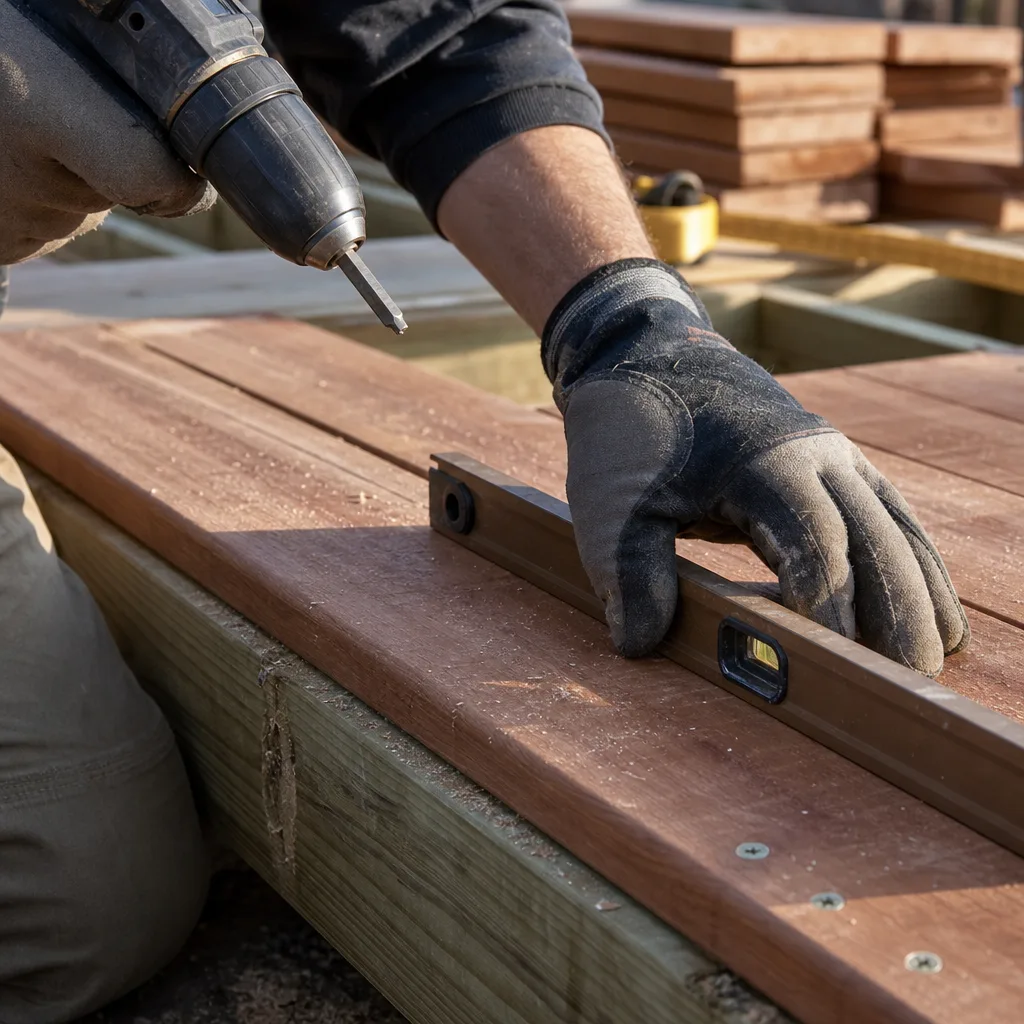
- Lay the decking. The boards go down with small gaps between them so water drains and the wood can swell and shrink with the seasons. Straight lines, even spacing, and screws set flush are where you'll see the craftsmanship every day.
- Add railings and stairs. Railings, balusters, and handrails need to meet today's height and spacing rules. This is also where style comes in, from simple wood balusters to a more modern look.
- Finish and protect. New pressure-treated wood often holds a lot of moisture, so it may need time to dry out before stain will soak in well. Rushing that step on a humid Ashburn summer day can leave a finish that peels early.
- Walk through it together. Before the job wraps up, walk the deck with your builder. Bounce on it, shake the railings, check the stairs, and look underneath. A solid deck feels steady, and you should never feel rushed through that last look.
Weather can shift the schedule, especially during digging and staining. A builder who tells you that up front is easier to trust than one who promises a fixed finish date no matter what.
Wood vs. Composite: Why This Page Covers Wood Specifically
Wood and composite are both good choices. They just ask different things of you. Wood costs less up front and gives you that real, warm feel underfoot, but it needs regular care. Composite asks for less upkeep but usually costs more to start. This page covers wood because it's the choice many homeowners make, and because what's underneath matters no matter which boards you pick.
Here's something a lot of people don't know. Most composite decks still sit on a wood frame. The posts, beams, and joists are often pressure-treated lumber either way. So everything this page covers about framing, footings, and how a deck attaches to your house applies to both. Composite boards on top won't save a frame that's built poorly underneath.
Wood tends to be the better fit if:
- You want to keep your up-front cost lower and you don't mind some upkeep
- You love the look and feel of real wood, and the way it changes over time
- You like the idea of changing your stain color down the road
- You'd like a deck that's simple to patch, add on to, or cut into later
- Your HOA prefers a natural wood look
Repairs are a quiet strength of wood. If one board cracks, you swap it for one from the lumberyard and stain it to match. With composite, finding a board that matches an older deck's color can be harder, since colors and product lines change over the years.
Now for the honest part. Wood isn't the right choice for everyone. If you know you won't clean and reseal your deck every couple of years, composite may serve you better. Ashburn's humid summers and freeze-thaw winters are hard on wood that's left alone. A wood deck that never gets refinished will gray, crack, and wear out faster than one that's cared for. If that sounds like a chore you'll put off, it's okay to say so. It's better to pick the material that fits your life than the one that looks nicest on day one.
Comfort is worth thinking about, too. Darker composite boards can get quite hot in full summer sun, which matters if you've got kids or pets running around barefoot. Wood usually stays more comfortable to the touch, though shade and color affect both.
If composite sounds like the better match, we offer composite decking as well, and that has its own page. Since we build with both, we'll walk you through the tradeoffs and let you choose.
Whichever boards you choose, the work that keeps your deck safe for the long haul is the same. That's why the rest of this page stays focused on wood, from the frame up.
Deck Builder Services in Leesburg.
Frequently Asked Questions
How long does it take to build a new wood deck in Ashburn?
Can I use a pressure washer on my own deck before calling someone?
Do I need to hire a contractor who is licensed for deck work?
Sources
[1] Loudoun County, Virginia. Decks. https://www.loudoun.gov/1166/Decks