What Waterproof Flooring Installation Actually Involves
Most people think waterproof flooring installation is just laying down some planks. It's not.
There's a real process here, and skipping any part of it is how you end up with floors that buckle, gap, or trap moisture underneath. We do this work in Leesburg homes regularly, and the prep work alone separates a floor that lasts from one that fails in two years.
Here's what actually happens when we do this right:
- Subfloor inspection and prep. We check for soft spots, high points, and moisture readings before anything gets installed. A concrete slab in a Leesburg basement can read fine visually and still be releasing vapor. We test it.
- Leveling and patching. Any dip or hump over a certain tolerance gets addressed. Waterproof flooring is rigid. It won't flex over an uneven surface without cracking at the joints.
- Underlayment selection. Some products come with underlayment attached. Others need a separate layer. Getting this wrong affects sound, feel, and how the floor handles temperature swings.
- Acclimation. The material sits in the space before we install it. Skipping this step is a common reason we get called in to fix someone else's work.
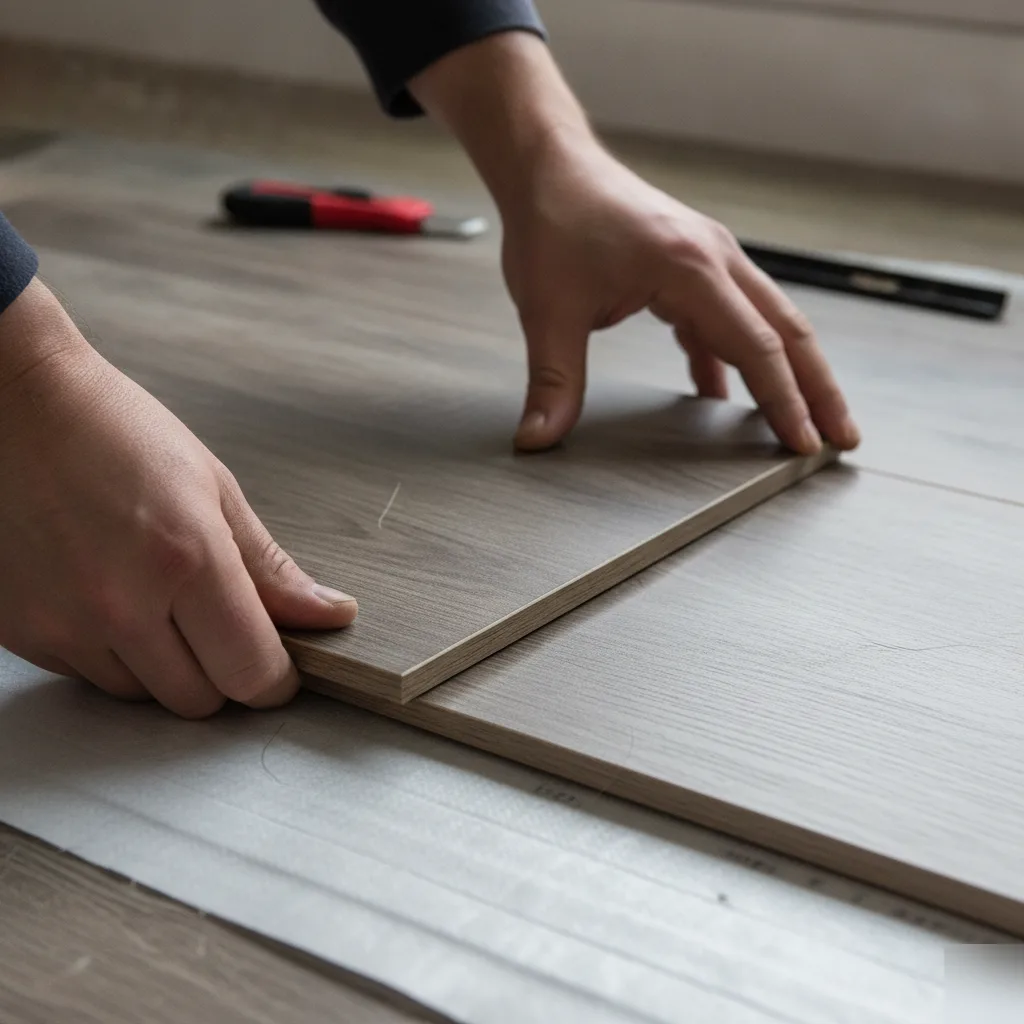
- Layout and installation. We plan the layout before the first plank goes down. Staggered seams, proper expansion gaps at walls, transitions at doorways. All of it matters.
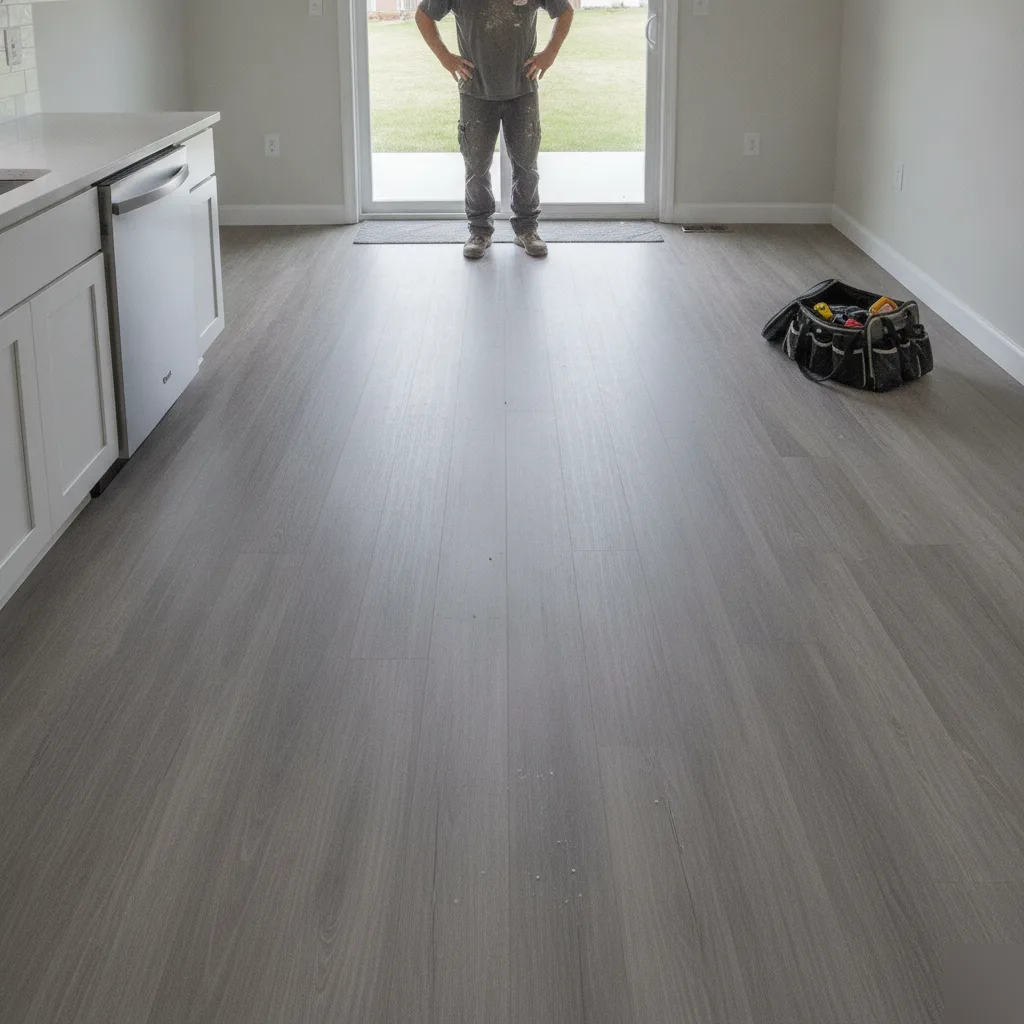
- Finishing details. Trim, transitions, and thresholds get installed last. This is what makes a floor look like it belongs in the room instead of just sitting on top of it.
And the waterproof part isn't magic. It means the core material won't swell or warp if water hits it. But the installation still has to be done correctly for that protection to actually work.
We see this all the time in older homes near Lansdowne and the Village at Leesburg. A homeowner installs a "waterproof" floor themselves, water gets under it through a gap at the baseboard, and now there's a mold situation. The floor didn't fail. The install did.
Good waterproof flooring installation is about the whole system working together, not just the product you choose. Start today by contacting a contractor ready to tackle your flooring project.
Leesburg's Two Subfloor Types Change How Installation Works
Here's something most homeowners don't think about until we're already on the job. The subfloor underneath your feet matters just as much as the waterproof flooring going on top of it.
In Leesburg, we run into two situations constantly. Older homes, especially in neighborhoods like Balls Bluff and around the historic downtown corridor, tend to have plywood subfloors over a crawl space or basement. Newer construction, including a lot of the homes built in the last 15 to 20 years out toward Lansdowne, usually sits on a concrete slab. Both can absolutely take waterproof flooring. But the prep work is completely different, and skipping that step is where installations go wrong.
The U.S. Department of Energy has an excellent resource about the importance of water resistant flooring [1].
Plywood Subfloors
Plywood moves. It expands in summer, contracts in winter, and if there's any bounce or flex in the boards, your new floor will feel it over time. Before we install anything, we check for:
- Soft spots or rot from old moisture damage
- Squeaky or loose boards that need fastening down
- High or low spots that need leveling compound
We see rot more than people expect, especially in homes with a crawl space that wasn't properly vented. The homeowner had no idea it was there.
Concrete Slabs
Concrete looks solid. But it's porous, and it holds moisture. A slab that tests above acceptable moisture levels will cause problems under almost any floor, waterproof or not. We always test before we commit to an install. If the numbers are off, we address it first. No shortcuts.
Concrete also needs to be flat, not just level. A dip of more than 3/16 of an inch over a 10-foot span is enough to cause issues. We grind down high spots and fill low ones before a single plank goes down.
And that's the part nobody talks about in the showroom. The floor you pick is only as good as the surface it's sitting on. Getting the subfloor right is what makes waterproof flooring in Leesburg actually perform the way it's supposed to, for years.
Choosing the Right Waterproof Flooring for Your Home
Not all waterproof flooring is the same. That's the thing most people don't realize until they're already standing in a showroom feeling overwhelmed.
In Leesburg, we deal with humid summers, finished basements, and homes that see a lot of foot traffic. The flooring that works great in a dry upstairs bedroom might be totally wrong for a basement in the Lansdowne area. So before we ever talk about installation, we talk about your space, how you use it, and what you're actually trying to solve.
Here are the main options we work with most often:
- Luxury vinyl plank: Fully waterproof core, comfortable underfoot, works well in basements and bathrooms
- Tile: Ceramic or porcelain, completely water-resistant, great for high-moisture rooms
- Engineered hardwood with waterproof coating: Looks like real wood, handles humidity better than solid hardwood
- Waterproof laminate: Budget-friendly option, improved moisture resistance over older laminate styles
We see it every week. A homeowner picks a luxury vinyl plank because it looks good in the store, but they didn't account for a concrete subfloor with moisture vapor issues. That changes everything about how the floor gets installed and what prep work comes first.
Thickness matters too. A 6mm plank in a busy kitchen with kids and dogs is going to feel and perform very differently than a 12mm plank. And the wear layer on top determines how long it holds up before it starts showing scratches and dents.
But here's what actually drives the decision for most of our Leesburg customers: the room's purpose. A mudroom with wet boots coming through daily needs something different than a sunroom addition that gets afternoon sun and occasional spills. We walk through each room with you before we ever recommend a product.
Need help figuring out which option fits your home? Talk to an interior remodeling expert in Leedsburg.
The right choice comes down to your subfloor, your lifestyle, and your budget. We help you match all three.
Ready to Get Started?
We offer free estimates on every project. No vague ballparks, no fine print. You get the price, the scope, and the timeline before anything starts.
Call (703) 956-8610What to Expect During and After Professional Installation
A lot of homeowners in Leesburg tell us they're nervous about the process. They picture a week of chaos, furniture stacked in the yard, and dust everywhere. Here's the truth: a professional waterproof flooring installation is much cleaner and faster than most people expect.
We start by prepping the subfloor. That's the part most people don't see, but it's the part that matters most. If the subfloor isn't level, flat, and dry, the floor above it won't perform the way it should. We check for high spots, low spots, and any moisture issues before a single plank goes down.
Once prep is done, the actual installation moves quickly. Here's what a typical project looks like, start to finish:
- Subfloor inspection and leveling where needed
- Acclimation of materials to your home's temperature and humidity
- Layout planning to avoid awkward cuts near doorways or focal walls
- Installation of underlayment if required by the product
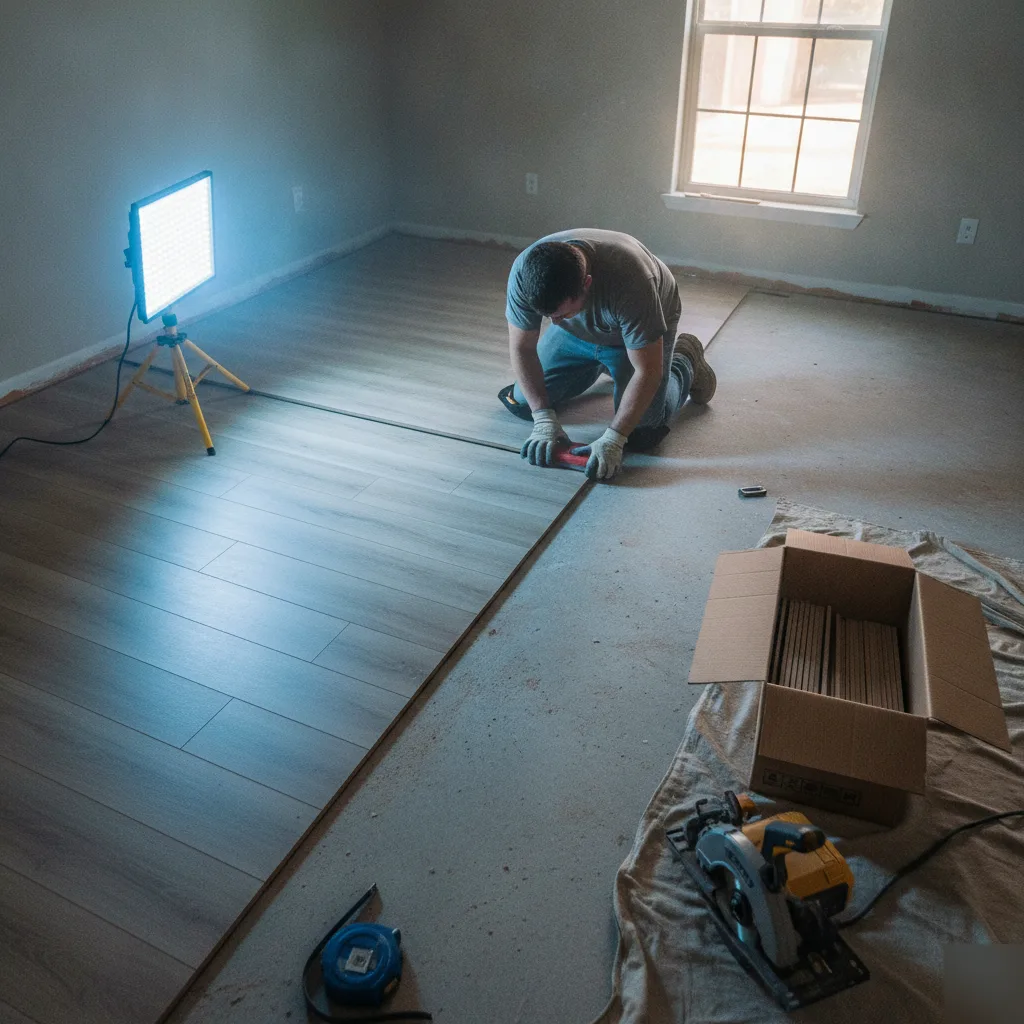
- Plank or tile installation, row by row, with proper expansion gaps
- Trim and transition pieces installed at doorways and edges
- Final walkthrough and cleanup
Most rooms we work in around the Lansdowne area are done in a single day. Larger open-concept spaces or whole-floor projects might run two days. But we're not dragging it out.
After installation, give the floor 24 hours before moving heavy furniture back. That's it. You can walk on it right away.
And here's something we tell every customer: the floor will look slightly different once your furniture and lighting are back in place. That's normal. The room changes the way the floor reads visually, and almost every time, people like it even more.
But the real payoff comes weeks later. You spill something. You don't panic. That's what waterproof flooring installation actually delivers — not just a pretty floor, but one you stop worrying about.
Our licensed installation crew has handled everything from tight powder rooms to full basement flooring projects across Leesburg, and we treat every job like it's the only one on the schedule that day.
Common Mistakes That Lead to Flooring Failures
We see it every week. Someone calls us because their "waterproof" floor is buckling, peeling at the seams, or growing mold underneath. And the floor itself wasn't the problem. The installation was.
Waterproof flooring installation done wrong doesn't fail immediately. It fails six months later, after a rainy season, after the humidity swings that Leesburg gets every summer. By then, the damage is already done.
Here are the mistakes we see most often:
- Skipping the moisture test on the subfloor before laying anything down
- Not acclimating the flooring material to the room's temperature and humidity first
- Installing over an uneven subfloor, which cracks locking joints over time
- Leaving gaps or misaligned seams that let water sneak underneath
- Using the wrong underlayment, or none at all, in below-grade spaces
That last one is a big deal in basements and lower-level rooms. Waterproof flooring is resistant to water from the top. But moisture vapor pushing up from a concrete slab? That's a different problem entirely. The wrong underlayment won't stop it.
Subfloor prep is where most DIY installs go sideways. A subfloor that's even slightly out of level — more than 3/16 of an inch over a 10-foot span according to most manufacturer specs — will cause click-lock planks to flex and eventually separate. Flat looks close enough until the floor starts popping underfoot.
In Lansdowne on the Potomac, we've gone into homes where a previous installer laid luxury vinyl plank right over an old damaged subfloor. No patching. No leveling compound. The floor looked fine at first. It didn't last two winters.
And acclimation matters more than people think. Planks need time to adjust to the actual conditions of your space before they go down. Rush that step and the material expands or contracts after installation. The seams pay for it.
But here's the thing. These aren't complicated problems. They're just steps that get skipped when someone's moving fast or cutting corners. Our licensed crew doesn't skip them. Every install starts with a real subfloor assessment, not a glance and a guess.