
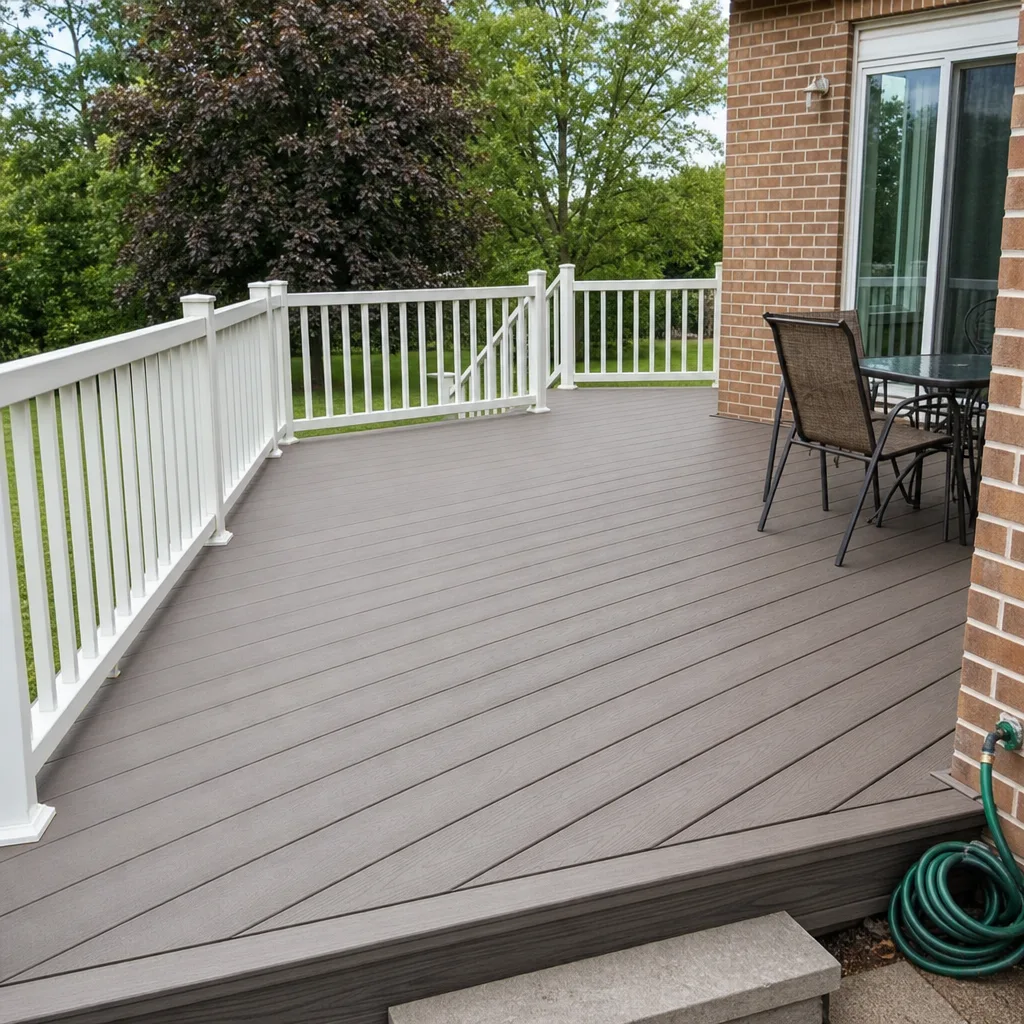
Full Trex Installation Versus Repair, Railing, or Staining
You don't always need a brand new Trex deck. If the frame underneath is solid and the problem is on the surface, a repair, new railing, or a fresh stain may be the smarter move. A full installation makes sense when the structure is tired, the boards keep failing, or you're done with yearly upkeep.
Before you spend money on a whole new deck, it's worth asking a simple question: what's wrong with the one you have? We offer deck repair, deck railing installation, deck staining, and full Trex builds. That way we can help you pick the fix that matches the problem, not the biggest job.
Here's how we'd sort it out if you were standing on your deck with us right now:
- Staining is probably enough if your wood boards look gray or faded, but they still feel firm when you walk on them. No soft spots, no big cracks, just tired color. A good cleaning and stain can bring that deck back for a while.
- Repair is probably enough if only a few boards are loose, split, or popping nails, or if one step feels wobbly. Swapping out a handful of bad pieces costs far less than starting over.
- New railing is probably enough if the floor is fine but the railing shakes when you lean on it or looks dated. Railing is a safety part of the deck, and it can be replaced on its own.
- Full Trex installation makes sense when the problems are spread across the deck, the frame underneath is soft or rotting, or you're tired of sanding and staining every few years.
That last point matters more than people expect. Northern Virginia's humid summers and wet springs are hard on wood. Boards soak up water, dry out, and soak it up again. Over time that leads to splinters, cupping, and rot. Composite boards like Trex don't need the regular sanding and staining that wood does. So if upkeep is the thing wearing you down, a stain job only pushes the same chore down the road.
There's also a middle path some homeowners don't know about. If the frame is in good shape, new composite boards can sometimes go on top of the existing structure. That can save real money. But it only works if the joists, posts, and footings are sound and set up to support composite. Putting new boards on a weak frame is like putting new tires on a car with a bad axle. It looks great until it doesn't.
So the honest answer is this: if your deck just looks rough, start small. If it feels rough, with soft spots, bouncing, or rot you can poke with a screwdriver, it's time to look at the whole thing. And if you're somewhere in between, that's exactly the kind of call we're happy to help you make. Being your home's best friend sometimes means telling you to hold off on the big project.
Signs a Wood Deck Has Reached Replacement Point
A wood deck has reached replacement point when the problems are in the bones, not just the boards. One loose plank is a repair. Rot in the frame, a shaky connection to the house, or damage spread across most of the deck means patching will cost you more over time than starting fresh.
Most of the warning signs hide underneath, so grab a flashlight and take a look below your deck. Here's what to check:
- The ledger board. This is the board that ties your deck to the house. Look for dark stains, soft wood, or gaps where it meets the wall. Water that gets behind it can rot both the deck and the part of your house it's attached to.
- The joists. These are the boards running under the floor. If they're cracked, sagging, or crumbly when you press on them, the floor has nothing solid to sit on.
- The posts. Check where each post meets the ground or the concrete. Water likes to sit there, and it's often the first spot to rot.
- The hardware. Rusty nails, bolts, and metal hangers lose their grip over time. Rust streaks running down the wood are a good clue.
- Stair and railing posts. If a post wiggles at the base instead of just at the top, the wood it's bolted into may be giving out.
Up top, look at the big picture. A few bad boards are normal for any wood deck. But if boards are splitting, cupping, or rotting all across the surface, you'll end up replacing them one batch at a time for years. That's money going into a deck that keeps wearing out under your feet.
Winter adds its own wear here in Ashburn. Water that soaks into small cracks freezes, expands, and pushes those cracks wider. A tiny check in a board in the fall can turn into a real split by spring.
Picture this. It's April, and you're getting ready for cookout season. From the kitchen window, the deck looks fine. But when you walk the far corner, it gives a little. You look underneath and see the post there has gone dark and soft near the ground. That one spot isn't the whole story, but it's a warning. Every part of that deck has lived through the same rain, sun, and freezing nights, so the rest of the frame deserves a close look too.
If water has worked its way behind the ledger, it may have reached your siding or trim as well. That's where it helps to have one team for both the deck and the outside of your home. We handle deck replacement along with siding repair and trim installation, so you're not juggling two contractors to fix one problem.
Here's a simple way to think about it. Find one of these signs, and it may just be a repair. Find two or three, especially in the frame, and it's usually time to replace. That's when a low-maintenance Trex deck built on a sound, new frame starts to make real sense for your home and your weekends.
Trex deck installation in Ashburn.
Permit and Licensing Facts That Affect Your Timeline
The building part of a new Trex deck often moves faster than the paperwork in front of it. Between HOA approval, permit review, and inspections, the start date depends on approvals more than on lumber or labor. If you plan for that up front, the wait won't catch you off guard.
A new deck is a structure people stand on, often several feet off the ground and tied into the house. That's why decks that attach to your home or sit well above the yard typically need a building permit before any digging starts. The permit isn't just red tape. It means someone checks that the footings, frame, and railing are built to hold the weight of your family and friends, year after year.
Here's what usually sets the pace:
- HOA approval. If your neighborhood has a homeowners association, it may want to see the deck's size, color, and location before you build. Some boards only meet once a month, so this step can take longer than the permit itself.
- Plan review. The local building office looks over drawings that show the deck's size, height, footings, and how it connects to the house.
- Inspections during the build. Work often pauses so an inspector can check things like the footing holes and the framing before they get covered up. Each stop depends on the inspector's schedule.
- Weather. Rain and frozen ground can push back footing work, which pushes back every step after it.
A good rule of thumb is to start the approval process well before the season you want to use the deck. If you're dreaming about Fourth of July cookouts, late winter is a smart time to get the ball rolling, not June.
One more thing. If someone offers to skip the permit to save time, take that as a warning. An unpermitted deck can cause trouble when you sell your home, and you'd lose the outside check on whether it was built safely.
Licensing matters just as much as permits. According to Loudoun County, contractors are licensed by the state, and you should always ask for a license number before you sign anything.[1] Salty Dog Remodeling holds a Virginia Class A Contractor license, number 2705175838. You're welcome to look it up. We'd rather you check than take our word for it.
Before you hire anyone for a Trex deck, these questions will tell you a lot:
- What's your Virginia contractor license number?
- Who will apply for the permit, you or me?
- Will you help with the HOA paperwork if my neighborhood needs it?
- How do inspections fit into your schedule, and what happens if one gets delayed?
Clear answers to those questions are a good sign. Fuzzy ones are worth a second look. We offer permitting assistance as part of our services, so the paperwork side of your deck doesn't have to land on your kitchen table alone. Looking out for that part of the project is just one more way we try to be your home's best friend.
What Happens From Consultation to Final Inspection
A Trex deck project usually moves through six stages: a site visit, a design and estimate, approvals, the frame, the boards and railing, and a final inspection. The boards go on near the end. Most of the work that decides how long your deck lasts happens before you ever see a gray or brown plank.
Here's what a careful job looks like at each step, so you know what to expect and what to ask about:
- The first visit. Expect a lot of questions about how you'll use the deck. Grilling, a hot tub, a spot for the kids, shade in the afternoon? The answers shape the size, the layout, and where the stairs go. If you have an old deck, a good contractor looks underneath it too, using the same checks from the section above.
- Design and estimate. You should get a drawing and a written estimate that spells out size, board color, railing style, and what happens to the old deck. If the estimate is vague about the frame, ask about it. That's the part you can't easily fix later.
- Approvals. This is the HOA and permit stretch we covered earlier. The building waits until the paperwork clears.
- Tear-out and footings. The old deck comes off, and holes get dug for the footings. The concrete supports have to sit deep enough that winter freezing won't heave them. An inspector often checks this stage before anything gets covered.
- The frame. This is where composite decks differ from wood. Composite boards need joists spaced to the maker's instructions, and they're often closer together than an older wood deck had. New lumber, solid hardware, and a well-flashed ledger give the boards a firm, flat base.
- Boards, railing, and stairs. Trex boards grow and shrink a little with temperature. Ashburn swings from muggy summer afternoons to freezing winter nights, so the boards need the right gaps and fasteners to handle that movement without buckling or pulling loose.
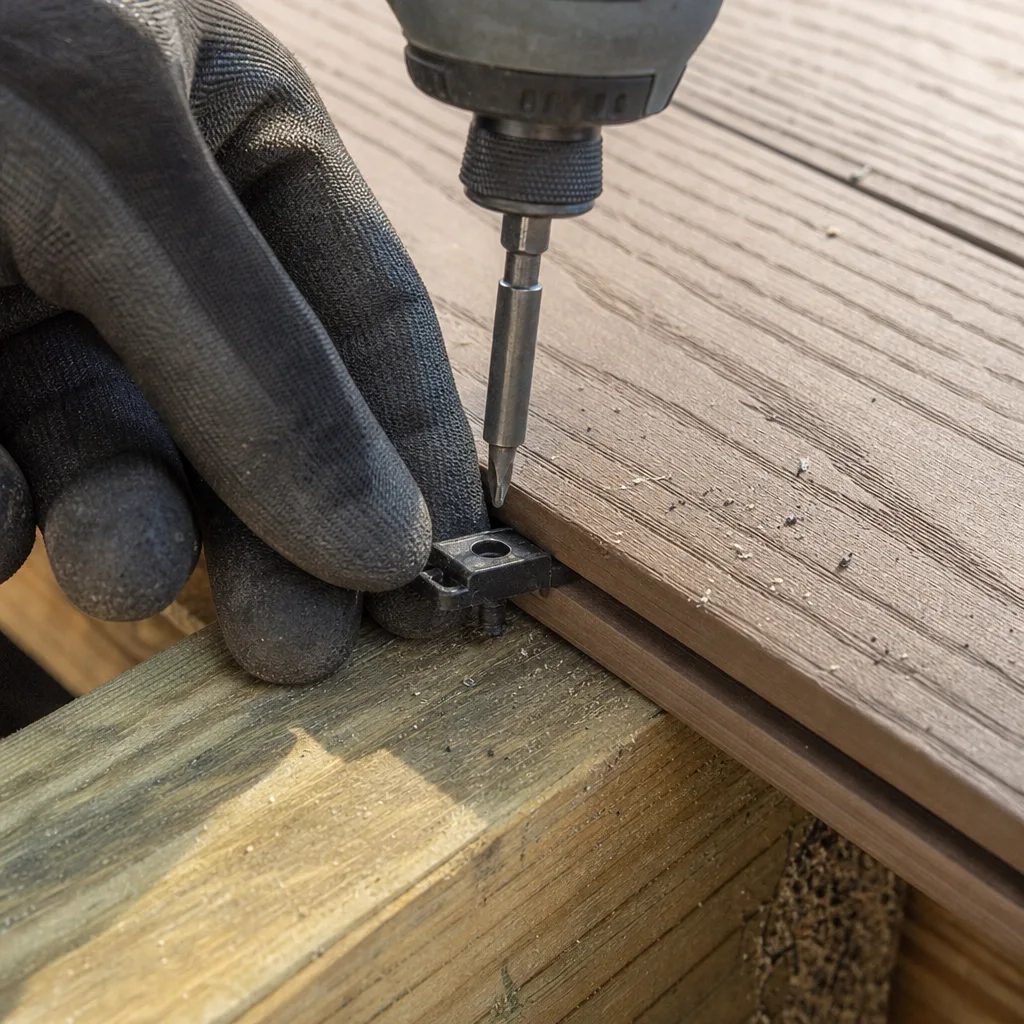
The last step is the final inspection, followed by a walkthrough with you. Walk every board. Lean on the railing. Go up and down the stairs. Ask how to clean the deck, because composite still needs a wash now and then, just no sanding or staining. Make sure the site is cleaned up and the permit is closed out. An open permit can come back to bite you when you sell.
Sometimes a deck project turns up a second job. Maybe the old patio door leaks, or the siding behind the ledger has soaked up water. Because we handle patio door installation, siding repair, and trim work along with decks, you can fix the whole back of the house with one team instead of lining up three.
That's the real goal: a deck you can step out onto every weekend without a second thought, built right from the footings up. If you're ready to talk about a Trex deck for your Ashburn home, we'd love to come take a look and help you plan it the right way.
Why Existing Framing Condition Decides Your Scope
The frame under your deck decides how big your Trex project really is. Good boards can't fix a tired frame. So before anyone talks about colors or railing styles, the honest first question is whether the structure you already have can carry new composite boards for as long as those boards will last.
Most projects land in one of three places:
- New boards on the existing frame. The joists, posts, footings, and ledger are all sound and already set up for composite. This is the smallest job, and it's the one most homeowners hope for.
- Partial rebuild. Most of the frame is solid, but a few joists, a post, or the ledger connection need work. Those parts get fixed or replaced before the new boards go down.
- Full tear-out. The frame has rot in several places, the footings aren't deep enough, or the layout doesn't fit what composite needs. Starting from the ground up costs more today, but it's the only way to get a deck that lasts as long as the boards on top.
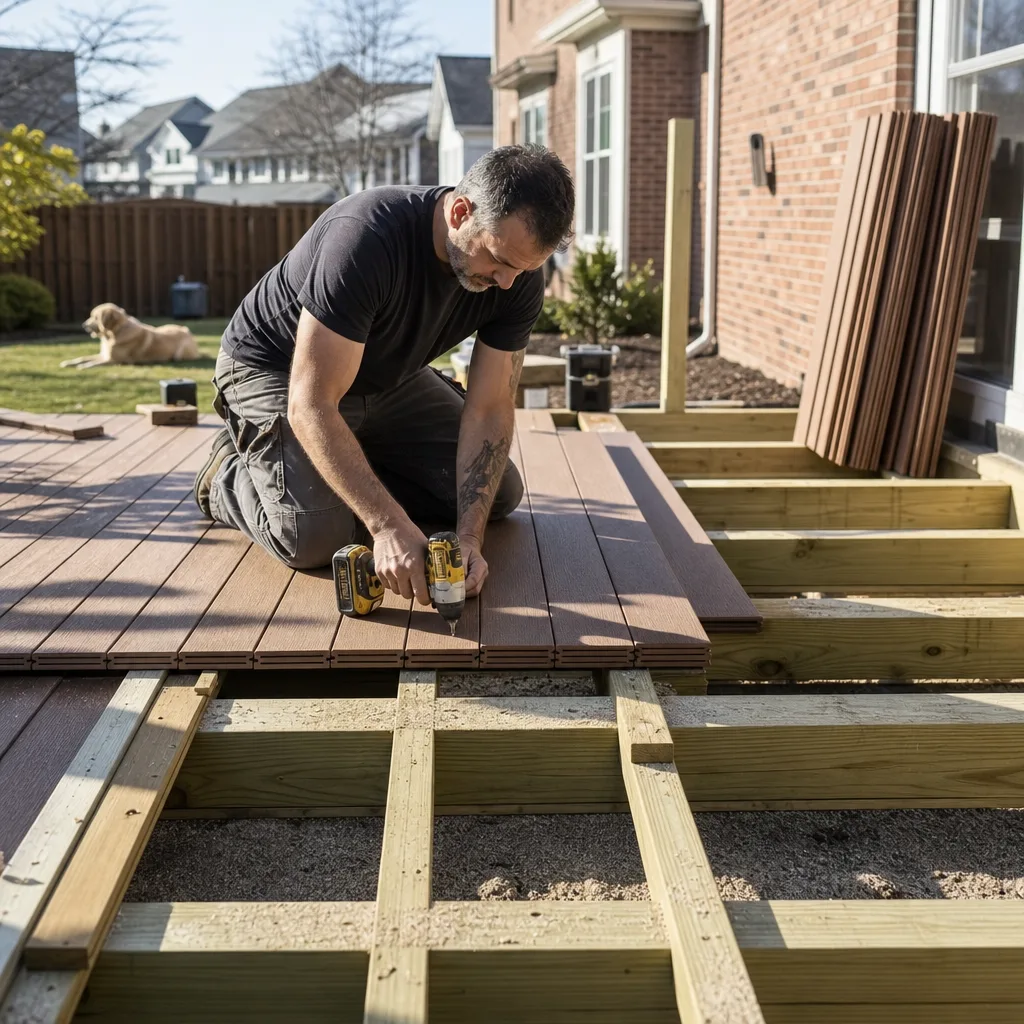
Here's the part people don't always think about. Composite boards don't rot like wood does. The frame under them is still wood, though, and it keeps aging no matter what's on top. If your frame is already well into its life, putting long-lasting boards on it is a mismatch. You could end up tearing up perfectly good Trex boards someday just to fix the wood underneath. That's paying for the same deck twice.
Picture a deck that looks fine from above. The boards are faded, but the floor feels steady. It's easy to assume the frame is fine too. Then the old boards come off, and the tops of a few joists are dark and soft where water sat between the wood for years. Nobody could see that with the boards in place. This is why it helps to talk about surprises before work starts, not after.
Frame condition is also one of the biggest things that moves the cost of a Trex deck. A few factors that push the price up or down:
- How much of the frame can stay. Every joist, post, and footing you reuse is lumber and labor you don't pay for twice.
- Height off the ground. Taller decks need longer posts, more bracing, and more careful work at the footings.
- Changes to size or shape. Making the deck bigger, adding a level, or moving the stairs usually means new framing no matter how good the old frame is.
- Repairs to the house behind the deck. If water got past the ledger, the wall it's attached to may need work too.
When you get estimates, ask each contractor the same questions. Which parts of my frame are you keeping, and why? What happens to the price if you find hidden rot once the boards come up? Is frame work listed on its own line, or bundled in? A clear answer tells you they looked. A vague one may mean the frame got skipped.
We'd rather tell you up front that your frame needs work than build something pretty that won't hold up. Sometimes the right answer is to save money and keep what you have. Sometimes it's to start fresh. Either way, you should know which one you're getting before you sign.
Deck Builder Services in Leesburg.
Frequently Asked Questions
Can you build a Trex deck on top of my existing frame to save money?
Do I need a permit for a new Trex deck in Ashburn?
Will my HOA slow down my deck project?
How do I know if my deck needs a full rebuild instead of a repair?
Sources
[1] Loudoun County, Virginia. Hiring a Contractor. https://www.loudoun.gov/5208/Hiring-a-Contractor