
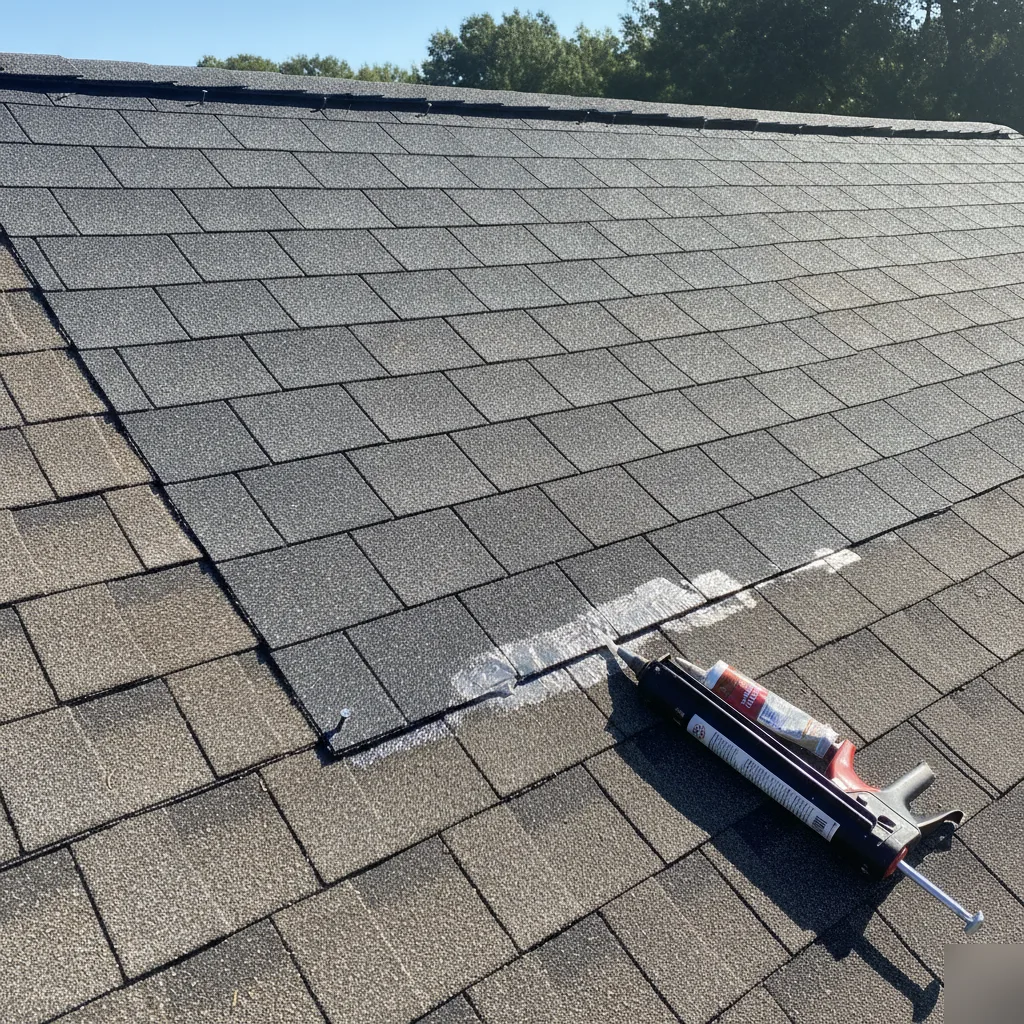
Why the Ceiling Stain Isn't the Whole Story
Here's the thing nobody tells you about a ceiling stain. It's not a map. Water doesn't fall straight down like rain in your living room, it runs. Once it gets past your shingles, it follows the path of least resistance, along a rafter, across a piece of decking, down a nail shank, until gravity finally wins and it drips through your drywall. That drip spot might be five feet from where the water got in. Sometimes it's fifteen.
We see this every week. A homeowner near downtown Leesburg calls us about a brown ring over the guest bedroom, sure the roof is failing right above it. We get up there and the shingles over that spot look fine. The real culprit turns out to be a cracked piece of flashing around the chimney, a good twelve feet away, letting water track down the roof sheathing until it finds a gap in the insulation and lets go.
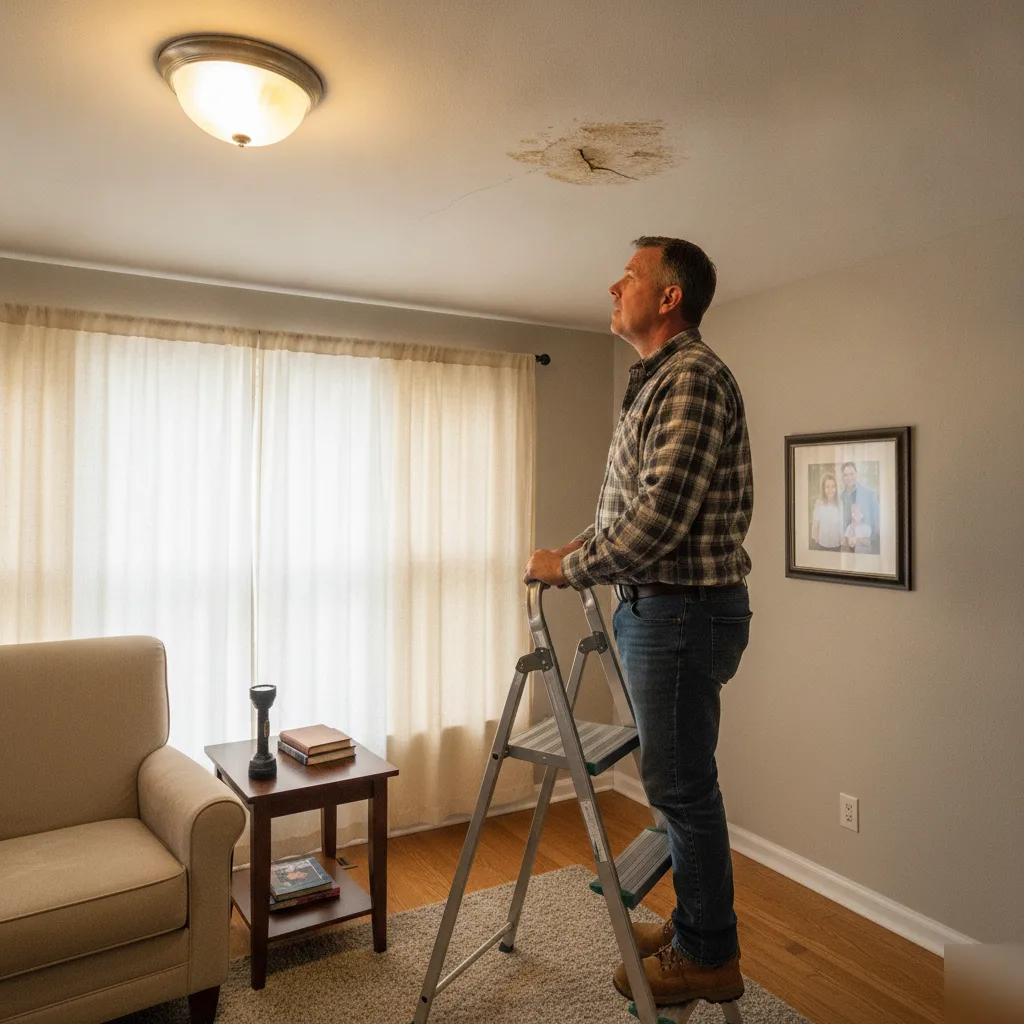
This is why patching the ceiling doesn't fix anything. You repaint, it looks great for a few months, then the next hard rain brings the stain right back. Older homes around Leesburg with steeper roof pitches and multiple roof lines, additions built onto additions, give water more surface area to travel before it shows itself indoors. More valleys and tie-ins mean more spots for a leak to start far from where you see the damage.
So what tells the story? The attic does. Water stains on the underside of the decking, dark trails along a rafter, damp insulation, these point us back toward the source instead of the symptom. That's where a real inspection starts, not on your ceiling, but above it.
What's Causing Leaks in Leesburg's Older and Newer Roofs
Most of the time it's not one big dramatic hole. It's something small that's been sitting there for months.
Leesburg has a real mix of roofs. Historic homes near the downtown core often still have older flashing details around chimneys and dormers, and that flashing is usually the first thing to fail. Newer builds out toward the edges of town tend to have more roof penetrations, skylights, vents, satellite mounts, and every one of those is a spot where a seal can crack. Our summers don't help. Hot, humid stretches followed by sudden storms make shingles expand and contract. That loosens nails and opens tiny gaps you'd never spot from the ground.
Here's what we run into most:
- Cracked or lifted flashing around chimneys, skylights, and dormers
- Nail pops where the shingle seal has broken loose
- Worn or missing pipe boot seals around vents
- Ice and snowmelt backup along the eaves after a winter storm
- Hail bruising or wind-lifted shingles from spring and summer storms
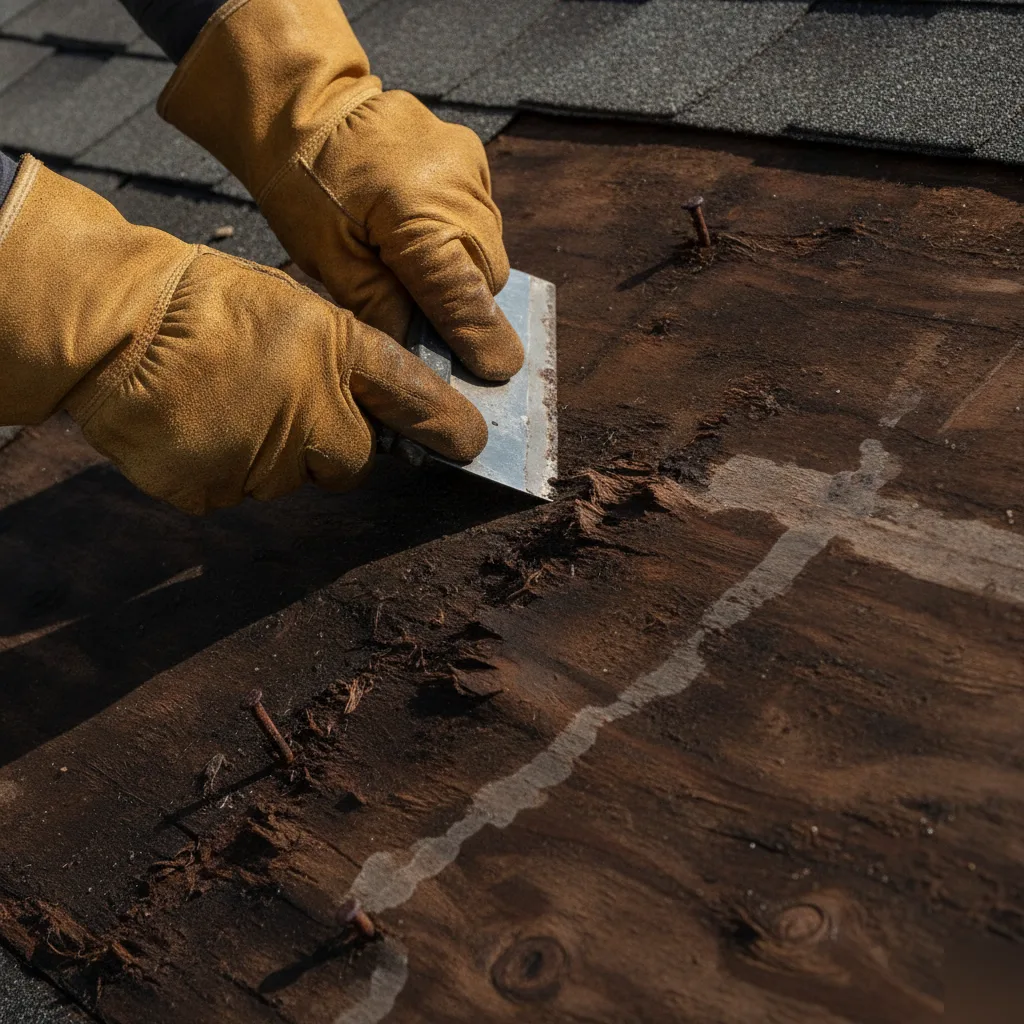
Storm damage is its own category. Loudoun County gets its share of spring thunderstorms with hail and gusty wind, and that kind of damage doesn't always show up as a leak right away. Sometimes a roof looks fine for weeks, then one heavy rain finds the weak spot the storm created. We've walked plenty of attics where the ceiling stain is nowhere near the actual leak, the water traveled along a rafter before it dropped. That's the tricky part about roof leak repair, chasing the water back to where it got in.
Signs That Can Wait and Signs That Need a Same-Week Call
Not every stain on your ceiling is an emergency. That surprises people. We get calls from folks in Leesburg who spot a small brown ring in a guest room they barely use, and they're ready to panic. Take a breath first.
A small, dry, unchanging stain that showed up after one bad storm and hasn't grown in weeks can usually wait for a scheduled inspection. So can minor granule loss you notice in the gutter after a heavy rain, or a shingle tab that's curling but still attached. Older neighborhoods around Leesburg with roofs pushing 15-20 years often show small cosmetic wear like this, and it doesn't mean water's getting inside.
Here's what does need a same-week call, no waiting around:
- A stain that's spreading or darkening between visits, that's active water
- Water dripping during a storm, even a slow drip
- Sagging drywall or a bulge in the ceiling, that's a sign water's pooled up there
- Daylight showing through the attic roof deck
- Missing shingles after high wind, especially near a valley or chimney
- Musty smell in a closet or upstairs room with no clear cause
Often, when we get a call about a bulging ceiling, there's already been damage for weeks before anyone noticed. Small leaks hide behind insulation and drywall longer than people think, then one warm afternoon the ceiling lets go all at once. If you've had a hailstorm come through and you're seeing dented gutters or dark streaks on the shingles, don't wait for the next rain to test it. And if you're not sure which category you're in, that's a fair spot to be in, a lot of homeowners aren't roofers and shouldn't need to be.
What Happens During a Roof Leak Repair Visit
You call, we set a time, and we show up ready to find the actual source of the water. Not just patch the spot where it's dripping onto your ceiling.
Here's how a typical visit usually goes:
- We walk the roof first, checking flashing around chimneys, vents, and skylights since that's where most leaks start.
- We check the attic if there's access, looking for water stains, wet insulation, or daylight coming through where it shouldn't.
- We trace the path. Water almost never drips straight down from where it enters, it travels along rafters and sheathing first.
- Once we find the real entry point, we explain what we found and what it'll take to fix it.
- We do the repair, whether that's resealing flashing, replacing a few shingles, or patching a section of underlayment.
- We clean up and check our work before we leave.
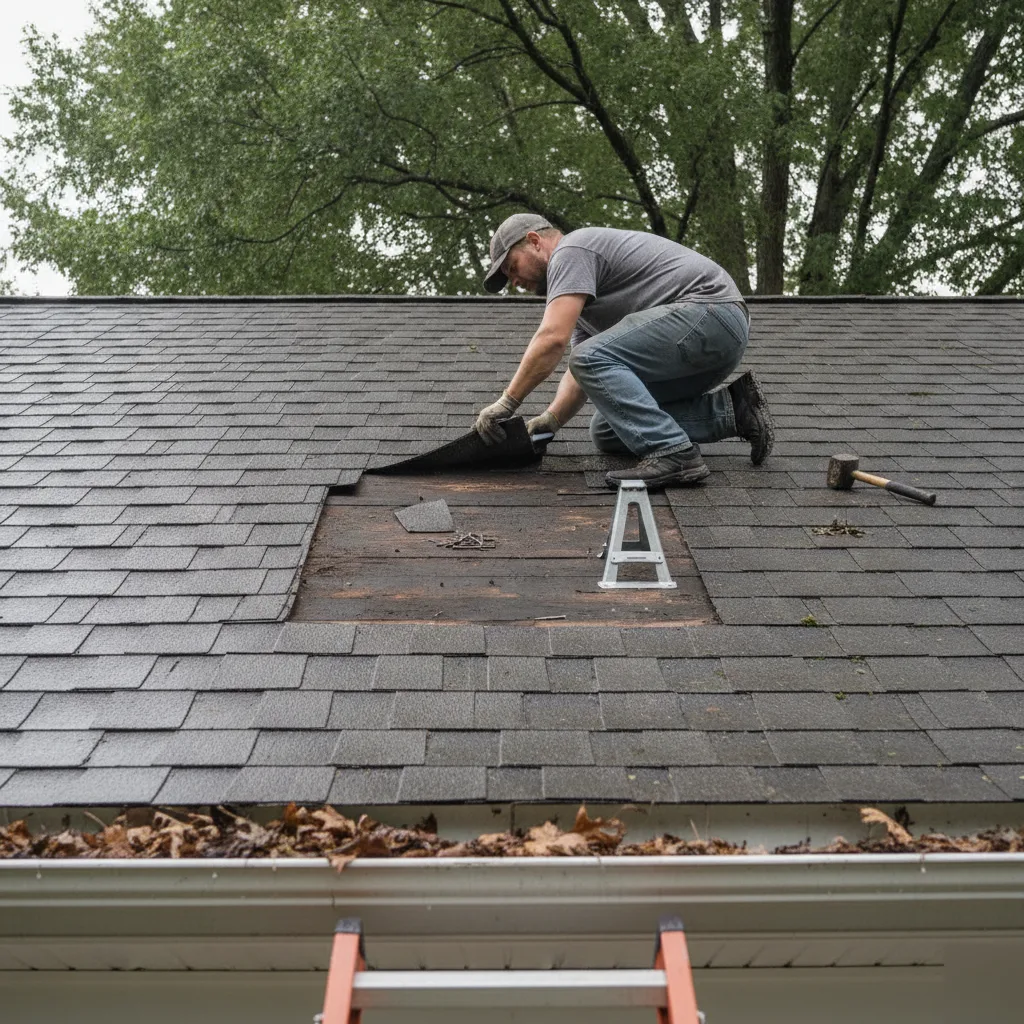
Some homes near downtown Leesburg have steep roof pitches on older construction, so we're extra careful with ladder placement and fall protection while we work. That's just part of the job on those roofs.
We see this every week: a homeowner points to a stain on the bedroom ceiling and swears the leak is right above it. It's not. It's a foot or two off, sometimes more, because the water followed a rafter before it soaked through the drywall. That's why the attic check matters so much, it saves you from paying for a repair in the wrong spot.
Most single-source leaks get diagnosed and fixed in one visit. If we find rotted decking under the shingles, that's a different conversation, and we'll walk you through what that means before we do anything else. No surprises halfway through.
How to Vet a Roofer Before You Sign Anything
A leak on your roof feels urgent. It is urgent. But signing with the first name that shows up after a storm is how homeowners end up with a bigger mess than they started with.
Start with licensing and insurance. Ask to see it, don't just take their word. Any roofer working in Virginia should carry general liability and workers' comp. If they hesitate or dodge the question, that's your answer right there.
Next, ask how they diagnose a leak before they quote anything. A roofer who tells you a price over the phone without ever climbing up top is guessing. We walk the roof, check the attic if we can get to it, and look at flashing points before we say a word about repair. That's the only way to know what's wrong instead of assuming.
A few questions worth asking every roofer who shows up:
- Will you show me photos of the actual damage, not just tell me about it?
- Who pulls the permit if the repair needs one, and who's listed on it?
- What happens if you get up there and find more damage than expected?
- How do you handle it if it rains again before the repair's finished?
Watch for pressure tactics too. Some storm-chasing crews push same-day signatures with scare talk about your whole roof caving in. Usually it's one damaged section, not the whole system.