Signs Your Roof Has Hail Damage
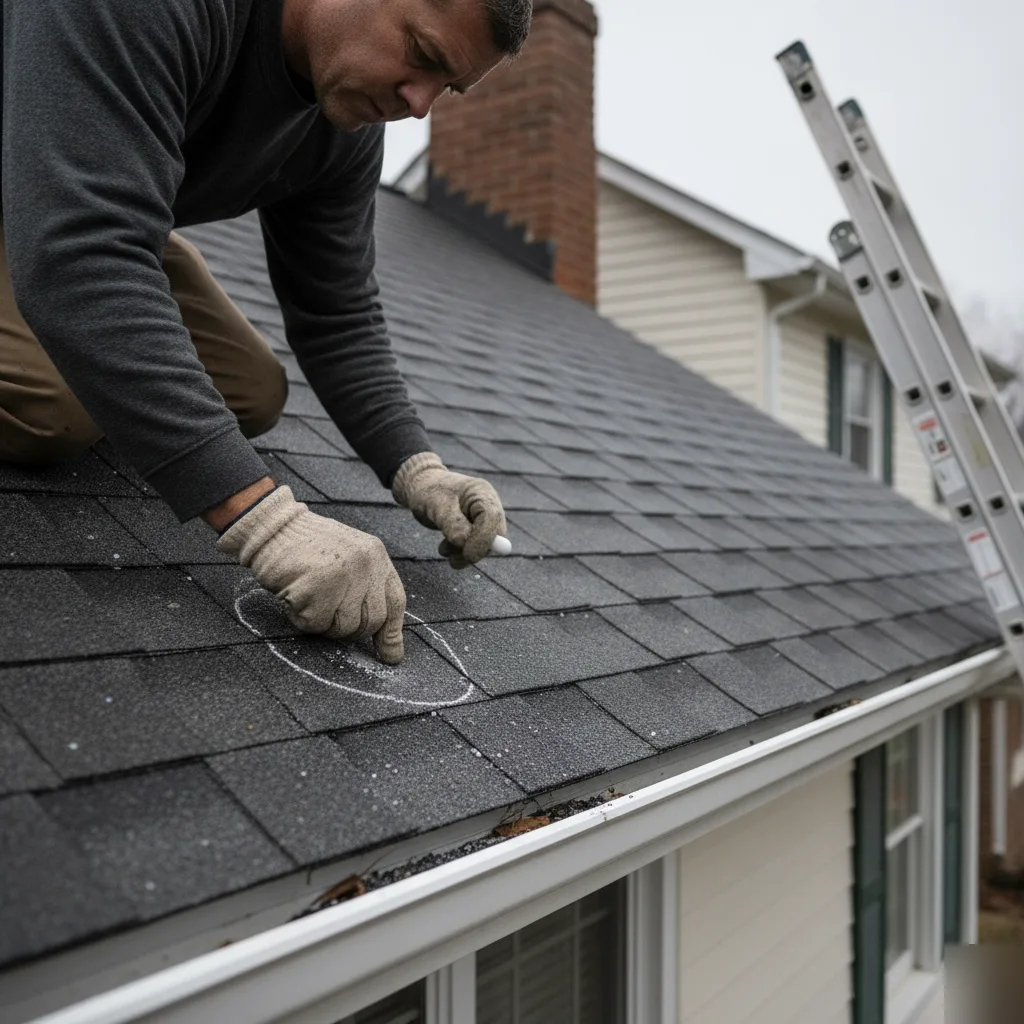
Here's the tricky part about hail. It doesn't always look dramatic from the ground. You won't always see broken shingles scattered across your yard or a hole punched clean through your roof. Most hail damage in Leesburg is quiet damage, the kind that sits up there for months before it turns into a leak in your ceiling.
We climb a lot of roofs after storms roll through Loudoun County, and homeowners are surprised by what we find. So what should make you pick up the phone?
- Dark, bruised-looking spots on asphalt shingles where the granules got knocked loose
- Soft spots you can feel when you press on the shingle, almost like a bruise on fruit
- Granules piling up in your gutters or at the bottom of your downspouts
- Dented gutters, fascia, or window screens — hail hits everything the same way, not just the roof
- Dings on your metal roof vents, flashing, or skylight frames
- Cracked or chipped ridge caps along the top of the roofline
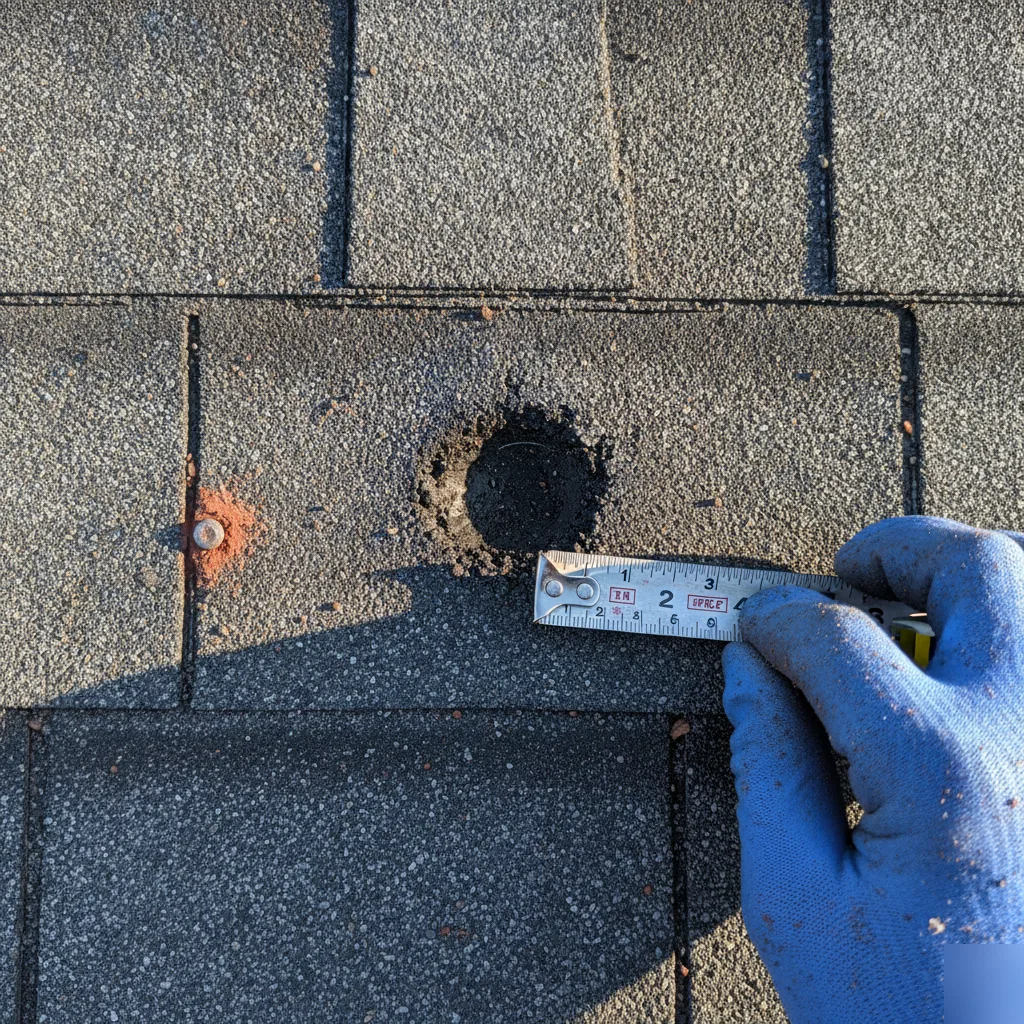
Metal roofing shows damage differently than asphalt. You'll usually see small round dents, almost like someone tapped it with a hammer. Asphalt shingles are sneakier. The granule loss can look like normal wear at first glance, which is exactly why so many folks skip a roof inspection after a storm and regret it a year later.
Noticed a water stain on your ceiling that wasn't there last spring? That's often the first sign anyone notices, and by then the shingle's been compromised for a while. Check your attic too — a musty smell or damp insulation near the roof deck usually means water's already getting in somewhere you can't see from the ground.
Discover home exterior repair services.
Cosmetic Wear vs. Real Hail Damage
Not every dent on your roof means you need a repair. A lot of what folks in Leesburg call about is just cosmetic bruising, especially on asphalt shingles after a spring storm rolls through. The granules get knocked loose, you see a dark spot, and it looks scary from the ladder. But if the shingle mat underneath isn't cracked or exposed, that's wear, not damage that needs fixing.
Real hail damage is different. You're looking for cracked or split shingles, exposed fiberglass matting, or soft spongy spots when you press on the surface. Metal roofing tells its own story too. Dents that dish inward and crease the panel edges are a real problem, but small surface pockmarks on a coated metal roof often don't affect how it performs.
So how do you tell the difference without climbing up there yourself? A few signs point to actual damage worth calling about:
- Shingle granules piling up in your gutters after a storm, not just a light dusting
- Cracks you can see from the ground near roof edges or ridge lines
- Soft spots that give when you press gently with a hand
- Bruising that's clustered instead of scattered randomly
If a roof is over ten years old and shows scattered light bruising with no cracking, we tell people to hold off and just keep an eye on it. That's not us being cheap with our own work. That's just what's true. Waiting a season to see if a leak develops costs you nothing. Calling a repair crew out for cosmetic marks that don't threaten the shingle's seal costs you money for nothing gained.
If you're not sure which one you're looking at, that's the most common call we get after a storm.
Getting a Free Hail Damage Estimate in Leesburg
So here's how it works. You call, you tell us what happened - storm, hail, that hard rattling sound on the roof during a bad afternoon. We come out and walk the whole roof, not just the spot you can see from the driveway. Free estimates are part of how we do things here, no hazy details, no surprise fees just to get someone on your roof looking around.
Bring us any photos you took right after the storm. Bring the date if you remember it. That stuff helps us line up what we find with what happened, which matters a lot once an insurance adjuster gets involved. We're not guessing at storm dates - we're matching physical damage to a real event.
During the walk we check the field of the shingles, the flashing around chimneys and vents, and the gutters, since hail dents metal way faster than it dents shingles. You'll get a plain answer. Sometimes that answer is "you've got real damage, let's talk repair." Sometimes it's "this is cosmetic, I wouldn't file a claim over it." We tell you either way.
Our office is on South King Street, and we work roofs across Leesburg from that same home base. That's not a sales pitch, it's just where you'll find us if you want to stop by instead of calling.
One thing worth knowing: Salty Dog Remodeling won Best of Loudoun in 2023 in the Remodeler category. We mention it not to brag but because it tells you something about how we handle jobs, roofing included.
Give us a call, we'll get someone out to look before the damage sits long enough to turn into a bigger problem.
Working With Your Insurance Adjuster
Here's the truth nobody tells you upfront: the adjuster works for the insurance company, not for you. That doesn't mean they're out to shortchange you. Most are fair, but their job is to document damage accurately and follow the carrier's guidelines. Your job is to make sure nothing gets missed.
We've walked roofs alongside adjusters more times than we can count, and the claims that go smoothly share a pattern. The homeowner already has photos. They know when the storm hit. And they've had a roofer look at the damage before the adjuster shows up.
A few things help your claim move faster:
- Write down the date and approximate time of the hailstorm
- Take wide shots and close-up shots of any dented gutters, dinged siding, or bruised shingles
- Ask your adjuster to walk the whole roof, not just one slope
- Request a copy of their inspection report before they leave

According to Owens Corning, hail damage on an asphalt shingle roof shows up as small circular bruises where the granules got knocked loose.[1] From the ground, it's invisible. That's exactly why some claims get underestimated: the adjuster just didn't see it without someone pointing it out.
Roof insurance claim assistance is part of what we do, and we're happy to meet the adjuster at your Leesburg home if your schedule doesn't allow it. Storm season around here tends to bring fast-moving hail in late spring and early summer, so claims often stack up quickly with the same carrier, and adjusters end up stretched thin and moving fast between appointments.
What Happens During a Hail Damage Roof Repair
So you've got hail damage and you called us out. Here's what happens, step by step, so you're not wondering what we're doing up there.
- We climb up and inspect every slope, not just the side facing the street. Hail bounces at weird angles, and damage on the back slope gets missed all the time.
- We check the shingles for bruising, granule loss, and cracked mats. We also check flashing around chimneys, vents, and skylights, since soft metal dents easier than shingles do.
- We photograph everything. This documentation matters if you're filing a roof insurance claim, and it's the part most homeowners underestimate.
- If your roof needs a tarp to stop leaks before repair day, we get that handled fast. A cracked shingle mat in July heat can turn into a soaked attic by August.
- We pull the damaged shingles and replace them, matching the surrounding material as closely as we can.
- We clean up. Nails, torn shingle bits, granules in the gutters, all of it gets cleared before we leave.
- We walk the roof one more time with you, or without you if you're not home, and confirm everything's sealed and sitting right.
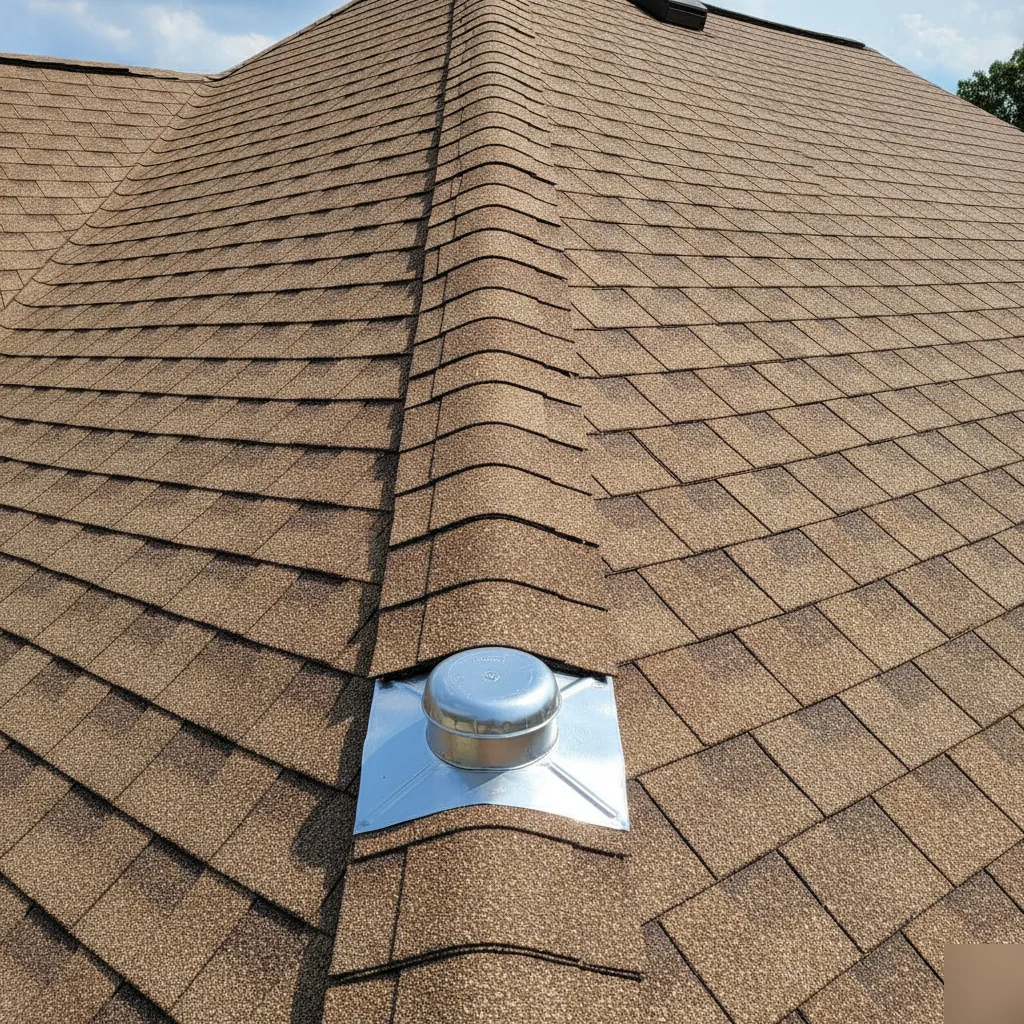
Now, some roofs need more than spot repairs. If the hail hit hard enough to crack multiple mats across a whole slope, patch repair won't hold, and we'll tell you that straight instead of nickel-and-diming shingles one at a time. We see this a lot on older asphalt shingle roofs around Leesburg homes built before the newer impact-resistant shingle options became common. Older mats just don't flex the same way.
Metal roofing repairs work a little differently, mostly dent assessment instead of shingle swaps. But the documentation step stays the same no matter what's on your roof.
Roof Hail Damage Repair in Leesburg.
Frequently Asked Questions
How soon should I call after a hailstorm hits Leesburg?
What happens when you inspect my roof for hail damage?
Can I file an insurance claim if my roof only has cosmetic damage?
Does my roof's age affect whether hail damage needs repair?
What should I do if I find a water stain on my ceiling after a storm?
Do metal roofs and asphalt shingle roofs show hail damage differently?
Sources
[1] Owens Corning. Signs of Storm Damage. https://www.owenscorning.com/en-us/roofing/blog/signs-of-storm-damage