Signs Your Roof Flashing Is Failing
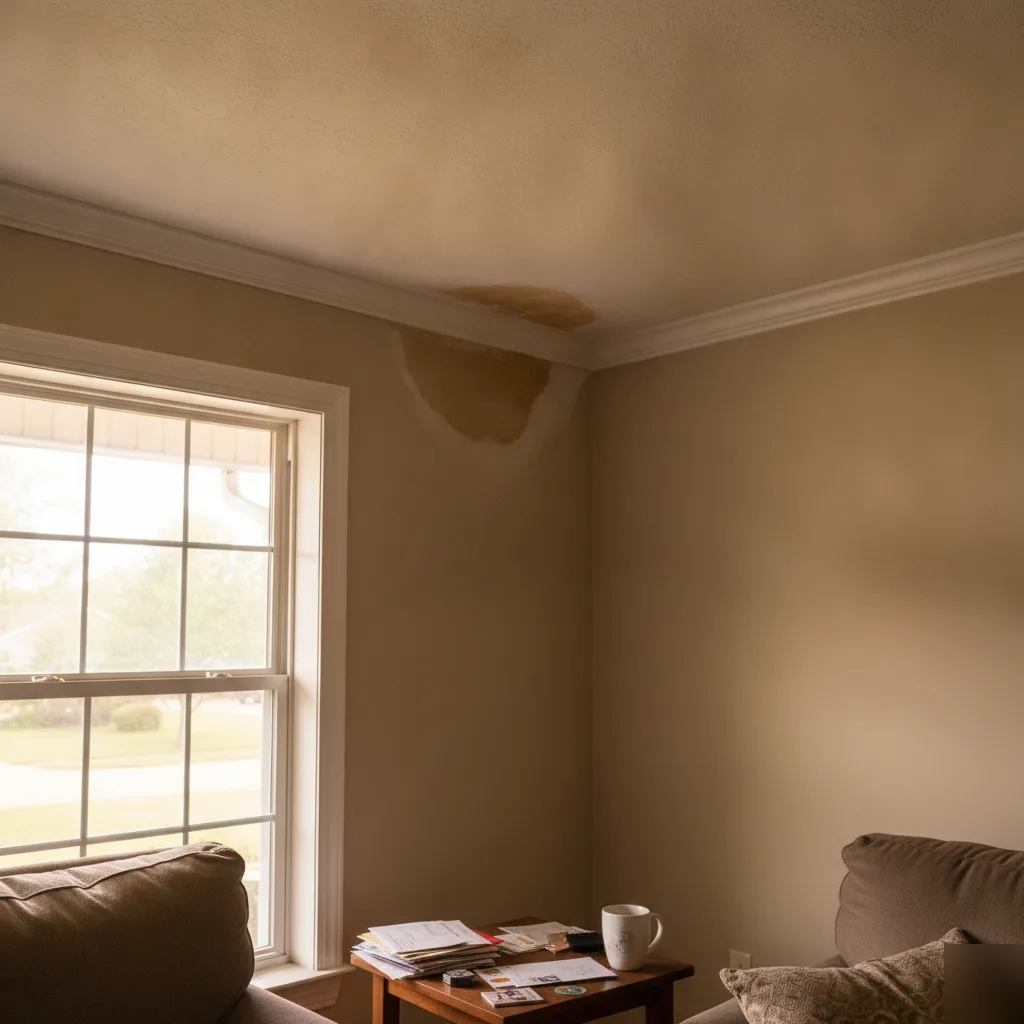
Water doesn't usually show up where the leak is. That's the tricky part. A stain on your ceiling might trace back to a flashing seam three feet away, up near a chimney or a dormer wall. We see this every week — homeowners chasing a drip in the wrong direction for months before someone finally gets up on the roof and finds the real problem.
So what should you look for? A few things tend to show up first.
- Rust streaks or dark trails running down siding below a roof valley or chimney
- Curling, lifted, or cracked metal at roof-to-wall joints
- Ceiling stains near skylights, chimneys, or where two roof planes meet
- Loose or missing caulk and sealant around vent pipes and step flashing
- Daylight visible through the attic where flashing meets the sheathing
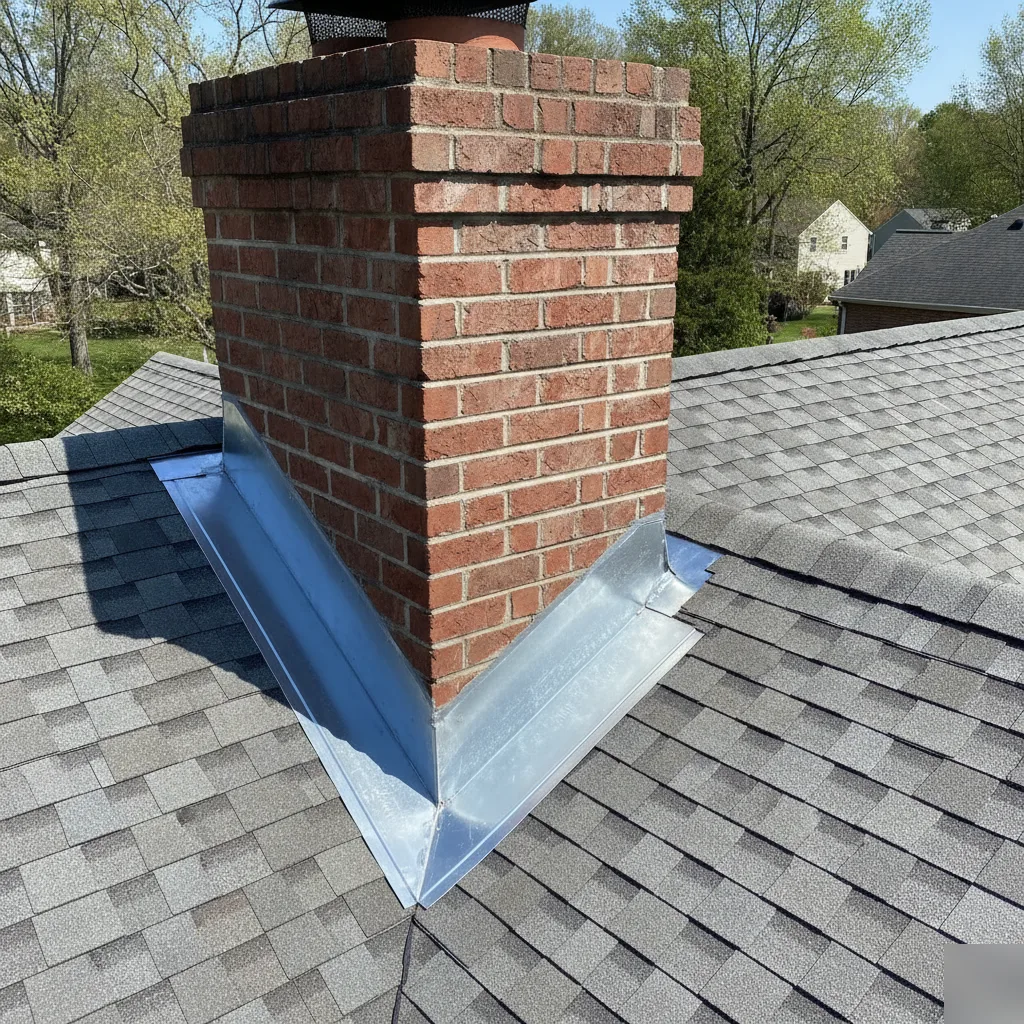
Older homes near Leesburg's historic downtown often have brick chimneys with step flashing that's decades old, and that metal wears out long before the shingles around it do. Freeze-thaw cycles here in winter make it worse. Water gets into a hairline gap, freezes, expands, and pries the seam open a little more each time. By spring you've got a bigger problem than you had in December.
Not sure if what you're seeing is a flashing issue and not just a shingle problem? That's a fair question, and it's a common mix-up. Shingle damage usually looks patchy and spread out across a slope. Flashing failure is different — it's almost always concentrated right where two surfaces meet: a wall, a chimney, a skylight frame.
If you've caught water stains inside within the last day or two after a hard rain, that's usually flashing, not shingles.
When Flashing Repair Is Enough, and When It Isn't
Here's the honest answer. Most flashing problems are fixable without a new roof. If the shingles around the flashing are still in good shape and the deck underneath isn't soft, a repair will hold. We see this every week: a homeowner calls about a stain on the ceiling, expecting the worst, and it turns out to be a chimney flashing seam that popped loose in the wind.
So how do you know which one you've got? Ask yourself a few things first.
- Is the leak showing up only during heavy rain or wind from one direction? That's usually a flashing issue, not a whole-roof problem.
- Is the shingle field around the flashing curling, cracking, or missing granules? If so, the flashing might be fine but the roof around it is failing.
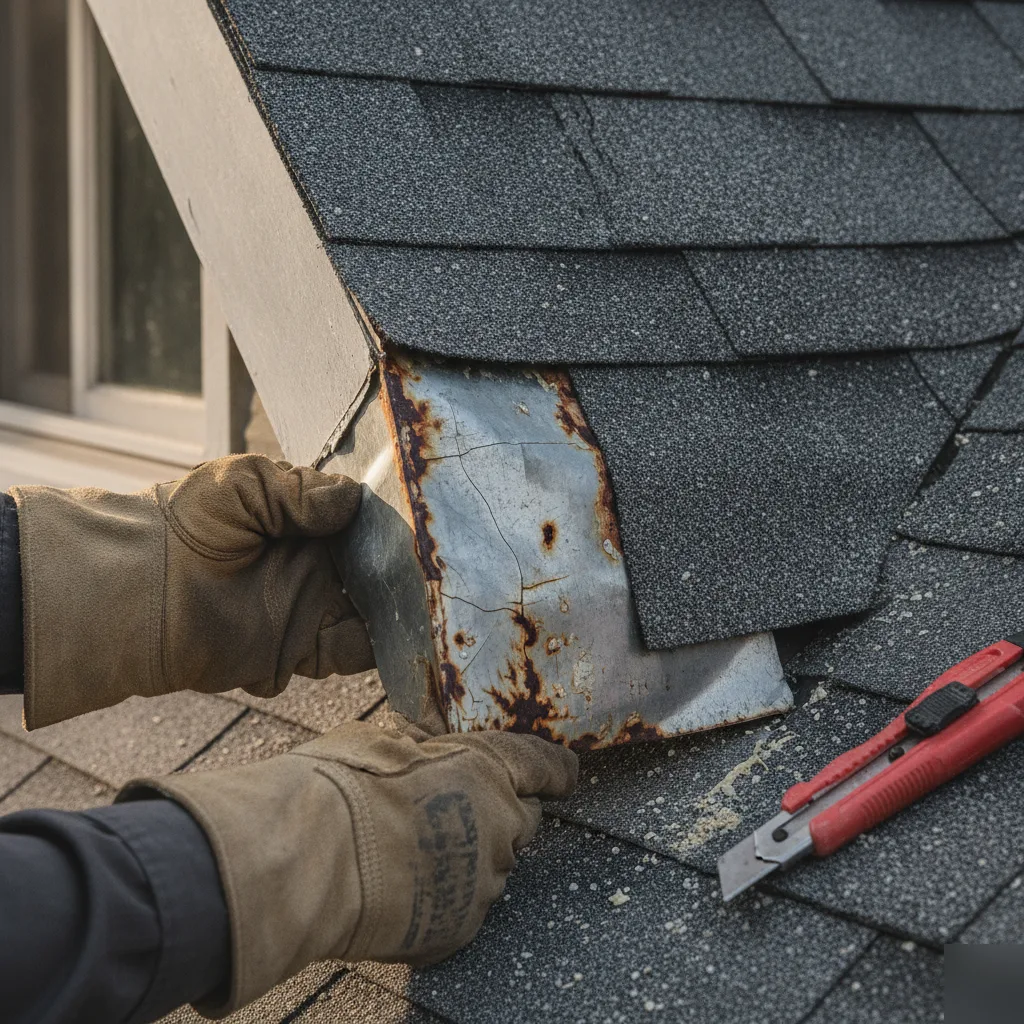
- Can you see daylight or rust through the metal itself? Old step flashing rusts through eventually, and patching rusted metal doesn't last.
- Has this same spot leaked more than once in a year or two? Repeat leaks in one area point to a bigger issue underneath, not a bad seal.
Older homes near downtown Leesburg often have tall brick chimneys, and the mortar joints where the flashing meets the brick tend to loosen with age. That's a repair, not a replacement. But if a chimney is leaning or the brick is spalling badly, flashing repair won't fix the real problem, and we'll say so.
Newer homes in Leesburg with architectural shingles usually have longer-lasting flashing, but valley flashing on steep roofs still takes a beating from ice and debris in winter storms.
Roofing Elements Magazine has an excellent guide to the ins-and-outs of roof flashing [1].
If your roof is under ten years old and the leak is isolated to one valley, chimney, or wall intersection, flashing repair is almost always the right call. If the roof itself is near the end of its life, fixing flashing alone is just delaying the real conversation.
How Freeze-Thaw Cycles Wear Down Flashing in Leesburg
Leesburg winters aren't brutal, but they're sneaky. We get that pattern where it's 40 degrees in the afternoon and 22 by midnight, and that swing happens over and over from December through March. Water gets under a lifted flashing edge during the day, then freezes and expands overnight. That expansion pries the metal up just a little more each time. It's slow. You don't see it happening, you just see the result months later.
Usually the first sign is a stain on the ceiling near a chimney or a dormer wall. By the time you spot that, the flashing's probably been letting water in for a few cycles already.
Older homes near downtown Leesburg with brick chimneys take this hard. Step flashing tucked into mortar joints can work loose as the freeze-thaw cycle repeats, and once that seal opens up even a hair, water finds it. Newer homes aren't immune either. Valley flashing on steeper roof pitches, common in a lot of the newer developments around Leesburg, collects more runoff and gives freeze-thaw more water to work with.
And it's not just the metal. The sealant around flashing edges gets brittle in cold weather, then it's asked to flex again once things warm up. Do that enough winters in a row and the seal cracks before spring even gets going.
So what speeds this up? A few things we see over and over:
- North-facing roof sections that stay shaded and hold ice longer
- Areas near gutters where meltwater backs up and refreezes against the flashing edge
- Older flashing metal that's already thinned out from years of expansion and contraction
None of this fixes itself in spring. It just waits for the next freeze.
Ready to Get Started?
We offer free estimates on every project. No vague ballparks, no fine print. You get the price, the scope, and the timeline before anything starts.
Call (703) 956-8610What Happens During a Flashing Repair Visit
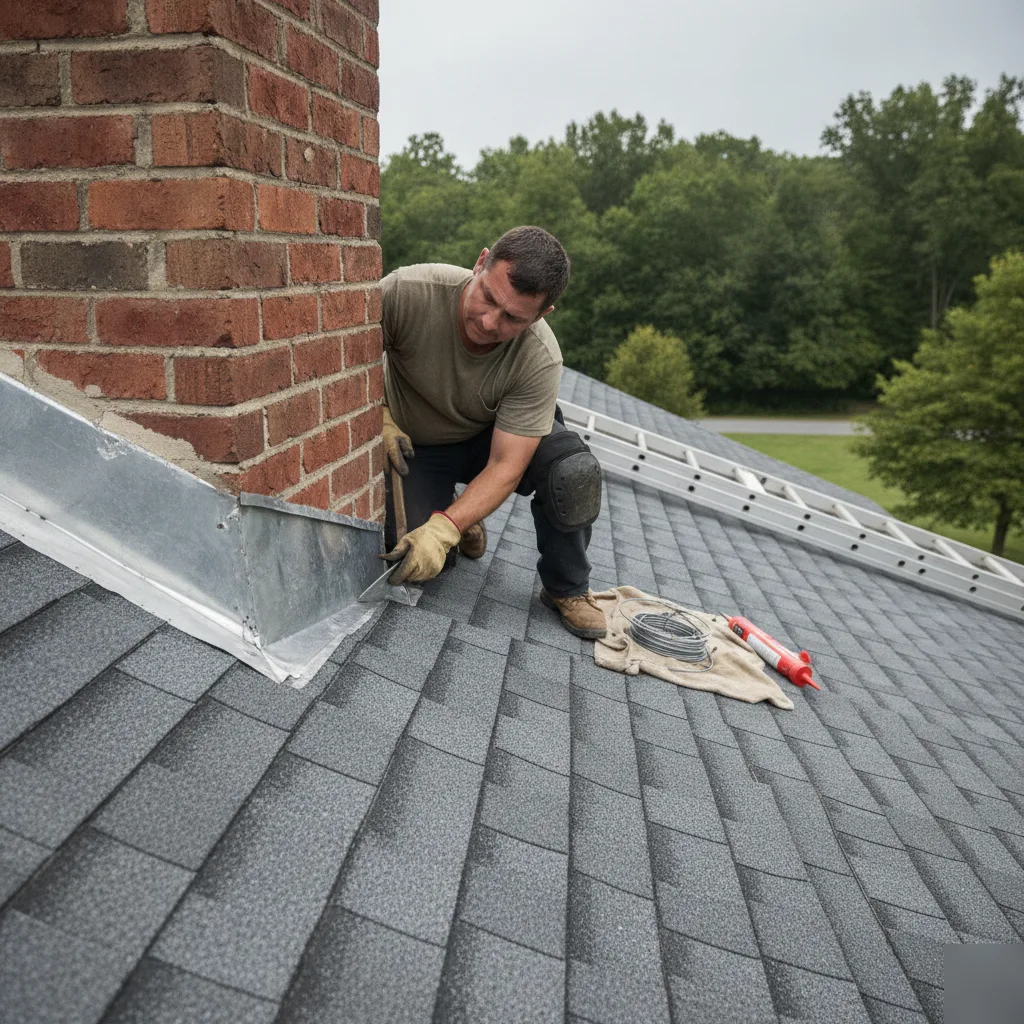
Here's what you can expect when we come out to look at your flashing. First, we get up on the roof and check every spot where flashing meets something else — chimneys, walls, skylights, vent pipes. Flashing failures almost always show up at these points, not out in the open field of the roof.
Once we find the problem area, we pull back the shingles or siding around it so we can see the metal underneath. Sometimes the flashing looks fine on top but the sealant behind it has cracked or shrunk. Other times the metal itself is rusted through or bent from years of ice and wind. We check the underlayment too, because if water's been getting past the flashing for a while, the wood decking underneath might be soft or stained.
From there, the actual repair usually goes like this:
- Remove the damaged or failing flashing section
- Clean off old sealant, debris, and any rust
- Cut and shape new flashing to fit the exact joint
- Set it under the shingles or siding, not just caulked on top
- Seal the edges with roofing-grade sealant built for outdoor exposure
- Run a water test to make sure nothing's leaking through
That last step matters. We've caught plenty of "repairs" from other jobs that looked fine dry but leaked the second we ran water over them. A flashing fix that isn't tested isn't finished, plain and simple.
Most single flashing repairs, like around a chimney or a vent pipe, don't take all day. But if we get up there and find rot in the decking or damage spreading past the flashing itself, we'll stop and talk with you before doing anything else. You should always know what we're finding, not just what we're charging.
How Roof Flashing Repair Is Priced
Flashing repair pricing comes down to a few things, and none of them are mysterious once you know what to look for. Contractors typically price this kind of repair based on labor time, the type of flashing material, and how much of the roof needs to come apart to fix it right. A simple step flashing patch near a small vent pipe takes less time than reworking valley flashing on a steep roof. That difference shows up in the bill.
Material matters too. Aluminum flashing costs less than copper, and copper costs less than the labor to bend and solder it correctly. Some older Leesburg homes, especially ones near the historic downtown area, still have copper flashing from decades back, and matching that material costs more than swapping in standard aluminum.
Here's what drives the price up or down on most jobs:
- How steep the roof pitch is, and how much staging or fall protection the crew needs
- Whether the decking underneath is soft or rotted and needs replacing before new flashing goes on
- The number of penetrations, chimneys, valleys, or wall intersections involved
- Access — some roofs need ladders moved twice just to reach one spot
We'd rather walk you through the real cost drivers than throw out a number that doesn't match your roof. A flat quote over the phone, without anyone seeing the roof, usually means someone's guessing. And guessing on flashing is how you end up paying twice.