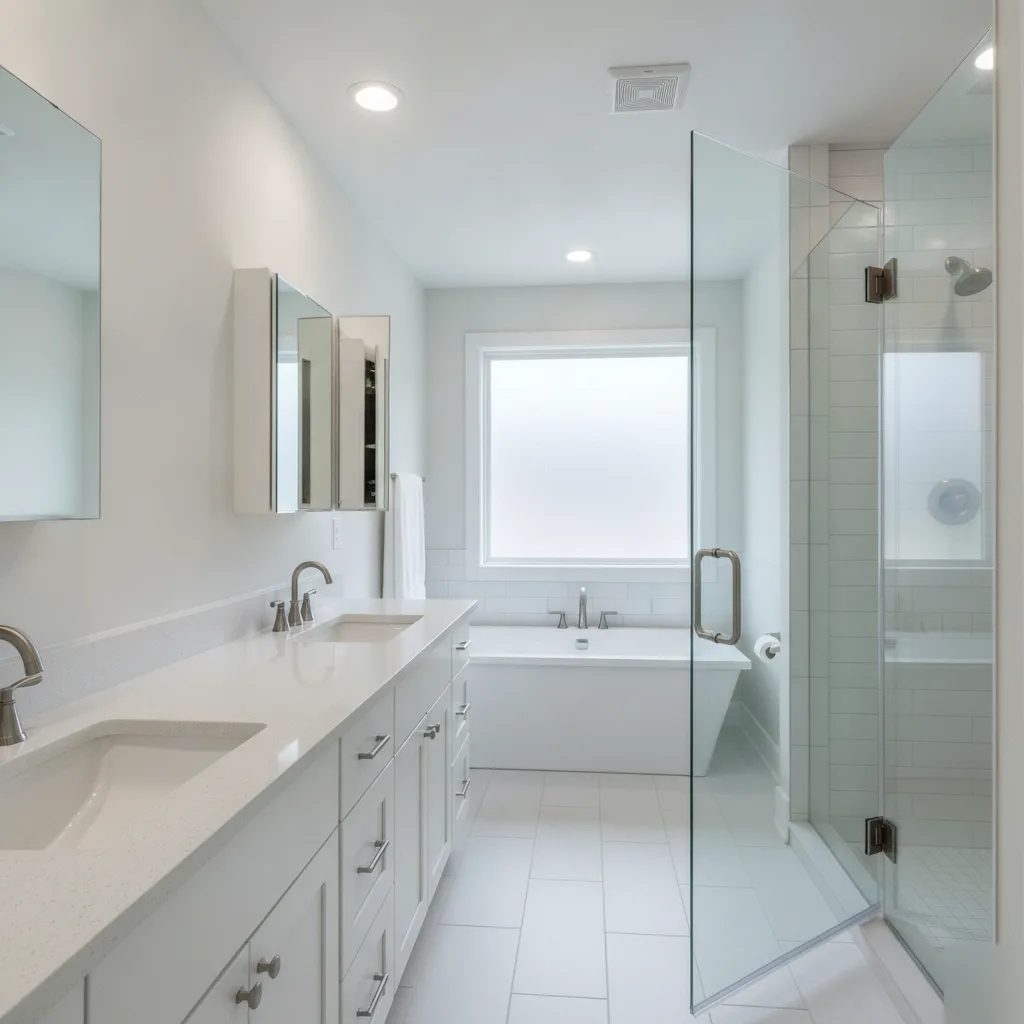
What a Full Master Bathroom Remodel Actually Involves
Most people in Leesburg come to us thinking they just want a new vanity or some fresh tile. Then we walk through the space together and they realize how much more is possible. A master bathroom remodel isn't one job. It's a dozen jobs that have to happen in the right order.
Here's what a full remodel actually looks like from start to finish:
- Demo: We clear out the old fixtures, tile, and sometimes drywall. What's behind the walls matters a lot here.
- Rough-in work: Plumbing and electrical get moved or updated before anything gets covered back up.
- Waterproofing: The shower area gets properly sealed. This step gets skipped more than you'd think by other contractors.
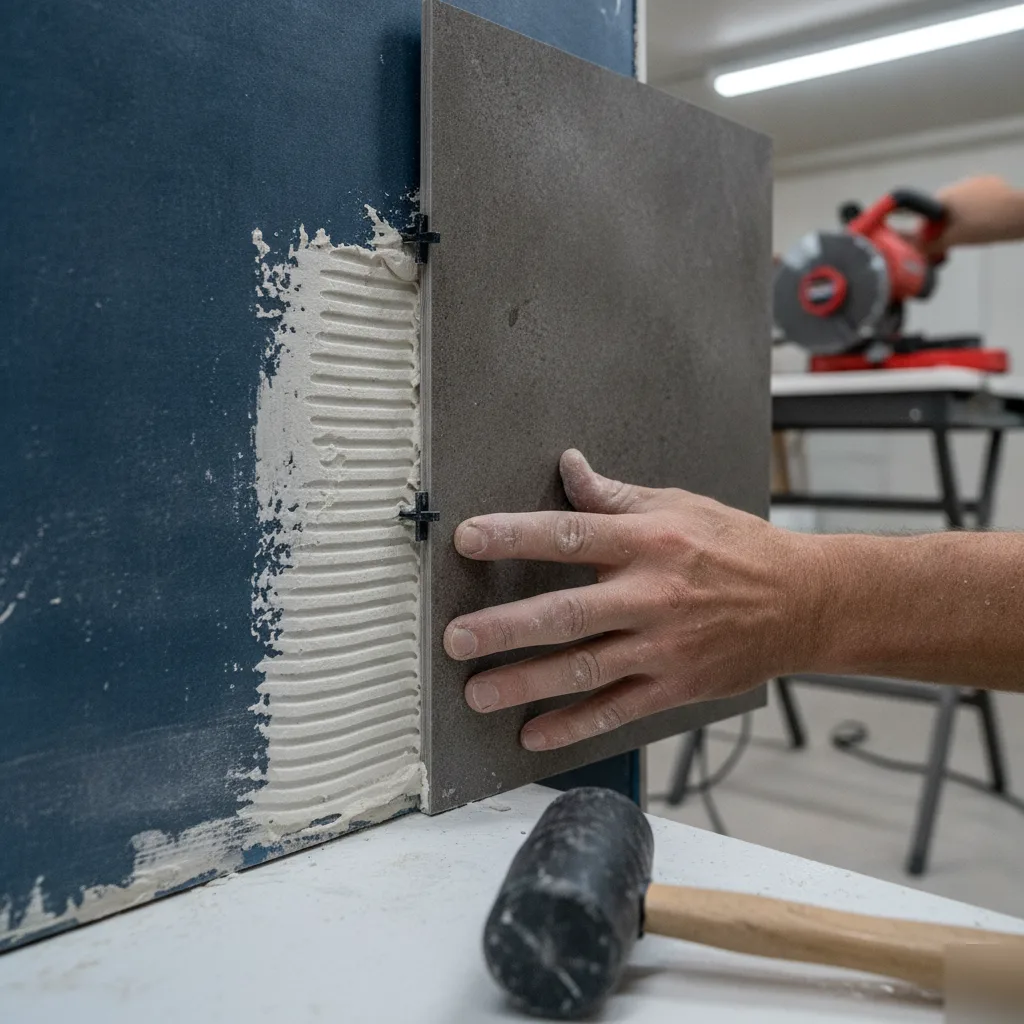
- Tile installation: Floor tile, shower tile, and any accent work goes in next.
- Fixture installation: Vanity, toilet, shower system, lighting, mirrors.
- Finish work: Paint, trim, caulk, hardware. The details that make it feel done.
We do this every week in homes across Leesburg. Every time, the waterproofing and rough-in phases are where shortcuts from other jobs come back to haunt homeowners. We don't cut those corners.
Something that comes up constantly on master bathroom remodels specifically: the layout. Master bathrooms are bigger, which means more decisions. Do you keep the tub? Convert it to a walk-in shower? Add a double vanity? Move the toilet wall? These aren't just style choices, they affect plumbing runs and your overall budget.
Homes in older Leesburg neighborhoods like Tuscarora Creek sometimes have cast iron drain lines that need attention before new tile goes down. We check all of that during our initial walkthrough so nothing surprises you mid-project.
The scope of a master bathroom remodel is big enough that permits are usually required. Our team handles permitting assistance as part of the process. You don't have to figure that out on your own.
Done right, this is the room that changes how you feel about your whole house.
Explore Salty Dog services in Leesburg.
What Leesburg Homes Reveal During Demolition
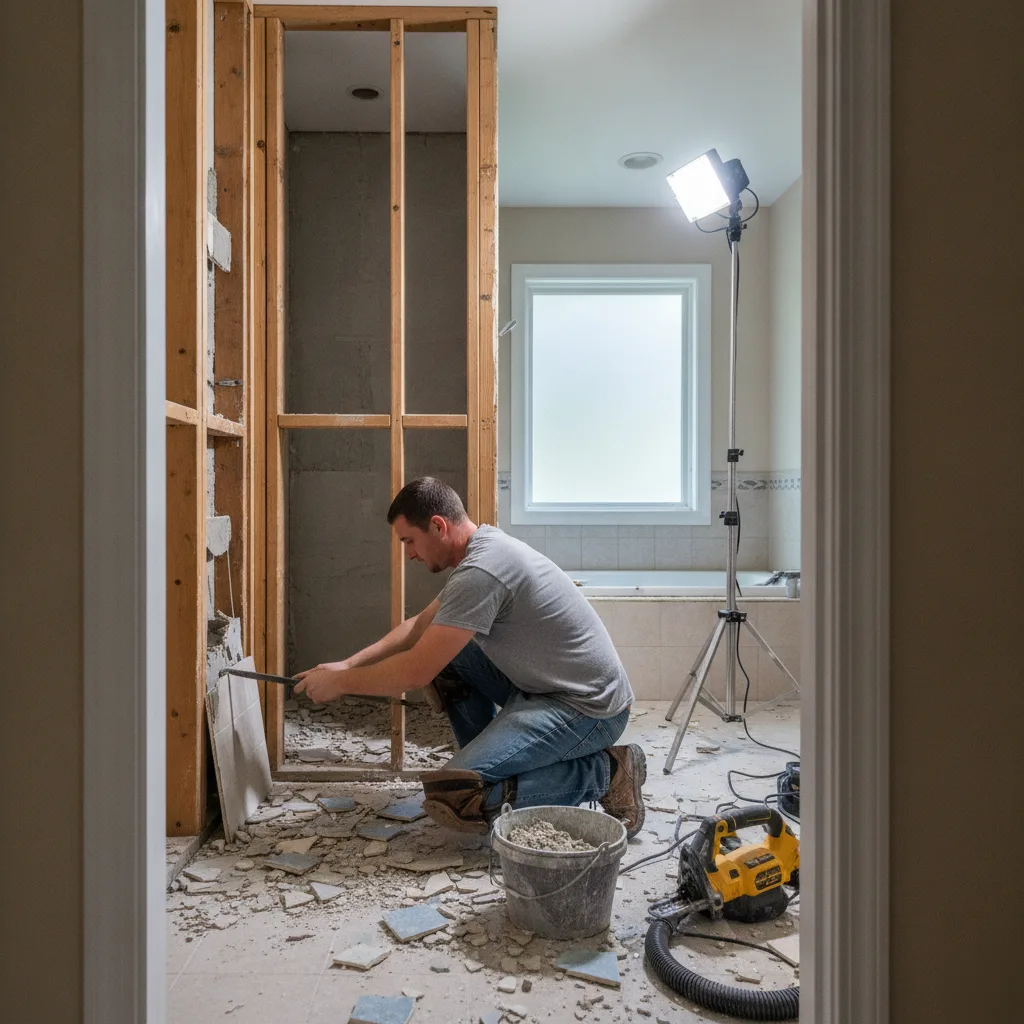
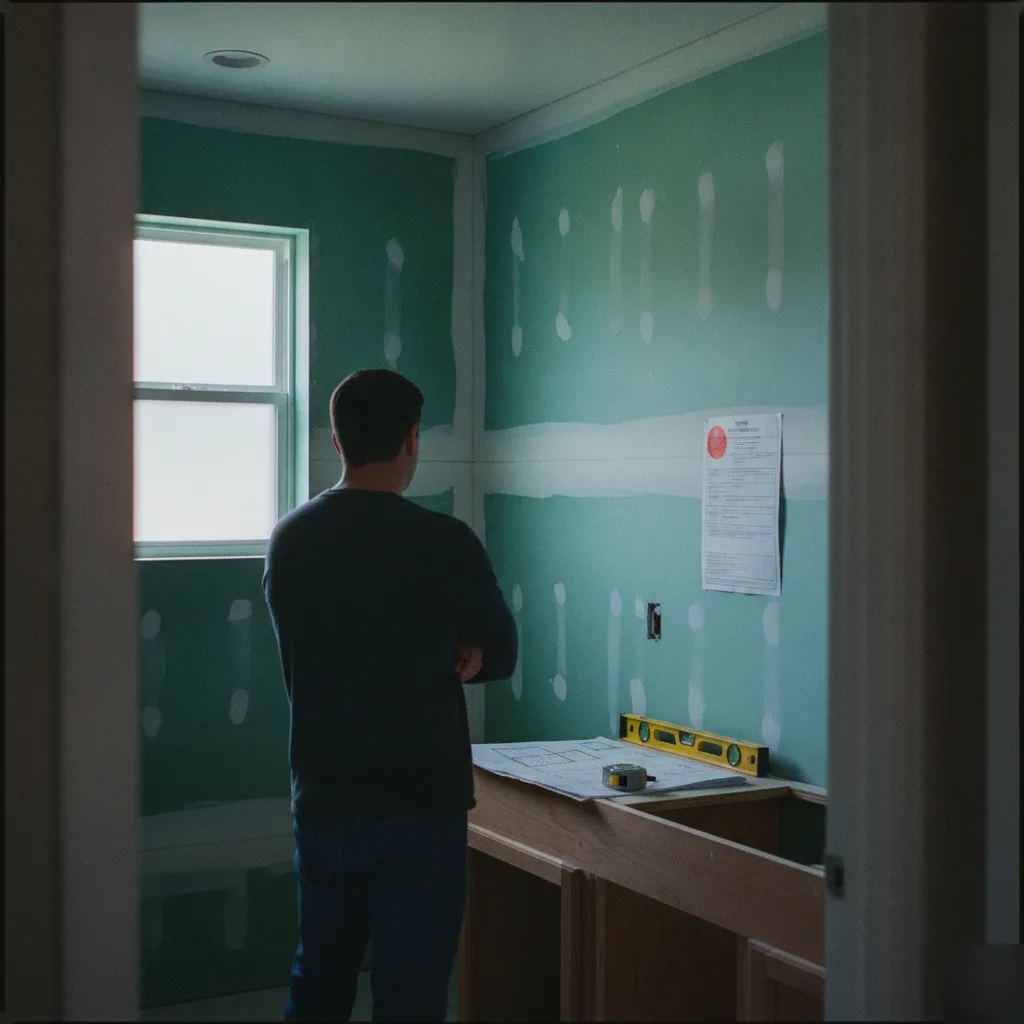
Once we pull the vanity, peel back the tile, and open up the walls, Leesburg homes have a way of telling us exactly what they've been hiding. We see surprises every week. It doesn't matter how clean the bathroom looked before we started.
Older homes in neighborhoods like Foxridge or near the Village of Leesburg tend to show us the same patterns. The tile was installed directly over drywall instead of cement board. The subfloor has soft spots from years of slow moisture getting underneath the toilet base. The plumbing is an original galvanized pipe that nobody touched in decades. None of that is visible until the demo happens, and all of it affects what comes next.
Here's what we find most often once demolition begins:
- Rotted subfloor around the tub or shower pan, usually from a failed caulk line nobody noticed
- Mold behind the walls where steam had nowhere to go
- Plumbing that doesn't meet current code, especially in homes built before the mid-1990s
- Electrical wiring that's undersized for a modern master bathroom remodel layout
- Structural blocking that's missing where a new shower niche or grab bar needs solid backing
Finding these things isn't bad news. It's actually the best possible time to find them. Catching a soft subfloor during demo costs a fraction of what it costs after new tile is already down.
We document everything we find before we move forward. Photos, notes, and a conversation with you about what it means and what the fix looks like. No surprises buried in the work.
So if you've been putting off your master bathroom remodel because you're worried about what's underneath, that concern is valid. But waiting doesn't make it better, it just gives moisture more time to spread. The homeowners who call us from the Lansdowne area are almost always glad they didn't wait another season.
What's behind your walls is probably fixable. We've seen worse.
Loudoun County Permits and What Triggers Them
A lot of homeowners in Leesburg assume a master bathroom remodel is purely cosmetic. Swap the tile, replace the vanity, done. But the moment you touch plumbing, electrical, or move a wall, Loudoun County wants to know about it.
Here's what actually triggers a permit requirement:
- Moving or adding any plumbing drain, supply line, or vent stack
- Adding or relocating electrical circuits, outlets, or exhaust fans
- Structural changes like removing a wall or widening a doorway
- Converting a tub to a walk-in shower when it requires drain relocation
Replacing a faucet or swapping a light fixture? Fine without a permit. But a full master bathroom remodel almost always crosses one of those lines. We see this every week with projects in neighborhoods like Lansdowne on the Potomac, where older homes have plumbing layouts that need updating the moment you open the walls.
Loudoun County permits go through the Department of Building and Development. You'll need a building permit at minimum, and depending on scope, separate electrical and plumbing permits too.[1] Inspections happen at the rough-in stage and again at final completion. Skip that rough-in inspection and you may be asked to open walls back up. That's an expensive lesson.
We handle permitting as part of every project we run in Leesburg. Our team pulls the permits, schedules the inspections, and makes sure the work passes. You shouldn't have to manage that process yourself.
When you sell your home, unpermitted work shows up as a liability. Buyers ask. Inspectors flag it. Lenders sometimes won't touch it. Doing the work right the first time protects your investment.
So if a contractor tells you a master bathroom remodel "doesn't need permits," that's a red flag. Either the scope is too limited to actually transform your bathroom, or they're cutting corners you'll pay for later.
Ready to Get Started?
We handle every permit and inspection your master bathroom remodel needs. Get your free consultation and a realistic timeline today.
Call (703) 956-8610How to Plan Your Remodel Timeline and Avoid Delays
Planning is where most master bathroom remodel projects either succeed or fall apart. We see this every week, homeowners in Leesburg who start a demo before their tile is even ordered, then wait three weeks for materials while their bathroom sits gutted.
Don't let that be you.
A master bathroom remodel has more moving parts than most people expect. Materials need to be ordered before work starts. Permits need to be pulled. Trades need to be scheduled in the right order. Compress any of that, and you're paying for delays you could've avoided.
Here's the sequence we follow on every job:
- Finalize your design and select all materials first, tile, vanity, fixtures, everything.
- Pull permits through Leesburg's building department before any demo begins.
- Order long-lead items immediately. Custom vanities and specialty tile can take 4-6 weeks.
- Schedule demo once materials are confirmed and on their way.
- Run rough plumbing and electrical before any walls close up.
- Inspections happen at the right stages, not at the end.
- Tile, fixtures, and finishes go in last, in the right order.
Skipping step one is the biggest mistake we see. People want to get started fast, so they demo first and pick materials later. But the minute you're waiting on a back-ordered shower valve, the whole job stops.
If you're in a neighborhood like Lansdowne on the Potomac, where homes run larger and master baths tend to be more complex, add extra buffer time for custom work. Bigger bathrooms mean more tile cuts, more plumbing runs, more decisions. For countertop surfaces like granite vanity tops, working with vetted granite countertop contractors early in the planning phase helps you lock in lead times before demo day arrives.
A realistic master bathroom remodel in Leesburg takes four to eight weeks from start to finish, depending on scope. Custom layouts, structural changes, or permit timelines can push that longer.
A rushed remodel costs you more in the end. Give us a call and we'll walk through a realistic timeline for your specific project before anything gets started.
Ventilation, Waterproofing, and the Details That Prevent Future Damage
Here's something we see constantly in Leesburg: a beautiful master bathroom remodel that starts failing two years later because nobody paid attention to what's behind the walls. Mold creeping up the grout lines. Paint bubbling near the ceiling. A slow leak under the shower pan that nobody notices until the subfloor is rotted through.
These aren't bad luck. They skipped steps.
Ventilation is the one thing most homeowners don't think about until there's a problem. Your master bathroom generates more steam and humidity than almost any other room in the house. Without a properly sized exhaust fan vented directly to the outside, that moisture has nowhere to go. It settles into drywall, into framing, into the back of your vanity cabinet. Over time, that's a mold problem and a structural problem. We always size the fan to the actual square footage of the room, not just whatever was there before.
Waterproofing is where we don't cut corners. The shower area gets a membrane system applied before any tile goes up. That means:
- A waterproof membrane behind cement board on all wet walls
- Properly sloped shower floor with a liner or bonded membrane under the tile
- Sealed corners and curb transitions where water loves to find a gap
- Caulk joints at all wall-to-floor transitions instead of grout
Grout is not waterproof. A lot of people don't know that. It's porous, and without the right membrane underneath, water gets through. We see this in older homes near Lansdowne and Potomac Station all the time, bathrooms that look fine on the surface but have serious water damage underneath.
The small details matter just as much. Proper blocking in the walls for grab bars, even if you're not installing them now. Niche boxes that are waterproofed before tile. Recessed lighting with the right moisture rating for wet areas.
The goal isn't just to build something that looks good on day one; it's to build something that holds up for fifteen years without calling us back for water damage repairs. That's what separates a real master bathroom remodel from one that just photographs well.
Discover master bathroom remodeling in Leesburg.
Frequently Asked Questions
Do I need a permit for a master bathroom remodel in Leesburg?
What do you typically find behind the walls during demos in older Leesburg homes?
Should I keep the tub or convert it to a walk-in shower?
How long does a master bathroom remodel take from start to finish in Leesburg?
What happens if my contractor says the remodel doesn't need a permit?
What should I do to prepare before the remodel crew arrives?
Sources
[1] Department of Building and Development, Residential additions and alterations. https://www.loudoun.gov/5387/Residential-Additions-and-Alterations