
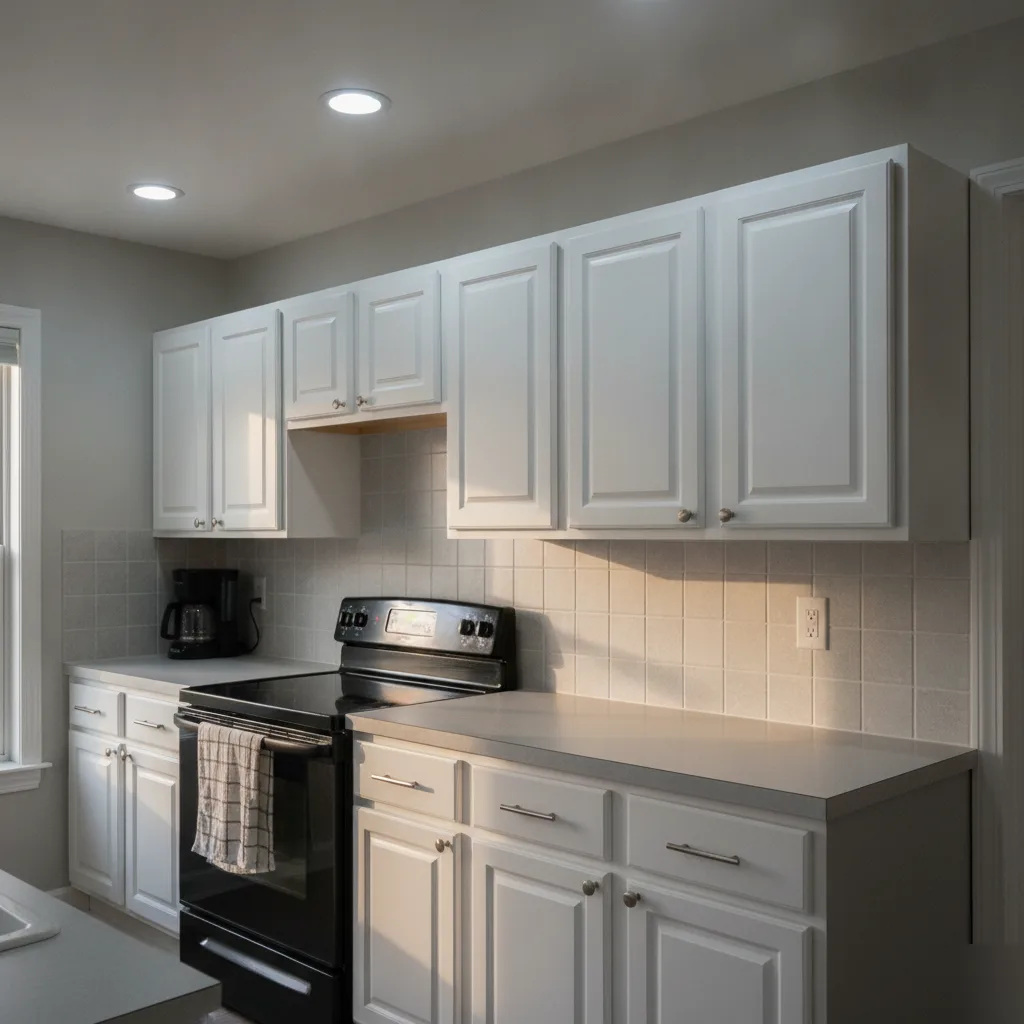
What Kitchen Cabinet Refacing Actually Involves
Kitchen cabinet refacing is not a full tear-out. That's the first thing most Leesburg homeowners get wrong when they call us.
We keep your existing cabinet boxes in place. The frames, the structure, everything built into your wall stays right where it is. What we replace are the parts you actually see every day: the doors, the drawer fronts, and the veneer or laminate that wraps the face frames. New hardware goes on too. When it's done, your kitchen looks completely different, but we didn't gut the room to get there.
Here's what the process actually looks like, start to finish:
- We inspect your cabinet boxes to confirm they're solid and worth keeping. Soft spots, water damage, or structural issues get flagged before anything starts.
- We remove all the existing doors, drawer fronts, and hardware.
- We apply new veneer or rigid thermofoil to the face frames, covering the old surface completely.
- New doors and drawer fronts go on, matched to whatever style and finish you chose.
- We install new hinges, pulls, and knobs, then do a final alignment pass so everything closes clean.
Most jobs in the Lansdowne area take two to three days. Not weeks. You're not living out of a cooler or eating takeout for a month while your kitchen is torn apart. That matters to people with families and schedules.
It happens constantly: someone calls thinking they need a full kitchen remodel, and after we look at their cabinets, refacing is the right answer. The bones are good. The layout works. They just want it to look like a different kitchen. Same footprint, fresh face.
One thing worth knowing: the quality of your existing cabinet boxes matters. Solid wood or plywood construction holds up well. A particleboard that's swollen from moisture is a different story. We'll tell you which situation you're in before we ever write up a job.
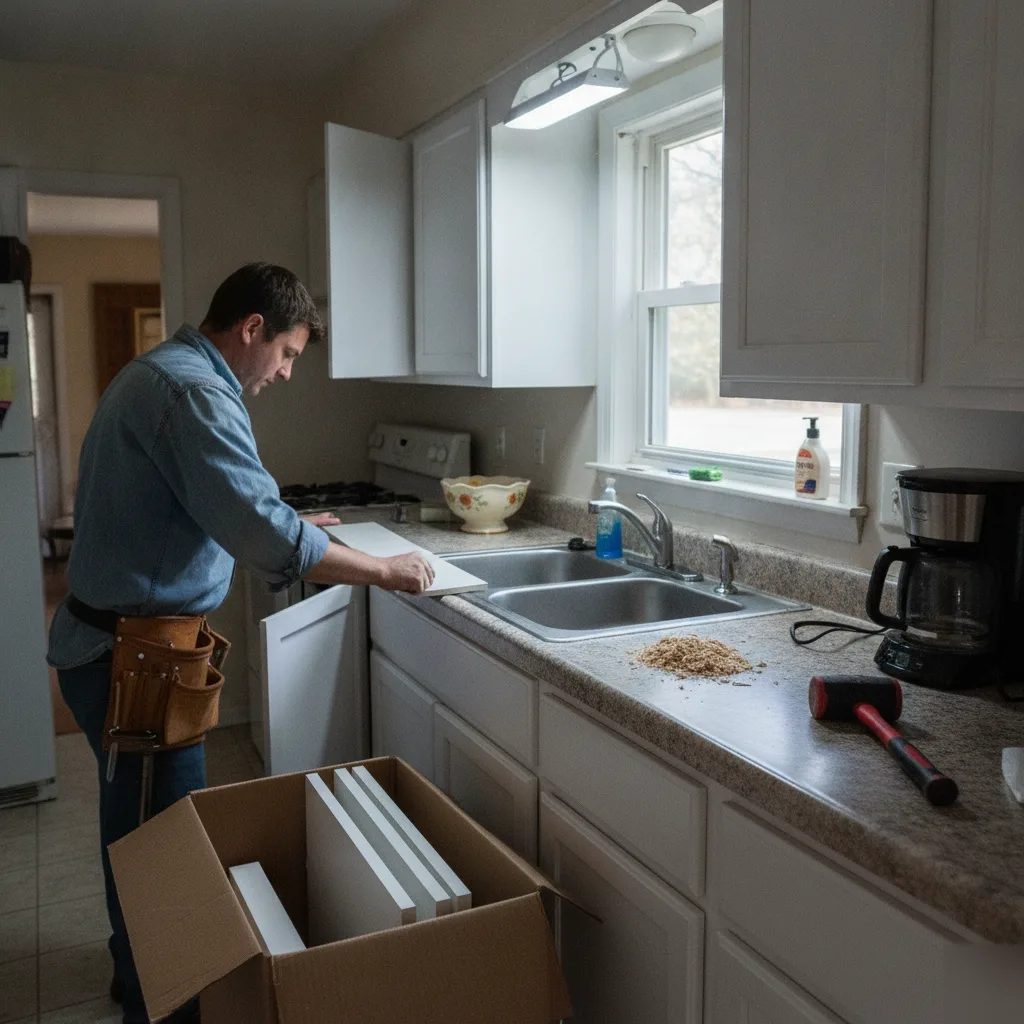
How Leesburg's Housing Stock Makes Refacing the Smart Call
Leesburg has a specific kind of home problem, and it shows up in kitchens constantly.
A huge portion of the homes here were built between the late 1980s and early 2000s. Those kitchens got oak. Lots of it. Heavy grain, orange undertones, the kind of finish that looked great in 1994 and now feels like a time capsule. We walk into homes near Potomac Station and across older subdivisions all the time and see the exact same setup. Solid box construction, good bones, perfectly functional layout. But the doors and drawer fronts have aged out of style while everything else in the house has moved on.
That's exactly where kitchen cabinet refacing makes sense. You're not replacing what works. You're replacing what shows.
We run into this constantly: homeowners who've already updated their countertops and appliances, but the cabinets still look like the original build. The mismatch is jarring. Refacing closes that gap without gutting a kitchen that's already functioning well.
Leesburg's historic district adds another layer. Some of those older homes near the downtown core have kitchen cabinetry that's actually worth preserving structurally. The frames are solid wood, built when lumber was cut differently. Tearing them out to replace them with new box cabinets would be a step backward. Refacing tends to be the right call in a few specific situations:
- Late-80s and 90s oak kitchens that are structurally sound but visually dated
- Post-renovation kitchens where counters and appliances no longer match the cabinet style
- Historic homes with original solid-wood frames worth keeping
- Tract homes where full replacement costs outweigh the home's resale ceiling
Refacing works best when the layout is right but the finish is wrong. And in Leesburg, that describes a lot of kitchens.
We've been doing this work here long enough to know the housing stock. We're not guessing at what you've got — we've seen it dozens of times in homes just like yours.
Discover professional home remodeling in Leesburg.
Signs Your Cabinet Boxes Are Ready for Refacing
Most homeowners in Leesburg call us after staring at their kitchen for months, knowing something's off but not sure what to do about it. Here's the thing: if your cabinet boxes are solid, you don't need to tear everything out.
From the experts at Kitchens Redefined, kitchen cabinet refacing works when the structure underneath is still doing its job. The doors look rough, the drawer fronts are dated, the finish is peeling. But the boxes themselves? Square, dry, and strong. That's the sweet spot.[1]
So how do you know if your boxes qualify? We check for a few specific things every time we walk into a kitchen:
- No soft spots or spongy wood near the sink base or dishwasher side panel
- Doors and drawers still close without forcing them
- The boxes sit level and haven't shifted away from the wall
- No visible mold, swelling, or water stains on the interior sides
- Hinges still have solid wood to grab onto, not just veneer holding on by habit
We see this pattern all the time. A homeowner in the Kincaid Forest area calls thinking they need a full kitchen remodel. We get there, open every cabinet, press along the base panels, check the corners, and the boxes are completely fine. The problem is purely cosmetic.
But if there's water damage under the sink, that's a different conversation. Soft, dark wood means the structure's compromised. Refacing over a damaged box is like painting over rot — it won't hold and it won't last.
Age alone isn't a disqualifier. Cabinets from the 80s and 90s were often built from solid plywood or particleboard that's held up surprisingly well. What matters is the condition, not the calendar year.
Not sure what you've got? That's actually the most common question we get.
Give us a call and we'll come take a look. A quick walkthrough tells us everything we need to know, and we'll give you a straight answer about whether your kitchen is a good fit for refacing or whether something else makes more sense.
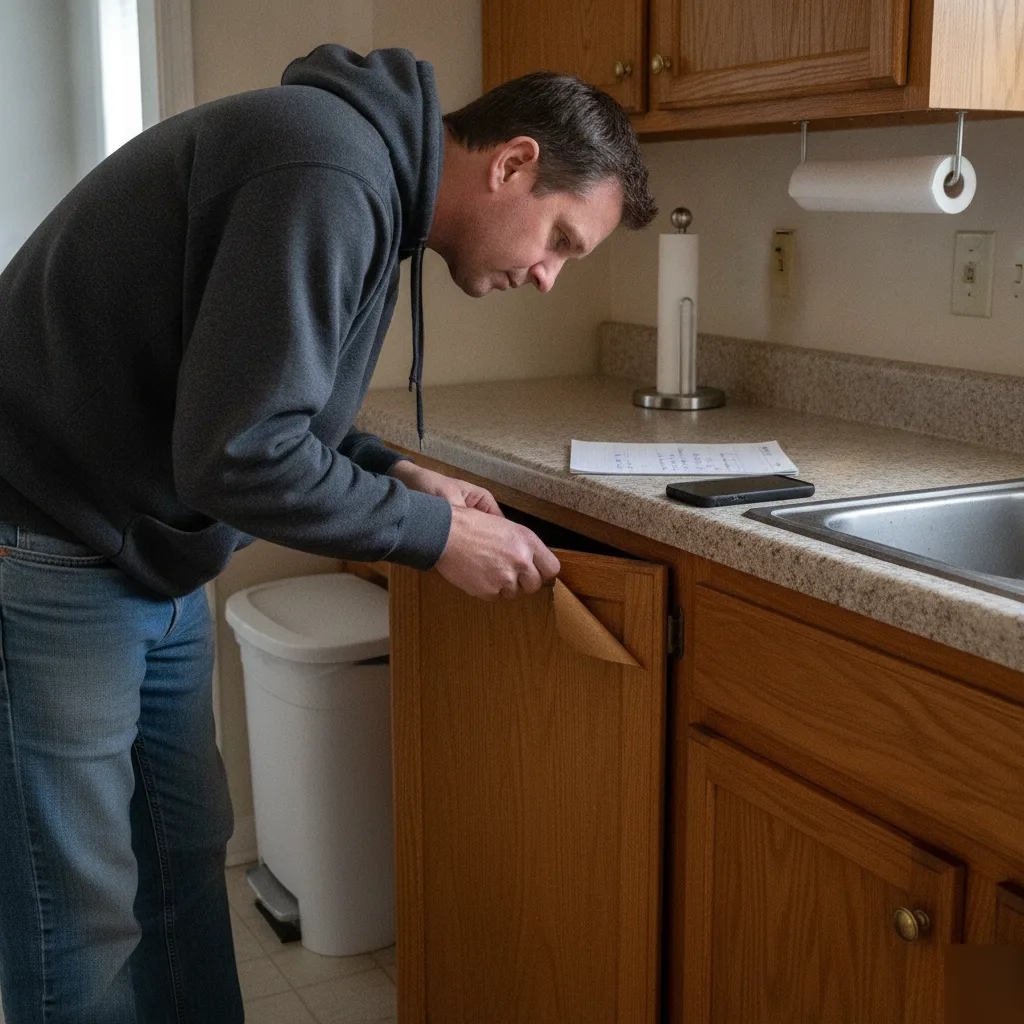
Ready to Get Started?
Not sure if your cabinet boxes are a good fit for refacing? We'll walk through your kitchen and give you a straight answer. Get your free consultation today.
Call (703) 956-8610The Refacing Process From First Visit to Final Hardware
Most homeowners in Leesburg are surprised by how fast this goes. We're not talking about a two-week kitchen tear-out. Kitchen cabinet refacing moves in a clear sequence, and once it starts, your kitchen isn't out of commission for long.
Here's exactly what happens, start to finish:
- Measure and material selection. We come out, measure every door, drawer front, and cabinet box face. You pick your veneer finish and door style right there in your kitchen, not from a catalog in some showroom across town.
- Surface prep. We clean and lightly sand the existing cabinet boxes. The frames need to be smooth and grease-free before anything sticks. We don't skip this step, ever.
- Veneer application. New veneer goes over the cabinet boxes. We cut it tight to every edge. No gaps, no bubbles.
- Door and drawer front installation. The new doors go up. This is where it starts looking like a completely different kitchen.
- Hardware installation. Pulls, knobs, hinges, all new. We drill clean, place them level, and make sure every door closes the same way.
- Final walkthrough. We go door by door with you. If anything's off, we fix it before we pack up.
We do this in homes all over Leesburg, including out in the Village at Leesburg area where a lot of the kitchens have older box construction that refacing handles really well. The bones are fine. They just need a new face.
One thing I tell every customer: the messiest part is prep day. After that, it's quiet work.
Most standard kitchens wrap in two to three days. Bigger kitchens with more doors and a lot of custom cuts might run four. But you're not eating takeout for a month.
With over a decade of remodeling work behind our team, we've refined this process to where there's very little guesswork. Every step has a reason. Nothing's done twice if we do it right the first time.
Get the kitchen of your dreams in Leesburg.
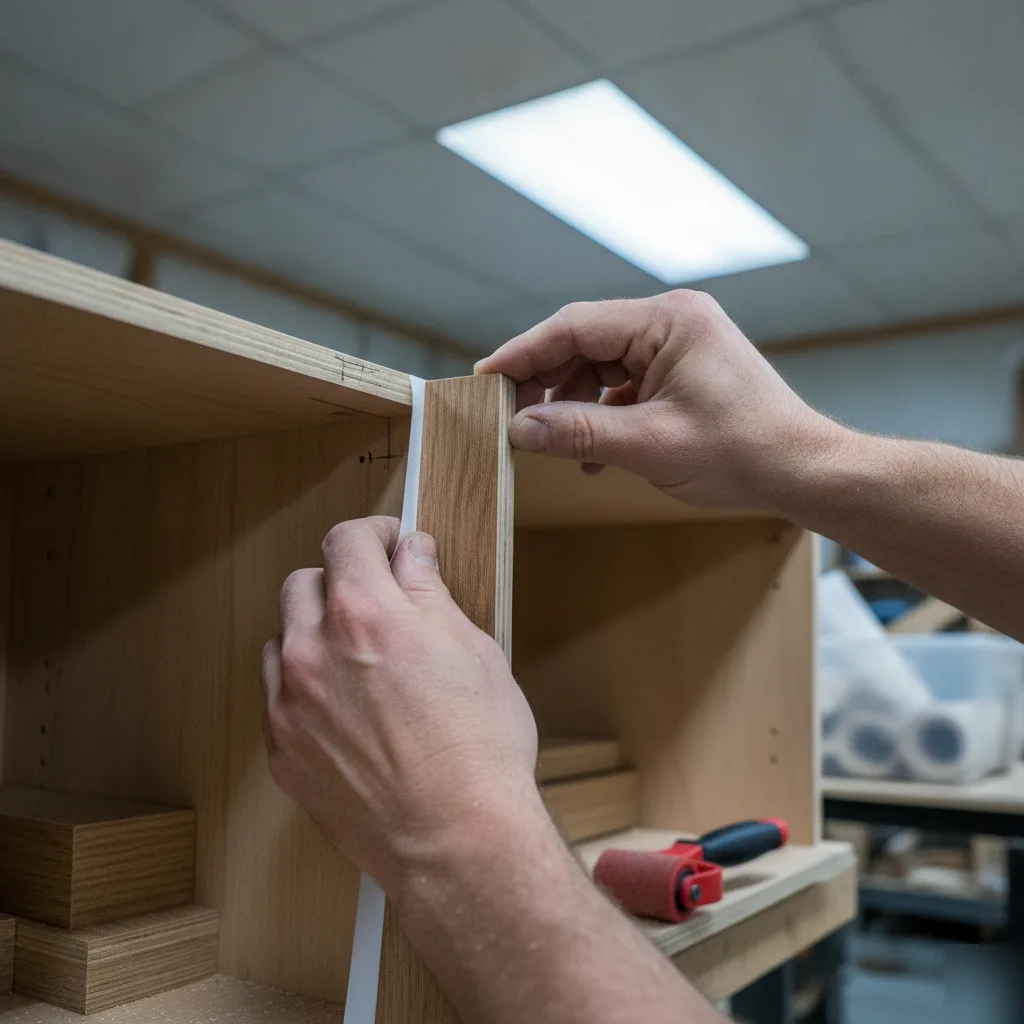
Material Choices That Hold Up in Northern Virginia Kitchens
Not every material works the same in every climate. Leesburg gets real humidity in the summer, cold snaps in winter, and kitchens here take a beating year-round. So the material you pick for your kitchen cabinet refacing project matters more than most people realize.
We've seen it happen more than once: a homeowner picks something based on looks alone, and two years later the edges are peeling because nobody talked to them about moisture resistance. That's a conversation we have upfront, every time.
Here's what we typically work with, and why each one fits certain kitchens better than others:
- Rigid thermofoil (RTF): Wraps tight around the door profile, handles humidity well, and gives you a smooth consistent finish without seams.
- Wood veneer: Real wood look and feel, takes stain beautifully, works great in kitchens that already have hardwood floors or natural finishes throughout.
- Laminate: Tough, easy to clean, holds up to heavy daily use. Families with kids in the kitchen every morning tend to love this one.
- Paint-grade MDF doors: Flat and smooth, perfect for a modern or shaker style, and they take paint evenly without the grain showing through.
For homes in the Lansdowne area, we've worked in a lot of open-concept kitchens where the cabinets are visible from the living room. In those spaces, wood veneer tends to win because it adds warmth that thermofoil can't match.
But in a busy family kitchen where the stove sees real use every night? Laminate or thermofoil is usually the smarter call. Easier to wipe down, less likely to show wear.
And the door style matters just as much as the material. A raised-panel door in thermofoil looks completely different from the same profile in veneer. We bring samples to your kitchen so you can see them under your actual lighting before anything gets ordered.
The goal is a finish that still looks good five years from now, not just on install day.
Frequently Asked Questions
How long does kitchen cabinet refacing take in Leesburg?
Will refacing work on the oak cabinets that came with my Leesburg home?
How do I know if my cabinet boxes are in good enough shape for refacing?
What happens if some of my cabinets are damaged but others are fine?
Does kitchen cabinet refacing make sense in a Leesburg historic district home?
My countertops and appliances are already updated — will refacing make the cabinets match?
Sources
[1] Kitchens Redefined. (2025, September 23). Hidden structural issues: What kitchen cabinet refacing can and can't fix. https://www.kitchensredefined.com/kitchen-cabinet-refacing-what-it-can-and-cant-fix/