
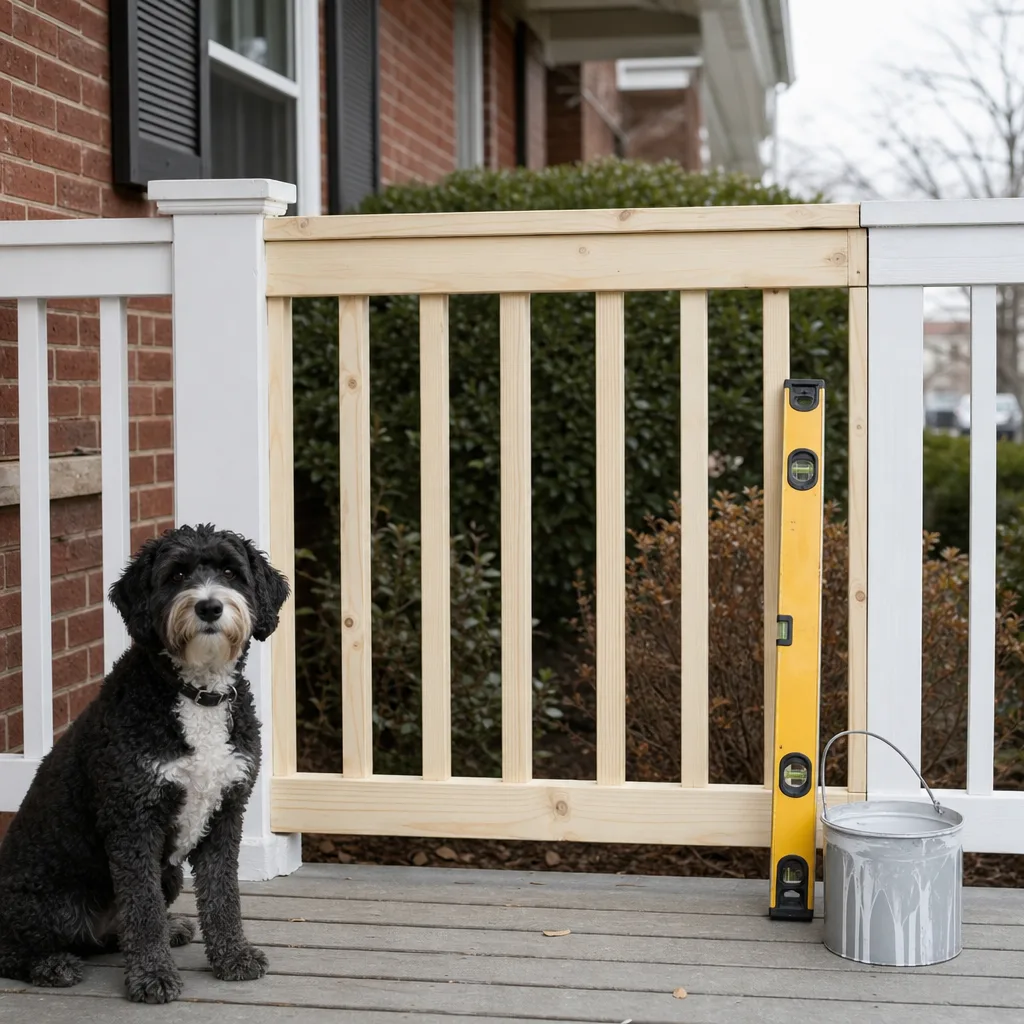
Cosmetic Wood Damage vs. Structural Problems
Cosmetic damage changes how wood looks. Structural damage changes what the wood can hold. If the board is still firm, solid, and in place, you're usually looking at a simpler general carpentry fix. If it's soft, sagging, moving, or pulling away, the problem likely goes deeper than the surface.
Most wood problems look scarier than they are. A scuffed stair tread, a dented door casing, or trim with peeling paint can make a room feel worn out, but none of that touches the parts of your house that carry weight. The trick is knowing which kind of damage you've got before you decide what to do about it.
Here's the simplest test: is the wood still doing its job? A cracked piece of baseboard that's still tight to the wall is a looks problem. A deck board that flexes when you step on it is a strength problem. One needs a patch or a new piece. The other needs someone to find out why it got weak.
- Scratches, dents, and gouges in trim, doors, or railings
- Peeling or flaking paint where the wood under it is still hard
- Small surface cracks or splits that don't spread or move
- Gaps at mitered trim corners from normal seasonal swelling and shrinking
- Loose nails or a piece of casing that's popped away but is still sound
Those are the kinds of things that usually stay cosmetic. You'll notice them, they'll bug you, but they won't get dangerous overnight.
- Wood that feels soft, spongy, or crumbles when you press on it
- Floors that sag, bounce, or slope in one spot
- Doors and windows that suddenly stick or won't latch
- Cracks that keep getting longer, or that show up in drywall near door corners
- Stair treads or deck boards that shift or flex under your weight
- Dark stains, swelling, or a musty smell around wood near water
These signs point to something below the surface. That could be moisture getting in, a joist or framing member that's weakened, or a support that's moved. Swapping out the visible board might make it look fine for a while, but if the cause stays, the new wood fails the same way.
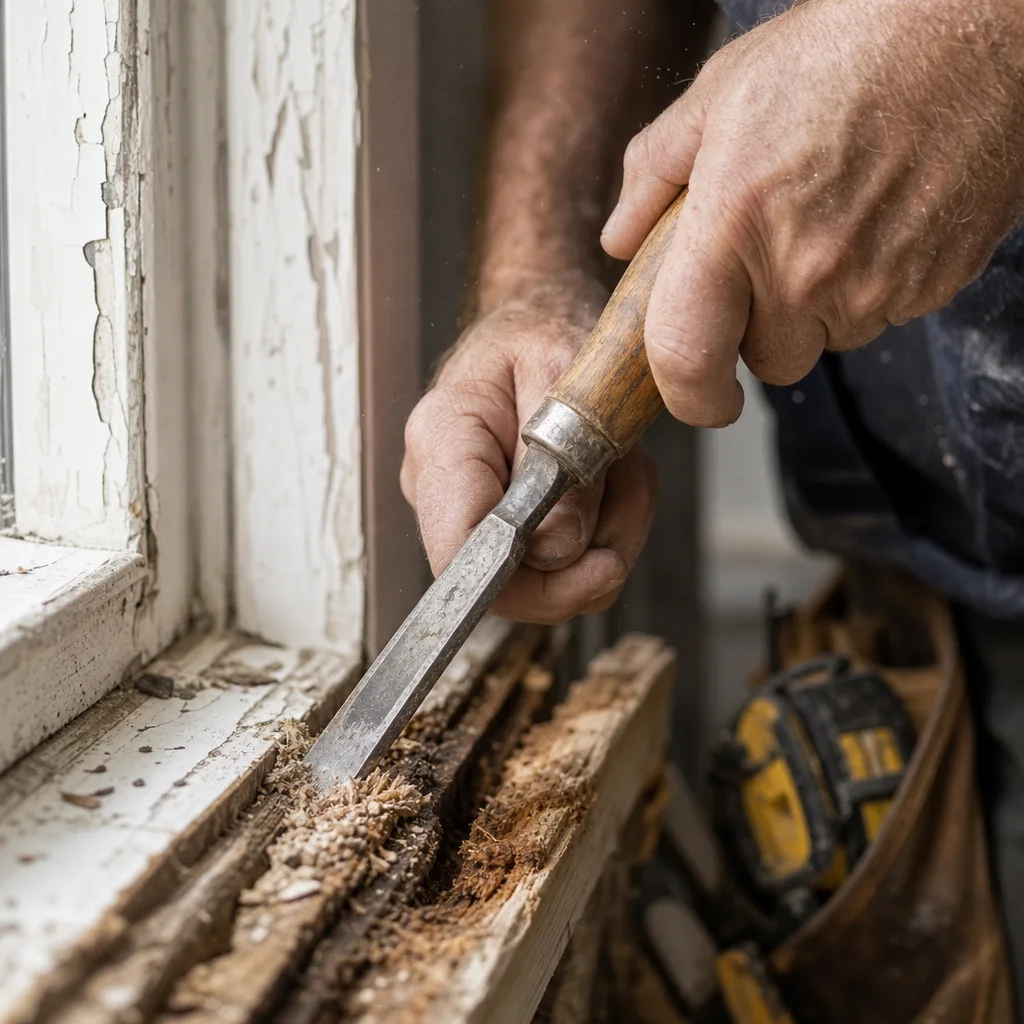
Picture this. You notice the paint bubbling on the exterior trim around a window. You scrape it, and the wood underneath is dark and soft. That's no longer a paint job. Water has been getting behind the trim, and the real question is how far it's traveled. Sometimes it's just the trim piece. Sometimes it's reached the sill or the framing behind it.
Water is the biggest reason cosmetic damage turns structural. Wood that stays wet softens and rots, and it often starts where you can't see it: behind fascia, under deck boards, at the bottom of door frames. If the damage is outside, it may tie into a bigger exterior job like fascia repair, siding repair, or deck repair, each of which we cover on its own page.
If you're not sure which side of the line you're on, that's normal. The good news is that finding out early almost always means a smaller, simpler fix than waiting until the board gives way.
When a Repair Needs a Permit or Historic District Review
Most small carpentry repairs don't need a permit. If you're swapping a cracked piece of trim, fixing a sticking door, or replacing a few worn stair treads with the same thing that was there, that's normal upkeep. The paperwork question comes up when a repair changes how the house is built or how it looks from the street. In Leesburg, it can also come up just because of where your house sits.
Here's a simple way to think about it. Replacing something with a matching piece is usually a repair. Changing the structure, the size, or the materials is usually a project, and projects are more likely to need sign-off.
- Repairing or replacing joists, beams, posts, or other framing that carries weight
- Building a new deck, or rebuilding a deck's frame, stairs, or railings
- Cutting a new opening in a wall, or making a door or window opening bigger
- Taking out or moving a wall
- Fixing damage that reaches past the surface into the structure behind it
Those are the jobs where you should check before anyone picks up a saw. Virginia uses a statewide building code. It's there to make sure framing, stairs, and railings are built to hold people safely. That's why the structural problems above can turn a quick fix into permitted work. Once the job moves from the board you can see to the framing behind it, the rules change.
Leesburg adds one more layer. The town has a historic district around its older core. There, changes to the outside of a building can need approval from the town's Board of Architectural Review.[1] That review is about how the house looks, not how strong it is. So it can apply even when no building permit is needed. Porches, trim, windows, doors, siding, and railings that face the street are the usual places it matters.
Picture an older home near downtown with rotted porch trim. Swapping it for a new piece in the same wood and the same shape is often handled very differently than switching to a new material or a different profile. Both fix the rot. Only one changes how the house looks, and that's the part the review cares about. If you're not sure whether your home is in the district, the town can tell you before work starts. That's a lot easier than finding out after.
Before you hire anyone for work that might need a permit or review, ask these questions:
- Does this job need a building permit, a historic district approval, both, or neither?
- Who's going to apply for it, you or me?
- Is the time to get approval built into the schedule?
- Will any inspections happen while the work is still open, before walls or decking get closed up?
A clear answer to those questions tells you a lot about who you're hiring. Skipping a needed permit can cause trouble later, like when you sell the house or file an insurance claim. Permitting assistance and historic home renovation are both services we offer, and each has its own page if your repair turns out to be part of a bigger job.
What Happens During a General Carpentry Estimate and Repair
A good carpentry estimate should leave you knowing three things: what's wrong, what it'll take to fix, and what happens if the damage turns out to be bigger once the old wood comes off. If you walk away fuzzy on any of those, ask again.
You can help before anyone shows up. Snap a few photos of the problem. Think back to when you first noticed it and whether it's gotten worse. Jot down any other small things that bug you, like a door that rubs or a loose stair rail. Fixing several small items in one trip often makes more sense than fixing them one at a time.
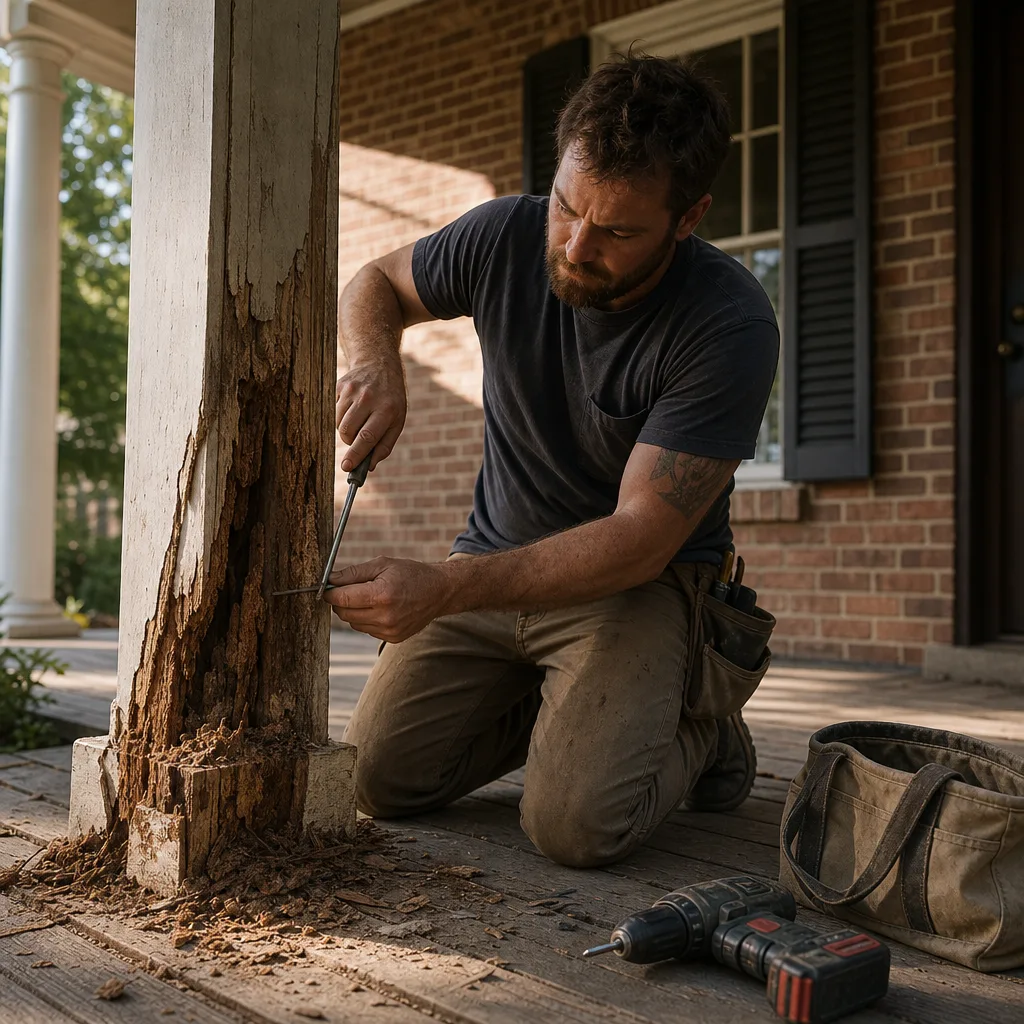
During the walk-through, a carpenter should do more than measure the board you're pointing at. Pressing on the wood around it shows how far softness goes. Looking above and around it, at gutters, flashing, a nearby window, or a leaky spot, helps find where water is getting in. That's the step that sorts a cosmetic fix from a structural one, and it's also where any permit or historic district question should come up.
In this trade, the price depends on a handful of things:
- How much wood has to come out, and whether rot has reached the framing behind it
- Whether the trim or molding is a stock shape or has to be matched to an older profile
- How hard the spot is to reach, like a second-story fascia or the underside of a deck
- Whether the new wood needs priming, painting, or staining to blend in
- Any permit or review time the job needs
Hidden damage is the big unknown. Nobody can see behind a board until it's off. So ask up front how the job changes if the damage is worse than expected, and how you'll be told before any extra work starts.
We offer free estimates for renovation projects, and they lay out the price, the project details, and the time to finish. If something doesn't make sense, ask. Our craftsmen are glad to explain.
On repair day, a solid job follows a simple order. The work area gets protected. The damaged wood comes out. Whatever's behind it gets checked. The cause, if there is one, gets dealt with, so the new piece doesn't rot the same way. Then the new wood goes in, gets fastened tight, and is sealed or finished so water can't sneak back behind it.
When it's done, check the work yourself. Press on the new wood and the wood around it. It should feel hard and solid. Doors should swing and latch without rubbing. Stair treads and deck boards shouldn't flex or creak under your weight. Joints should be tight, with no gaps where water could get in. If something feels off, say so while the crew is still there.
General carpentry in Leesburg.
Questions to Ask Before Hiring a Carpenter
You already know to ask about permits and what happens if the damage runs deeper. The questions below fill in the rest. Their answers tell you whether this person will fix the cause or just make the problem look nice for a season.
- Do you hold the license Virginia requires for a job this size? You can look a license up with the state before you sign anything.
- Do you carry liability insurance and workers' comp? If someone gets hurt on a ladder at your house, you don't want that landing on you.
- Can I get the scope in writing? It should name each piece being replaced, the material, and how it'll be finished.
- Who's doing the work? Will it be the person giving the estimate, their own crew, or a subcontractor?
- What wood will you use, and how will it match? Outdoor spots need lumber made to handle weather. Older trim may need a custom profile to blend in.
- How do you handle old paint? Many older homes have lead paint under newer coats, so cutting or sanding it needs safe methods.
- What's the payment schedule? A small deposit is normal. Paying most of the bill before work starts isn't.
- What does cleanup look like? Ask who hauls away old wood, nails, and scraps, and whether nearby floors and plants get covered.
The lead paint question matters more in Leesburg than in a lot of newer suburbs. The older homes around the historic core often have many coats of paint on their trim, porches, and window casings. Scraping or cutting that wood carelessly can spread dust you don't want in your house. A good carpenter will bring it up before you have to.
Listen to how they answer, not just what they say. A carpenter who hedges on insurance or won't put the scope in writing is telling you something. So is one who can't explain why your board rotted in the first place. Remember the trim and window example from earlier. The right person talks about the gutter, the flashing, or the gap that let water in. They don't just talk about the new piece of wood.
Watch out for a few red flags too. One is a price given over the phone before anyone has pressed on the wood. Another is pressure to decide on the spot. A third is a plan to cover soft wood with new trim or caulk instead of cutting it out. Those shortcuts save time on day one and cost you later.
It's also fair to ask for photos of similar repairs or the names of past customers. A carpenter who's proud of their work won't mind. You're welcome to ask us any of these questions, and we'll give you straight answers.
Have a repair that needs a second opinion? Call (703) 956-8610.
Call (703) 956-8610Repairs You Can Handle Without a Professional
A lot of wood problems don't need a carpenter. If the wood is firm when you press on it and the issue is only on the surface, a screwdriver, some filler, and a free afternoon will often do the job. We'd rather tell you that now than have you pay for a visit you didn't need.
Here are fixes most homeowners can handle on their own:
- A door that sags or rubs at the top corner. Tighten the hinge screws first. If a screw just spins, its hole is stripped. A longer screw that bites into the wood frame behind the jamb often fixes it.
- Nail holes, small dents, and light scratches in trim. Press in some wood filler, let it dry, sand it smooth, and touch up the paint.
- Thin gaps where trim meets the wall or another piece of trim. A bead of paintable caulk closes them and makes the room look finished again.
- Baseboard or door casing that's popped loose but is still solid. Tap it back into place and set a finish nail or two to hold it.
- Cabinet doors that hang crooked or won't close flush. Most cabinet hinges have small adjustment screws that move the door up, down, or sideways.
- Drawers that stick. Rubbing a little wax or a dry bar of soap on the wooden runners often lets them slide again.
- A squeaky stair tread or floorboard. Hardware stores sell kits made to quiet squeaks from above, and they're simple to use.

Some problems are best left alone for a while. Gaps at trim corners often open up when the air is dry and close again when it's humid. If you caulk them at their widest, the caulk can bunch up or crack later. Watch the gap through a season. If it keeps coming back in the same spot, then it's worth filling.
Here's an easy way to check your own work. Say you tighten the hinges on a door that rubs, and it swings fine. Great, you're done. If it starts rubbing again a week later, or you spot new cracks in the drywall above the door, the hinges were never the real problem. That's one of the deeper warning signs covered earlier on this page. More screws won't fix it.
Stop and call someone if any of these happen:
- The wood feels soft or crumbles once you start working on it.
- The same fix keeps failing in the same spot.
- The repair is on stairs, railings, or deck parts that people put their weight on.
- You'd need to work high up on a ladder, like on second-story trim or fascia.
- The house is older and the fix means sanding or scraping old paint, which brings in the lead paint concern covered above.
- The job grows into replacing framing or changing an opening, which is where permits come in.
If your easy fix holds and the wood stays firm, you've just saved yourself a service call. That's a good outcome, and it's the right one for a lot of small problems around the house.
Trusted Leesburg contractors, honest work.
Frequently Asked Questions
How do I know if my trim damage is from a one-time leak or an ongoing problem?
Can I fix popped trim or a loose baseboard myself, or does it need a carpenter?
Why does my stair tread or deck board feel bouncy even though the wood looks fine on top?
Sources
[1] Town of Leesburg, Virginia. Old & Historic District, Board of Architectural Review. https://www.leesburgva.gov/departments/community-development/historic-preservation/old-historic-district