
Decide If This Is a Repair Job or a New Installation Project
If the damage is small and the board around it is still firm and dry, you likely need a repair, not new drywall installation. If the panels are soft, sagging, moldy, or missing because a room is being built or opened up, you're looking at a new installation. Getting this right up front keeps you from paying for more work than you need, or patching something that won't hold.
Start by pressing gently on the wall or ceiling around the problem spot. Solid board that just has a hole, crack, or dent in it can almost always be patched. Board that feels soft, crumbles, or bows when you push on it has lost its strength. No amount of patching will bring it back.
A repair usually makes sense when you see:
- A doorknob hole, a dent from moving furniture, or a few anchor holes from old shelves
- Nail or screw heads popping through the paint
- Thin cracks along seams or above door and window corners
- An old water stain on a spot that's dry and firm, where the leak has already been fixed
New installation is the better path when you see:
- Ceiling panels that sag between the framing
- Board that got soaked and now feels soft, smells musty, or shows mold
- Large sections that had to be cut open for new wiring, plumbing, or ductwork
- Bare studs in a space you're turning into living area, like a basement, garage, attic, or new addition
Water damage is the gray area. Picture a ceiling stain under an upstairs bathroom. If the leak is fixed, the stain is dry, and the board is still hard, a patch and fresh paint may be all you need. If the stain keeps growing or the board feels spongy, the soaked section should come out and be replaced. Patching over wet or weak boards just hides the problem until it shows up again.
Here's the honest part. If you've got a few small holes and you're handy, a tub of spackle, a putty knife, and some sandpaper will often do the trick. You don't need to hire anyone for that. It's when the damage is bigger, sits on a ceiling, or needs to blend into a large smooth wall that a pro's finish starts to matter.
The two jobs are also priced differently across the trade. Small repairs are often billed as a minimum visit or a flat job charge. The setup, drying time, and return trips for sanding and paint take about the same effort whether the hole is big or small. New installation is usually figured by the wall and ceiling area, the ceiling height, how smooth a finish you want, and whether old board has to be torn out first. Before you hire anyone, ask which kind of job they're quoting and what's included, like hauling away debris, texture matching, and paint.
Sometimes a repair quietly turns into a bigger project. Once a wall is open, it can be the right time to move a doorway, add outlets, or finish the room the way you've always wanted. Because our team also handles basement finishing, bathroom remodeling, and painting services, we can help you decide whether to fix the spot or plan the whole space, and keep it all with one crew you already know.
Match Your Project Type to the Right Drywall Scope
The room you're working on decides more than how many sheets of drywall go up. It shapes which board belongs on the walls, what has to happen before the first panel is hung, and how much finishing it'll take to look right. Here's how the scope changes across common projects.
Basements. Concrete walls and floors hold moisture, so a basement needs framing and insulation before any board goes up. Moisture-resistant board makes sense in damp spots, and panels shouldn't sit right on the slab, where they can wick up water. Ducts, pipes, and beams overhead often need to be boxed in, which adds framing and extra corners to tape and finish. Our team also handles basement finishing, so the drywall can be planned along with the flooring and lighting instead of guessed at.
Garage conversions. The wall between a garage and a house usually calls for fire-rated board. Turning a garage into living space brings its own list of requirements for insulation, framing, and finish. That's a good reason to check the rules for your exact project before work starts, not after the walls are closed up.
Attics. Sloped ceilings, short knee walls, and odd angles mean more cuts and more seams than a square room. Every seam and corner has to be taped and smoothed, so an attic can take more finishing time than its size suggests. Insulation behind the board matters a lot up there, since attics can run hot in summer and cold in winter.
Bathrooms and kitchens. Bathrooms do better with moisture-resistant board on the walls and ceiling. Inside a shower or behind tile in a wet area, regular drywall isn't the right backer, so that spot needs a board made for tile and water. In kitchens, much of the wall ends up hidden behind cabinets, but the open stretches around windows and the backsplash still need a clean finish.
Additions and new rooms. Here, everything is new. The whole space gets hung and finished from bare framing, and the new walls should blend with the rest of your home, including any texture on older ceilings and walls.
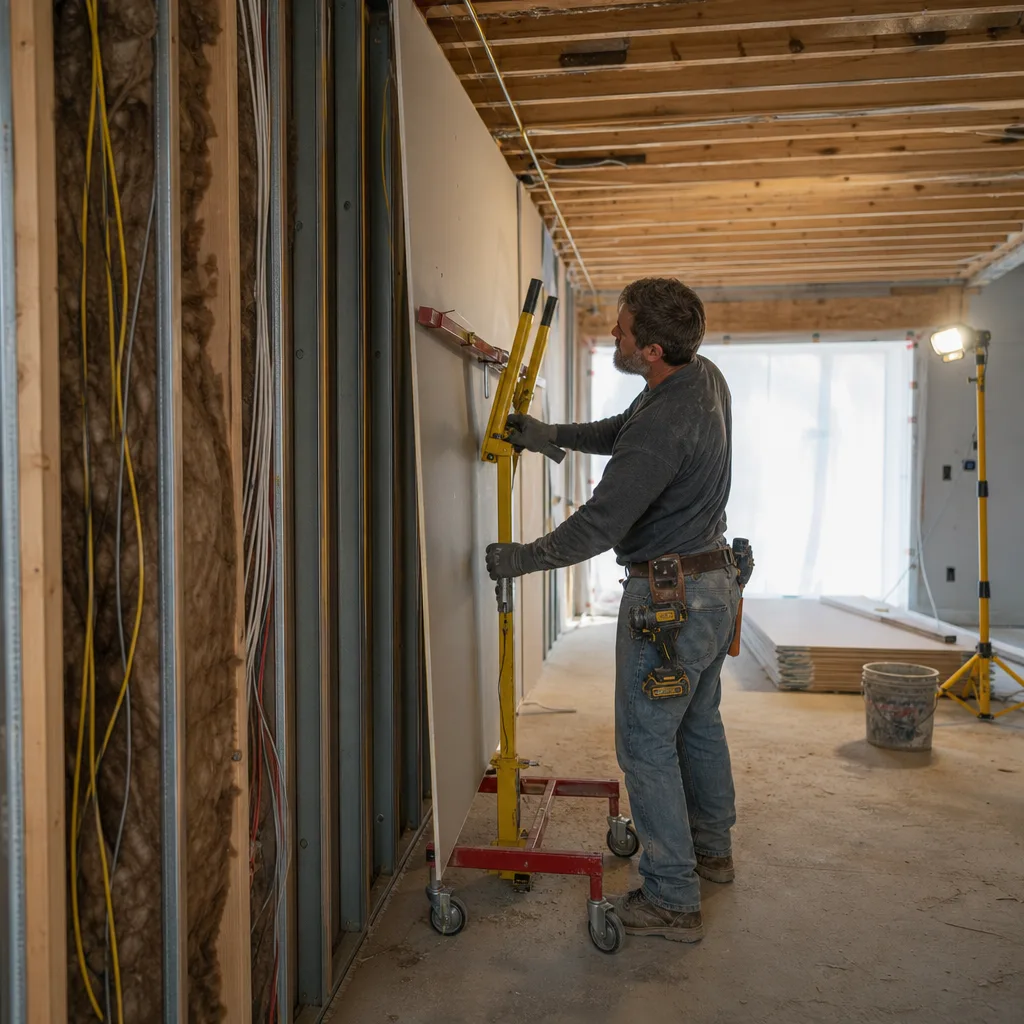
No matter the room, think about how smooth you want the walls to be. Big windows, open floor plans, and glossy paint show every bump and seam, so those walls need extra coats and more careful sanding. A garage, closet, or utility room can get by with a simpler finish. When you collect quotes, ask what level of smoothness each one includes so you're comparing the same thing.
Bigger jobs like finishing a basement, converting a garage, or building an addition often need a permit, and inspections may be needed before the walls are closed. Ashburn sits in Loudoun County, so that's where those permits are handled. A framing, wiring, or plumbing inspection that comes after drywall is up can mean cutting into brand-new walls, so the order of work really matters. We offer permitting assistance and project management to help keep those steps lined up.
Because we handle interior and exterior work, from painting services to flooring to windows, the drywall scope can be planned around the rest of your project. That's part of being your home's best friend: looking at the whole room, not just the wall in front of you.
Drywall installation in Ashburn.
Confirm Licensing and Permits Before Work Starts
Before anyone hangs a single sheet, check two things: that the contractor is licensed in Virginia, and that everyone agrees on who's handling the permit. It takes a few minutes, and it protects you from the headaches that start when either one gets skipped.
Virginia licenses contractors, and every licensed company has a number you can look up with the state, according to Loudoun County.[1] A real license means the business has met the state's requirements to do the work. It also gives you somewhere to turn if a job goes wrong. If a contractor can't give you a number, or dodges the question, that tells you plenty.
Here's ours, so you don't have to ask. Salty Dog Remodeling holds a Virginia Class A Contractor license, number 2705175838. We're veteran-owned, and we were named Best of Loudoun in 2023.
Most patch jobs won't need a permit. Bigger projects like a basement, garage conversion, or addition often will, as we covered above. When a permit is needed, the most important question is simple: whose name goes on it?
Some contractors ask the homeowner to pull the permit. That can sound like a small favor, but it means you're the one on the hook for meeting the rules and scheduling inspections. If the work fails an inspection, it's your problem to sort out. When the contractor pulls the permit, they're taking responsibility for doing the job to code.
Before you sign, ask each contractor these questions:
- What's your Virginia contractor license number?
- Does my project need a permit, and who will apply for it?
- Which inspections have to happen before the drywall goes up, and who schedules them?
- Can you show me proof of insurance?
- What's included in your written quote, like tear-out, debris hauling, the finish level, texture matching, and paint?
Get the answers in writing. A clear quote that spells out the scope, the finish level, and who handles the permit keeps everyone on the same page. It also makes it easy to compare one quote against another.
Watch for a few warning signs. A contractor who offers a lower price if you skip the permit is asking you to take on the risk. The same goes for anyone who wants most of the money up front, or who won't put the scope on paper. Unpermitted work can come back to bite you later, like when you sell your home and a buyer's inspector starts asking questions.
This is where having one team for the whole job really helps. Our permitting assistance and project management services keep the paperwork, inspections, and drywall schedule moving in the right order. You won't be stuck chasing down three different people. Whether you need a quick repair or a full room built from bare studs, you'll know exactly who's responsible from the first day to the final coat of paint.
Know What Drives Drywall Cost Up or Down
Two quotes for the same room can land far apart. That doesn't always mean one contractor is padding the bill. More often, it means they're pricing different work. Once you know what moves the number, it's a lot easier to tell a fair quote from a lowball one that'll grow later.
Here are the things that push the cost up:
- Specialty board. Moisture-resistant board for bathrooms, fire-rated board for a garage wall, and tile backer for showers all cost more than standard panels. They're worth it where they belong, but you don't need them in a bedroom.
- Ceilings. Hanging board overhead is slower and harder than hanging it on walls. It often takes extra hands or a lift, and every seam has to be smoothed while you're looking straight up at it.
- Tricky shapes. Sloped attic ceilings, arches, soffits, and boxed-in ducts mean more cuts, more corners, and more seams to tape. A small room full of angles can take longer than a big square one.
- Hard access. Full sheets have to get into the room somehow. Tight stairways, narrow basement doors, and third-floor spaces can mean smaller panels, more seams, and more labor.
- Matching old walls. Blending new board into an older textured ceiling or wall takes skill and patience. The more texture there is to match, the more time it takes.
- What's behind the old board. When walls come down, you sometimes find wet insulation, rotted framing, or old wiring that has to be fixed before the new board goes up.
That last one is the cost surprise that catches folks off guard. Ask each contractor how they handle it. A good answer sounds like this: they'll stop, show you what they found, and explain the fix before doing any extra work. Nobody should be adding charges without talking to you first.
Some things can bring the cost down:
- Fix leaks first. A new board over an active leak just means paying twice.
- Pick the finish level by room. Save the extra-smooth finish for the walls that need it, and go simpler in closets, garages, and utility rooms.
- Clear the space. Moving furniture and wall hangings yourself saves time on the clock.
- Bundle the work. If you're also planning paint, flooring, or a bigger remodel, doing it together means one setup, one cleanup, and fewer return trips.
Bundling is where working with one full-service team pays off. When our crew handles the drywall along with painting services, flooring, or basement finishing, the steps line up in the right order. You aren't paying three companies to show up, protect your floors, and clean up after themselves. That's part of being your home's best friend: helping you spend your budget on the work that shows, not on wasted trips.
When you compare quotes, line up these factors side by side, along with the scope items we covered earlier. The quote that spells out board type, ceilings, and how surprises get handled is usually the one that holds up.
Know When a Small Patch Is All You Need
Plenty of drywall problems never need new boards. If the damage is small and the wall behind it is sound, a patch is the right fix. Spending more than that would just be paying for work your home doesn't need.
Size is a good first guide. Here's roughly how patches break down:
- Pinholes and small nail holes: a dab of filler, a light sanding, and a touch of paint.
- Holes up to a few inches, like a doorknob dent: a self-sticking mesh patch covered with a few thin coats of joint compound.
- Holes bigger than your hand: cut the damage into a neat square, add a strip of wood behind it for support, and screw in a small piece of new board.
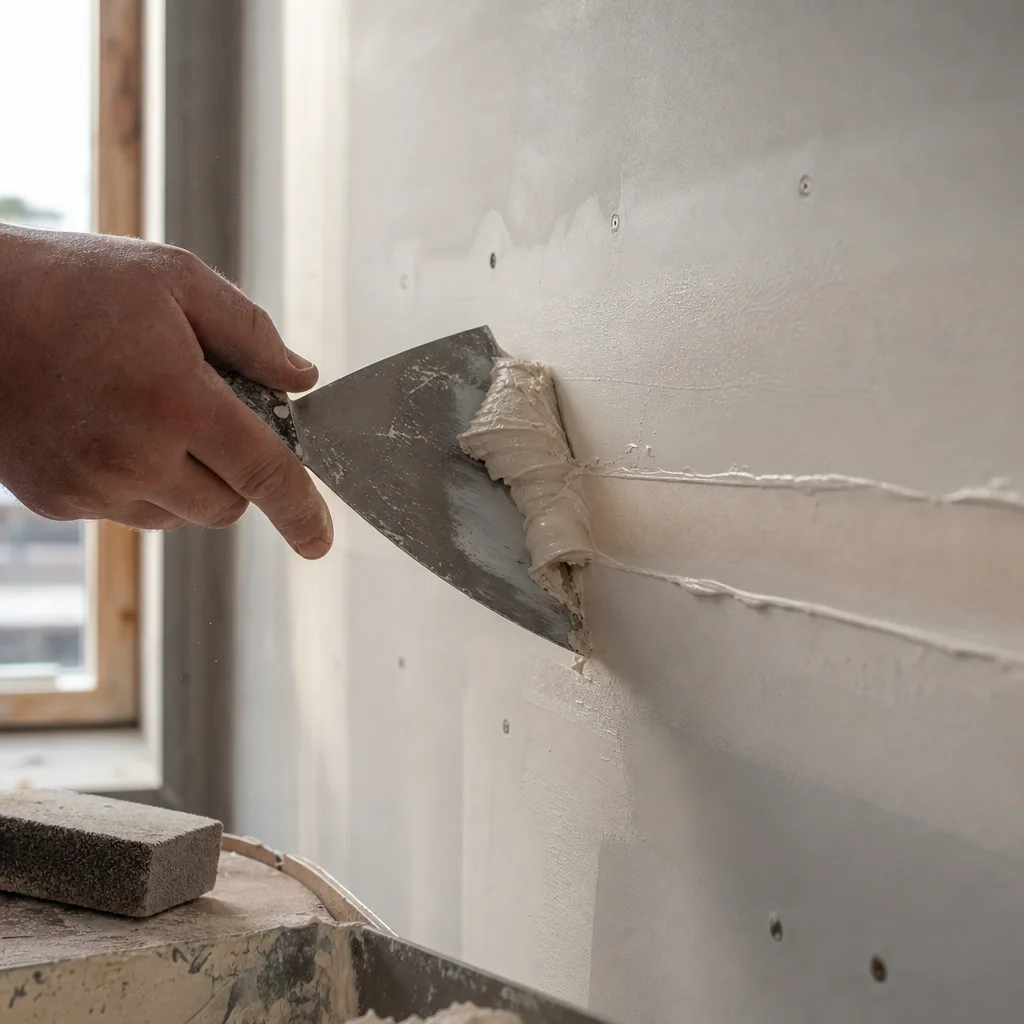
Even that last one is far from a full install. You're replacing a piece the size of a dinner plate, not a whole wall.
Sometimes the right move is to wait. If your home is fairly new, the wood framing keeps drying and shifting for the first year or two. That's what causes many nail pops and hairline cracks over doors and windows. Fix them too soon and they can come right back. It often makes sense to let a full year of seasons pass, then patch everything at once.
Timing your patches around paint helps too. If you're planning to repaint a room next spring, there's no rush to fix a few small dings today. Mark them, live with them for a while, and handle them when the room is cleared for painting. That way you only prep and paint once.
A patch does have limits. Keep an eye out for these signs that a small fix isn't holding:
- The same crack opens again in the same spot after you've filled it more than once.
- Tape along a seam starts to bubble, peel, or lift.
- A patched spot feels softer than the wall around it.
- Cracks keep getting longer or wider over time.
A crack that keeps coming back usually means something behind the wall is still moving. It's worth finding out why before you patch it a fourth time.
Ceilings are the one place where small jobs get tricky. Working overhead is tiring, wet compound drips, and light from a window can show every ridge. A ceiling patch is still small work, but it's the spot where many homeowners decide their time is worth more than the savings. On walls, though, if you can follow the steps and don't mind a little sanding dust, you can handle most small patches yourself.
General Contractor Services in Leesburg.Frequently Asked Questions
What kind of contractor should I hire to install drywall?
What mistakes should I watch out for during a drywall job?
Is drywall called something different anywhere else?
Sources
[1] Loudoun County, Virginia. Hiring a Contractor. https://www.loudoun.gov/5208/Hiring-a-Contractor