Signs a Deck Needs Staining Versus Repair
Stain is protection, not a repair. If your deck's wood is solid and the problems are on the surface, like fading, graying, or water soaking in, staining is the right move. If boards are soft, loose, cracked deep, or the frame feels shaky, that wood needs to be fixed before any stain goes on.
Here's the simple way we think about it. Stain works on top of good wood. It helps keep out water and sun so the wood lasts longer. But it can't hold a rotten board together or tighten a wobbly railing. So before you pick a color, it helps to know which kind of problem you're looking at.
These signs usually mean your deck is ready for stain:
- The color has faded, or the wood has turned a dull silver gray.
- Water soaks into the boards after rain instead of beading up on top.
- The old stain is wearing thin in busy spots, like the steps or near the door.
- You see small surface checks or light splinters, but the boards still feel firm underfoot.
- The deck looks tired, but nothing moves, bends, or feels soft when you walk on it.
These signs point to repair work first:
- Boards feel spongy, soft, or give a little when you step on them.
- You see dark, crumbly spots, especially where boards meet posts or the house.
- Cracks run deep or split a board end to end.
- Nails or screws are popping up, or boards have cupped and lifted.
- Railings wiggle, stairs feel loose, or the deck sways when people move around on it.
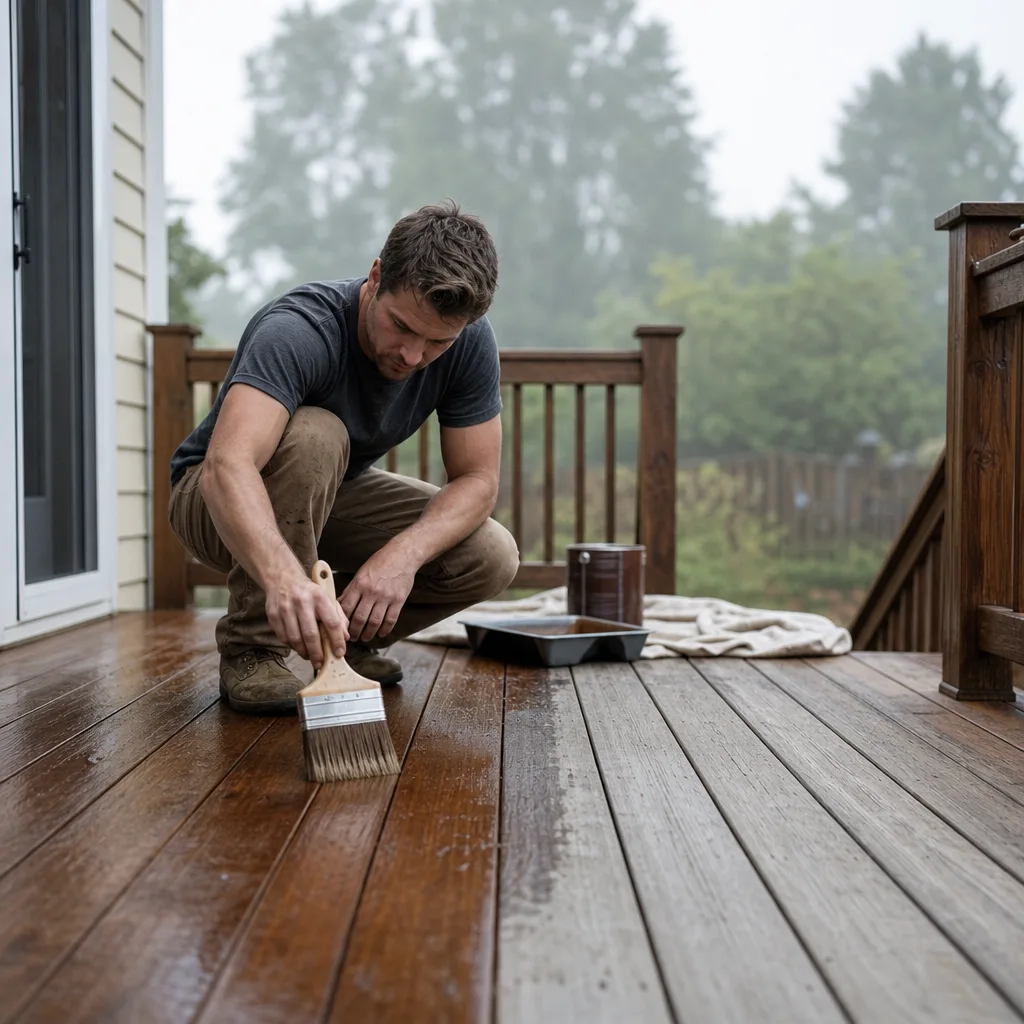
A lot of decks fall somewhere in the middle. Picture this: you're out on your deck in spring, and most of it just looks faded. But two boards by the grill feel a little soft, and one stair tread rocks when you step on it. That's not a reason to give up on the whole deck. It just means those few spots get fixed first. Then the full deck gets stained so the new and old wood are protected together. Staining over a bad board only hides the problem for a while, and it keeps getting worse underneath.
If the damage is spread across the frame, the posts, or most of the boards, a fresh coat won't be enough. That's when our deck repair or deck replacement services make more sense. Because we handle both the wood work and the finish, you don't have to coordinate two different crews to get your deck back in shape.
We'll also be straight with you. Sometimes a deck doesn't need anything yet. If your stain still looks even, water still beads up, and the boards are solid, you can wait. A good rinse to clear off dirt and leaves may be all it needs this year. According to Home Depot, brand new pressure-treated wood often needs time to dry out before it will stain well, too.[1] Staining too soon or too often won't help, and we'd rather you spend that money when it does your deck some good.
When Staining Is the Right Call and When It Isn't
Once you know your wood is solid, the next question is whether stain fits your deck and your plans. For most wood decks in Ashburn, it does. Stain is the right call when you like the look of real wood and you're happy to give it some care every few years. It isn't the right call for every deck, though.
Staining makes the most sense when:
- Your deck is real wood, like pressure-treated pine or cedar, and you want to keep it.
- It's bare, weathered, or already has stain on it. Stain soaks into the wood, so it goes on well over wood that's been stained before.
- You'd like a little color or warmth without hiding the grain.
- You plan to stay in your home for a while and want the deck to last.
Stain isn't the answer in a few cases. If your deck is composite, it doesn't need stain. Most composite boards aren't made to take it, and a good cleaning is usually all they need. If your deck was painted or coated with a thick film, stain can't soak through that layer. The old coating has to come off first, or you stick with paint. Paint gives full coverage, but it can peel and chip on a floor that gets walked on and rained on.
Sometimes the honest answer is that you're tired of keeping up with wood. That's a fair feeling. If your deck is near the end of its life anyway and you'd rather not stain again, it may make sense to look at our composite decking service when it's time to rebuild. We'll walk you through both paths and let you choose what fits your home and budget.
Timing matters just as much as the choice itself. Northern Virginia gets hot, humid summers, plenty of spring and summer storms, and cold winters with freeze and thaw. Stain needs dry wood and a few dry days to soak in and set. That's why late spring and early fall are usually the easiest times to stain here. The air is mild, the sun isn't baking the boards, and the pollen and summer storms are easing off.
Staining at the wrong time can waste a good coat. Stain put on in strong midday sun can dry before it soaks in, and that can leave lap marks. Rain too soon after can wash it out or leave spots. Cold, damp days can keep it from curing right. Every product has its own temperature and weather limits on the label, and those limits are worth following closely.
Here's what that looks like in real life. Say you want your deck ready for a big summer cookout. Booking the work in May gives the stain time to cure before the heat and the crowd show up. If you wait until July, you're working around heat waves and pop-up storms. The job can still get done, but there are fewer good days to do it.
As a Virginia Class A Contractor, we look at the whole deck and not just the color. Then we'll tell you plainly whether stain is the right fit and when the weather gives it the best chance to last.
What the Deck Staining Process Involves
Most of a good stain job happens before any stain goes on. The color is the part you notice. The prep is the part that decides whether that color lasts a few seasons or starts peeling by next summer. Here's what the work looks like from start to finish, so you know what to expect and what to look for:
- Check the wood and fix what needs it. Any soft boards, loose stairs, or popped nails get handled first, for the reasons covered above.
- Clean the whole deck. A deck cleaner and a careful wash take off dirt, pollen, mildew, and worn-out stains. If the wash is too rough, it can tear up the wood fibers and leave the surface fuzzy, so the goal is clean wood, not blasted wood.
- Brighten the wood if it needs it. Some cleaners can leave wood looking dark or blotchy. A brightener helps even out the color, so the stain goes on more evenly.
- Let it dry all the way. This step can't be rushed. A simple test is to sprinkle a little water on a board. If it soaks in, the wood is ready to drink in stain. If it beads up, it needs more time or more cleaning.
- Sand rough spots. Raised grain, splinters, and fuzzy patches get a light sanding so the deck feels smooth under bare feet.
- Protect what's around the deck. Siding, doors, plants, and the ground below get covered so stain only lands where it should.
- Apply the stain. Stain goes on a few boards at a time, along the full length of each board. That helps prevent the lap marks you get when wet stain overlaps stain that has already dried. Any extra that doesn't soak in gets worked in or wiped off, because stain that sits on top stays tacky and wears off fast.
- Give it time to cure. Each product lists how long to wait before people walk on it and before furniture goes back. Following that label matters.
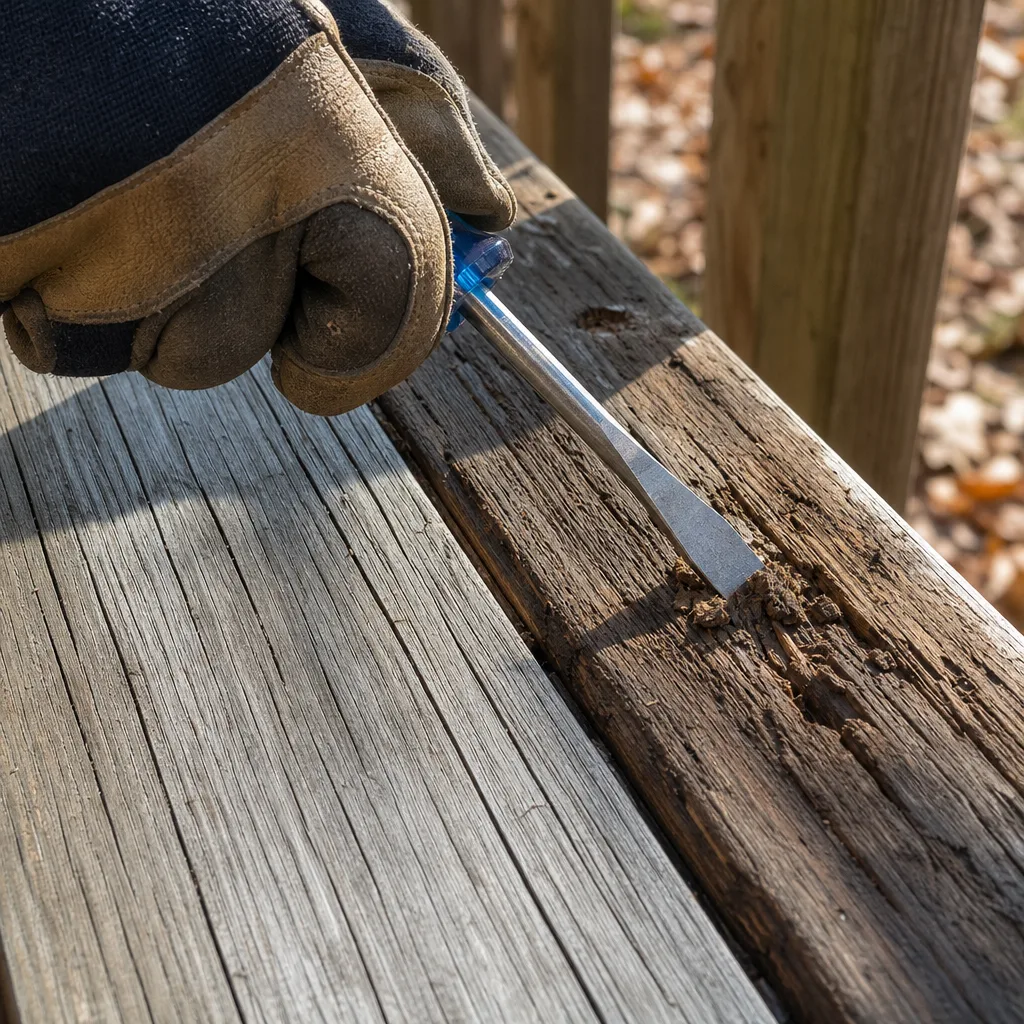
Here's a quick example of why the order matters. Say a deck gets a nice new coat, but it went on the day after a wash, while the boards were still damp inside. It might look great for a month. Then the stain starts to flake on the steps and in the sunny spots, because it never soaked in. The color wasn't the problem. Skipping the drying time was.
You'll also notice that the floor of your deck wears faster than the railings. Boards that get walked on, rained on, and hit by the sun all day take a beating. Railings mostly just get sun. That's normal, and it's why the deck floor usually needs attention before the rest of the deck does.
There are a few easy things you can do to get ready. Move your patio furniture, grill, and planters off the deck. Make sure there's a hose spigot that works. Plan to keep kids and pets off the deck until the stain has cured. If you have a cookout or a party coming up, give yourself some room between the stain day and the guest list.
A careful stain job isn't fancy. Every step gives the stain a better shot at soaking into clean, dry wood and protecting it, and that's what keeps your deck looking good longer.
Best Timing for Deck Staining in Ashburn's Climate
Good timing isn't just about picking the right season. It's also about picking the right few days, the right hours of those days, and the right point in your deck's life to stain again. The late spring and early fall windows we talked about above give you the best odds. Within those windows, a few smaller choices make a big difference in how long the color holds up.
Start with the forecast. A stain job needs dry weather on both sides of it. The boards need time to dry after cleaning, and the stain needs time to soak in and set before rain comes. So one sunny day isn't enough. You want a stretch of dry days in a row. In our area, a clear week in spring can turn stormy fast, so it's worth watching the forecast closely and being ready to move the date if rain shows up.
Time of day matters too. Mornings often start with dew on the boards, so the work waits until the wood has dried off. Late afternoon has its own problem, since evening dew can settle on stains that haven't set yet. That usually leaves the middle of the day. On sunny decks, it helps to work the shady side first and follow the shade around, so the stain isn't baking on hot boards.
Your deck's spot in the yard changes the timing as well. Decks that sit in full sun all afternoon fade faster and dry out quicker. Decks under big trees stay damp longer, hold onto leaves and pollen, and can grow mildew. A shaded deck may need an extra dry day before it's ready. A sunny deck may need its next coat sooner.
How often you'll need to re-stain depends on the stain and on how hard your deck works. Here's a simple way to think about it:
- Clear and lightly tinted stains show the most wood grain, but they fade the fastest and need new coats the most often.
- Semi-transparent stains add more color and usually last longer between coats.
- Solid stains last the longest on color, but they sit more like a coating and can wear unevenly on busy walking areas.
- Floors and steps almost always need attention before the railings do.
The easiest check is the water test from earlier. Do it once a year, maybe each spring. When water stops beading up in the busy spots, it's time to plan your next coat. Restaining a little early on a sound deck is much easier than waiting until the wood has turned gray and needs heavy cleaning to bring it back.
One more tip: book early. The good stain weeks are the same weeks everyone else wants, so reaching out in late winter for spring work, or late summer for fall work, gives you the best shot at the dates you'd like.
Avoiding the Most Common Deck Stain Failures
Most stain failures don't start with the weather. They start with a choice about the product, the coats, or the old finish that's already on the boards. When a deck peels, turns blotchy, or ends up two colors, there's almost always a clear reason. Knowing those reasons ahead of time helps you avoid paying for a coat that won't last.
Here are the failures we work hardest to prevent, and what keeps each one from happening:
- Peeling from too many coats. Stain is meant to soak into the wood. When coat after coat gets added on top, it starts to act like a skin that can crack and flake, often on the steps first. If the old finish has built up, it may need to come off instead of getting another layer.
- Putting the wrong stain over the old one. Some stains don't stick well to others. A new coat that doesn't match the old product can bubble or peel in patches. Figuring out what's already on the deck comes before choosing what goes on next.
- A color that's not what you pictured. The chip at the store and the color on your boards can look very different. Old wood, new wood, and leftover stain all change how a color looks. A small test spot in a hidden corner shows you the real color before the whole deck is done.
- Blotchy, uneven patches. New stain over old stain that's worn in some spots and thick in others tends to come out patchy. Getting the surface to an even starting point matters more than picking a darker shade to hide it.
- Dark marks under the new color. Mildew that wasn't fully cleaned off, or rusting nails, can bleed through and leave dark spots. Stain won't cover those. It locks them in.
- Skipping the cut ends. The ends of boards and stair treads soak up water quickly. If they don't get stain, they can split and rot while the tops look fine.
Repairs can cause a color problem too. Say you replace a few soft boards before staining, like the ones by the grill in the earlier example. Fresh lumber takes stain differently than wood that's been outside for years, so the new boards can look lighter or brighter at first. Planning for that, with the right timing and sometimes an extra coat on the new wood, keeps the deck from looking patched together. Because we handle both the repair and the finish, we can plan the stain around the new boards from the start.
If you're getting quotes, whether from us or anyone else, a few questions will tell you a lot about how carefully the job will be done:
- What's on my deck now, and will the new stain work with it?
- Does the old finish need to come off, or can it be cleaned and recoated?
- Can we test the color in a hidden spot first?
- How will new repair boards be handled so they blend in?
- Which product type do you suggest for my deck's sun and shade, and why?
Clear answers to those questions are a good sign the stain will be chosen for your deck, not just pulled off a shelf. That's how we treat every job. We want your deck to look good the day we finish and to still look good a few seasons from now.
Professional home remodeling in Leesburg
Frequently Asked Questions
How long does a deck need to dry before it can be stained?
Can I stain my deck myself instead of hiring someone?
Why does my deck look blotchy after staining?
Will new boards match the rest of my deck after a repair?
Sources
[1] The Home Depot. How to Stain Pressure-Treated Wood. https://www.homedepot.com/c/ah/how-to-stain-pressure-treated-wood/9ba683603be9fa5395fab9014d4485af