
Signs Your Deck Needs Full Replacement, Not Just Repair
Worn boards on top usually mean repair. Rot, rust, or movement in the frame underneath, or where the deck attaches to your house, usually means it's time to replace. The real answer lives under the deck, not on top of it.
Most decks look worse than they are, and some look better than they are. Faded, splintered boards can make a solid deck seem done for. A fresh coat of stain can hide a frame that's quietly giving out. That's why we always tell homeowners to look underneath before deciding anything. Whether you need repair or replacement comes down to the health of the structure, not how the surface looks.
Here are the signs that point toward a full replacement:
- Soft spots in the frame, not just the boards. Press a screwdriver into the joists, beams, and posts under your deck. If it sinks in easily or the wood crumbles, rot has reached the parts holding everything up.
- Trouble where the deck meets your house. The board bolted to your home carries a big share of the load. Rust streaks, dark water stains, or a gap where it's pulling away are serious warning signs.
- A deck that sways or bounces. Walk across it and shift your weight side to side. If it wobbles, leans, or feels springy, the posts or connections may be failing.
- Rusted or crumbling metal. Look at the brackets, hangers, nails, and bolts. Heavy rust or flaking metal means they're losing their grip on the wood.
- Rot in many places at once. One bad board is a repair. Soft wood spread across the deck usually means water has been getting in for years.
- Railings that move when you lean on them. Loose railings can be tightened, but if the posts they're attached to are rotting, the fix goes deeper.
- Repairs that keep stacking up. If you've patched the same deck every year or two, you may be paying more over time than a new one would cost.
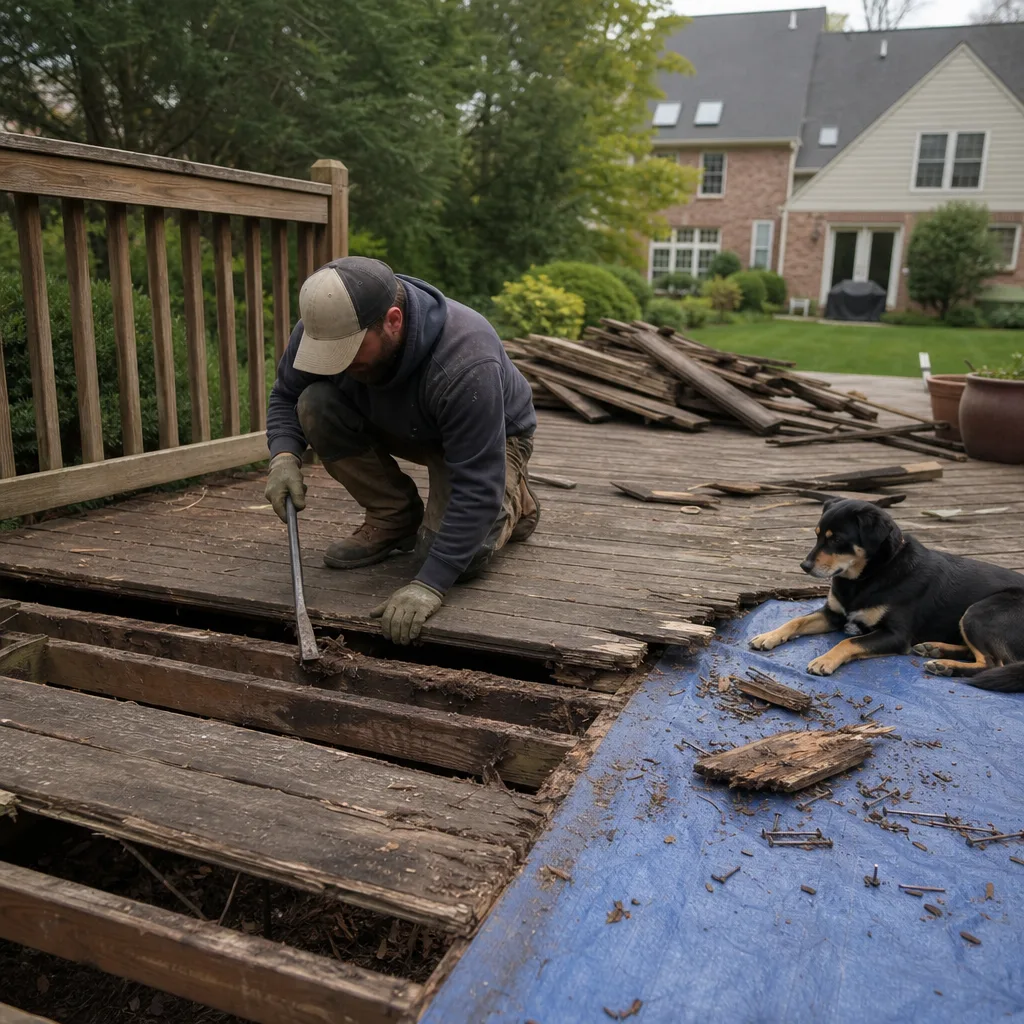
Our weather is part of the story. Summers here are humid, and winters bring rounds of freezing and thawing. Water soaks into small cracks, freezes, and opens them wider. Over the years, that cycle works its way into the frame, especially in spots that stay damp, like the ends of joists and the base of posts.
Older decks can also have a design problem, even if the wood still looks okay. Building standards for decks have changed over time, so a deck built years ago may not have the attachments, footings, or railing heights expected today. Updating a few parts on an outdated frame doesn't always make sense.
Now for the honest side. If the frame is solid and the problems are all on top, you probably don't need a new deck. Gray or splintered boards, a few cracked planks, loose screws, or faded stain are all things deck repair or a good cleaning and staining can handle. Some handy homeowners can even swap out a board or two on their own. We'd rather tell you that than sell you a project you don't need.
If you're not sure which side of the line your deck falls on, that's normal. Some damage hides behind boards or under the house connection where it's hard to see. A careful look at the structure is what turns a guess into a clear answer.
When a Deck Can Be Repaired or Refinished Instead
If the frame under your deck checks out, you have more options than you might think. A sound structure is the expensive part of any deck. When it's healthy, it usually makes sense to protect what you have instead of tearing it out.
Repair works well when the damage is limited and easy to reach. Here are a few common examples:
- Swapping out a handful of boards that cracked, cupped, or went soft in one damp corner.
- Replacing a worn stair tread or a wobbly step, as long as the stair supports underneath are still solid.
- Tightening or replacing railing hardware when the posts themselves are firm.
- Fixing one weak spot in the frame, like a single damaged joist, when the rest of the structure is in good shape.
Refinishing is the lighter fix. It means cleaning the deck, sanding rough or splintered areas, and putting on a fresh coat of finish. It won't fix rot, but it slows down the water damage that causes rot in the first place. Here's an easy test you can do yourself. Sprinkle some water on the boards. If it beads up, your finish is still working. If it soaks in and darkens the wood, it's time to reseal. Lots of homeowners handle cleaning and staining on their own, and that's a perfectly good choice.
If you have a composite deck, there's no stain to redo. A good cleaning usually brings it back, and individual boards can often be replaced if one gets damaged.
Some people choose a middle option: keep the frame and put brand-new boards on top. This can work, but there's a catch. New decking can last a long time, and you don't want it riding on a frame that's only got a few good years left. If your frame is older, it's worth asking how much life it really has before you invest in new boards. Otherwise you may end up pulling up nice new decking to fix the structure underneath.
There are also good reasons to wait. Maybe your deck is solid but dated, and you're planning a bigger change down the road, like an addition or a new back door layout. In that case, steady upkeep can carry you until you're ready to do it all at once. Do your part each year: sweep off leaves and debris, keep planters and mats from trapping moisture, and check the frame and house connection for any of the warning signs we covered above.
We offer deck repair and deck staining too, so we don't have a reason to steer you toward a bigger job than you need. If a few new boards and a fresh finish will give you more good summers out back, that's the answer we'll give you.
Why Older Ashburn Decks Are Reaching the End of Their Life
A lot of Ashburn filled in over a fairly short stretch of years. Whole streets of homes went up close together, and many of them came with a deck out back. That means many of those decks are now getting old at about the same time. If your neighbors are pulling up their decks, there's a good chance yours was built around the same time, from similar materials and in a similar way.
Age by itself doesn't doom a deck. But a wood deck isn't built to last forever, even with good care. After a couple of decades, the parts you can't easily see have been through a lot of sun, rain, and the seasonal swings we covered earlier. That's when small weak spots start to add up.
Here's what tends to wear out first on an older deck:
- The metal holding it together. Nails, screws, and brackets slowly rust where they touch treated wood. A hanger can look fine from a few feet away and still be thin and weak up close.
- Post bases and footings. The bottom of a post sits where water collects and dries out over and over. Older posts were sometimes set right into the ground, which keeps the wood wet even longer.
- Joist ends and the house connection. These spots trap water and don't get much air or sun, so they can rot from the inside while the top looks normal.
- Stairs. They take the most foot traffic and often rest on the ground, so they can wear out ahead of the rest of the deck.
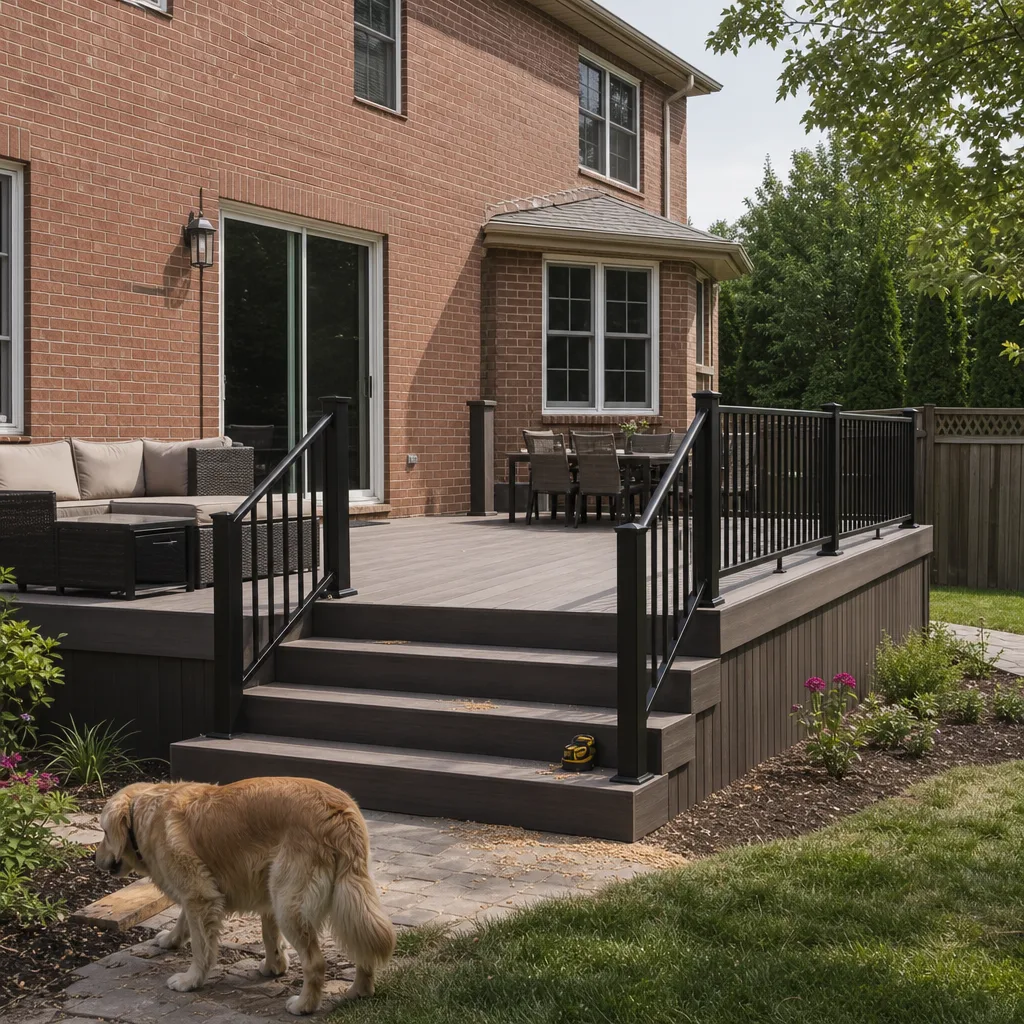
How a deck was first built matters too. Many decks that came with new homes were built quickly with basic treated lumber and standard hardware. That was fine at the time. But a basic build has less room for error as it ages. A deck that started with the bare minimum doesn't have much strength to spare once the wood and metal start to weaken.
There's also the chance that nobody knows the full history. If you bought your home from someone else, you may not know how the deck was built, whether it was ever sealed, or whether someone patched a problem instead of fixing it. A newer layer of boards or stain can hide years of wear underneath.
This is why we look at an older deck as a whole, not one board at a time. When many parts were built in the same year and have aged side by side, fixing one usually just shows you the next one that's close behind. At that point, a full replacement gives you a new frame, new hardware, and a layout that fits how you use your backyard today, instead of a string of repairs on a structure that's running out of time.
None of this means you should replace a deck just because it's old. It means age is a good reason to take a closer look underneath. If the structure is still strong, that's great news. If it isn't, you'll know before a weak spot turns into a safety problem.
Permits and Code Requirements for Deck Replacement in Loudoun County
Ashburn isn't its own town, so building permits here go through Loudoun County. In most cases, tearing out a deck and building a new one is treated like building a new deck. That usually means a permit, plans the county can review, and inspections along the way. It sounds like a lot, but it works in your favor. The permit process is what makes sure the parts you'll never see again, like footings and framing, get a second set of eyes before they're covered up.
Here's the part that surprises many homeowners. Your old deck may have been fine under the rules when it was built, but a replacement has to meet today's code. Earlier we talked about how deck standards have changed over the years. This is where that change shows up. Your new deck may need deeper or larger footings, a stronger connection to your house, different railing heights, or sturdier stairs than the one you're replacing. It's usually best to plan for those changes from the start instead of being surprised by them halfway through the job.
According to Loudoun County, inspections usually happen at key stages, such as before the footings are filled and before the framing gets covered with boards, with a final check at the end.[1] Each one has to pass before work can move forward. That's why it's normal for a deck replacement schedule to include a little waiting time between steps.
Many Ashburn neighborhoods also have a homeowners association, and that's a separate approval from the county. An HOA permit doesn't replace a building permit, and a building permit doesn't replace HOA approval. Your HOA may have rules about deck size, materials, colors, or railing styles. Get their approval in writing before anyone orders materials, so you don't end up with a deck the county approved but your HOA didn't.
Skipping the permit can cost you later. When you sell your home, a buyer's inspector may ask about an unpermitted deck, and fixing that after the fact is harder than doing it right the first time. More importantly, the inspections help catch problems with the structure that holds your family and friends up off the ground.
Before you hire anyone for deck replacement, ask a few simple questions:
- Who will apply for the permit, you or the contractor?
- Who schedules the inspections and meets the inspector?
- Will the new design be drawn up to meet current code, not just copy the old deck?
- Is the contractor licensed in Virginia?
- Does the plan account for your HOA's rules?
Clear answers to these questions tell you a lot about how the rest of the job will go. We're a Virginia Class A Contractor, license number 2705175838, and we offer permitting assistance as part of our services. You shouldn't have to sort out county forms and HOA paperwork on your own just to get a safe, solid deck in your backyard. Being your home's best friend means helping with the details that are easy to overlook, so your new deck is done right from the footings up.
Choosing Between Wood and Composite for Your Replacement Deck
Once you know you're replacing the deck, the next big choice is what you'll walk on. Most homeowners land on either wood or composite. Neither one is the right answer for everyone. It comes down to how much upkeep you want, how you use your backyard, and how long you plan to stay in your home.
Before comparing them, here's something that matters a lot. On most decks, the frame underneath is pressure-treated wood no matter which boards go on top. Composite is a surface choice. It doesn't make a weak frame strong. That's why a replacement starts with a solid new structure, built to today's code, and the decking choice comes after.
Wood might be the better fit if:
- You want the lowest upfront cost. Treated wood usually costs less to start with than composite.
- You like the look and feel of real wood, and you don't mind it changing color over time.
- You're fine with regular care. Wood needs cleaning and a fresh coat of stain every few years to keep water out.
- You may sell in a few years and want a nice, solid deck without a bigger investment.
Composite might be the better fit if:
- You'd rather spend weekends on the deck than working on it. Composite skips the staining and mostly needs a good wash.
- You don't want splinters. That's a real plus if kids or pets run around barefoot.
- You plan to stay a long time. Composite costs more upfront, but less upkeep over the years can help balance that out.
- You want a color that stays more steady, without the graying that bare wood goes through.
There are a few trade-offs worth knowing about. Composite boards can get hot in direct summer sun, and darker colors tend to heat up more. If your deck faces full afternoon sun, a lighter shade or some shade from a pergola can help. Composite also usually needs the joists underneath spaced closer together than wood decking does, so it has to be planned into the frame from the start. That's one more reason to pick your material before the framing goes in, not after.
Wood has its own trade-offs. Our humid summers and freeze-thaw winters are hard on any wood left unprotected. If you choose wood, plan on keeping up with sealing. A wood deck that's cared for can look great for a long time. One that's ignored tends to wear out faster.
Railings and stairs are part of this choice too. You can match them to the decking or mix materials, like composite boards with a different railing style. Just check your HOA's rules on colors and materials before you fall in love with a look.
We build with both wood and composite decking, so we're happy to walk you through what fits your yard, your budget, and your plans. We'll help you pick boards you'll enjoy, on a frame that's built to last underneath.
Professional home remodeling in Leesburg
Frequently Asked Questions
How long does a deck replacement usually take from permit to finish?
Can I stay in my house or keep using part of my yard during work?
What should I do with planters, grills, and furniture before replacement starts?
Will my new deck need a different footing depth than my old one?
Sources
[1] Loudoun County, Virginia. Decks. https://www.loudoun.gov/1166/Decks