
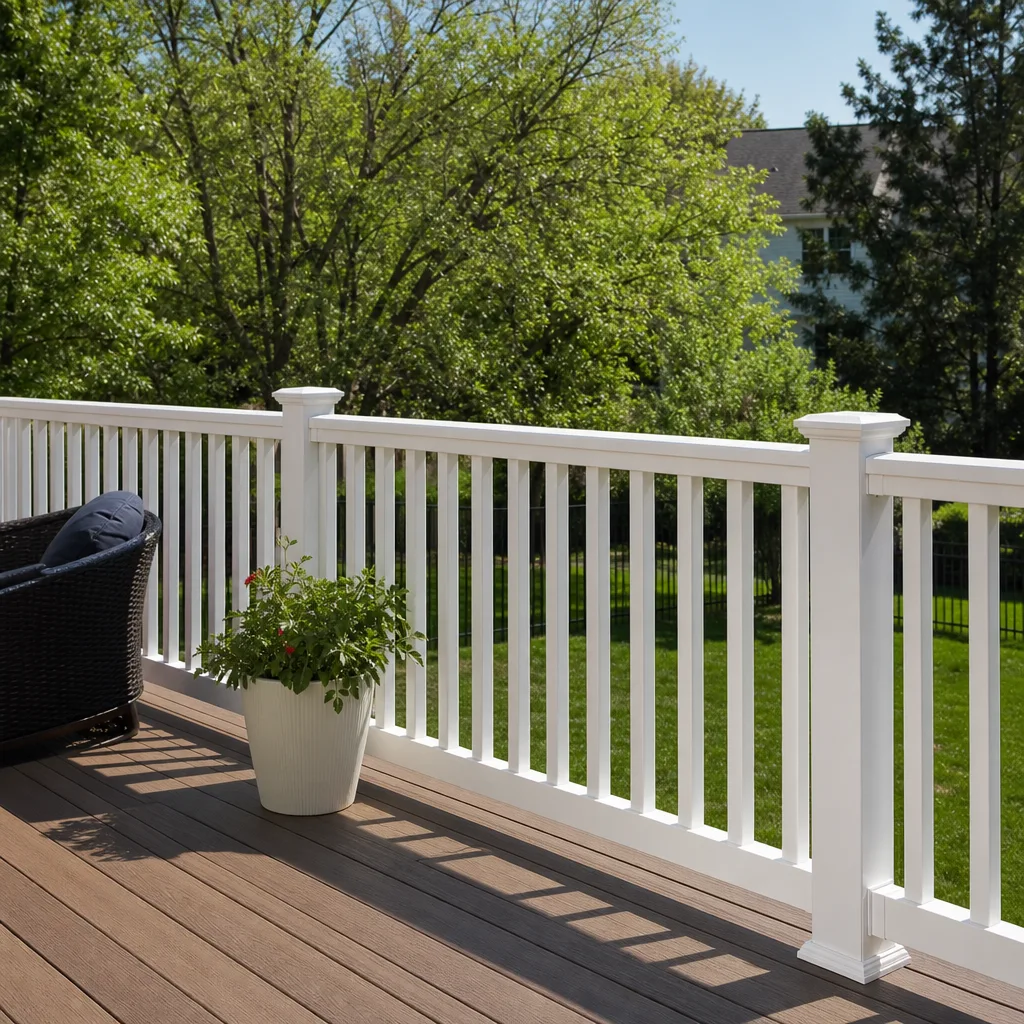
Decide Between Railing Repair, Upgrade, or Full Replacement
Start by checking the posts, not the paint. If the posts are solid and only a few parts are worn, a repair or upgrade is usually enough. If the posts move at the base or the wood around them is soft, it's time for a full replacement.
Most people judge a railing by how it looks. Faded stain, a cracked baluster, or a top rail that's turned gray can make the whole thing feel shot. But looks don't tell you much about safety. What tells you the most is how the posts feel when you push on them, and what the wood looks like where they meet the deck frame.
Here's a simple test you can do today. Stand at each post and give it a firm push, then a pull. A good post feels like part of the house. A post that rocks, creaks, or shifts even a little is telling you something about the connection below it.
A repair makes sense when:
- The posts are tight and the wood around them is firm.
- Only a few balusters are cracked, loose, or missing.
- A section of top rail is split, but the rest is sound.
- Screws or nails have backed out, and the wood they go into is still solid.
If that's you, you may not need us at all. Swapping a couple of balusters or driving in new exterior screws is a fair weekend job for a handy homeowner. We'd rather you know that up front.
An upgrade fits when the structure is good, but you're tired of the look or the upkeep. Maybe you want to trade wood balusters for metal ones so you can see the yard better. Maybe you want a wider top rail that holds a coffee cup, or a material that won't need stain every few years. When the posts are strong, the frame can often stay while the parts you see and touch get a fresh, modern look.
A full replacement is the right call when:
- One or more posts wobble when you push them.
- The wood at the base of a post or along the edge of the deck feels soft or crumbles when you press a screwdriver into it.
- Rust has eaten into the bolts or brackets that hold the posts.
- The railing feels low when you stand next to it, or the gaps between balusters look wide enough for a small child to slip through.
- You've patched it so many times that nothing matches and new problems keep popping up.
Picture a deck where the stain looks fine, but the corner post near the stairs moves an inch when you lean on it. That railing looks better than a faded one with tight posts, yet it's the one that needs replacing. A fresh coat of stain would only hide the problem.
One more honest note. If the deck boards are spongy or the frame under the deck is in rough shape, a new railing alone won't fix that. You'd be bolting new posts to old trouble. In that case, it's worth looking at deck repair or deck replacement first, so the new railing has something strong to hold onto.
Not sure which group you fall into? That's normal. A wobbly post can come from a loose bolt or from rot you can't see yet, and telling the two apart is part of the job. We're happy to take a look and give you a straight answer, even if the answer is a small fix.
Virginia Code Sets the Real Trigger for Railing Requirements
How your railing looks is your call. Whether you need one, and how it has to be built, is set by Virginia's statewide building code. That's the rulebook your new railing gets measured against. It doesn't care about stain color or style. It cares about one thing: keeping people from falling off the deck.
The main trigger is height. Once a deck sits a certain distance above the ground below it, the code says it needs a guard along the open sides. A low deck that's just a step or two up may not need one at all. A second-story deck off the kitchen, or a deck that's low by the house but high where the yard slopes away, almost always does. Many people miss that slope point. The height that counts is measured where the drop is biggest, not where you walk out the door.
Once a guard is required, the code covers a few key things:
- How tall it is. The top rail has to reach a set height so an adult leaning on it won't tip over.
- How big the gaps are. The space between balusters, and under the bottom rail, has to be small enough that a young child can't slip through or get stuck.
- How strong it is. The railing has to hold up when someone pushes hard on the top rail, not just when you rest a hand on it. That strength comes from how the posts are fastened to the deck frame.
- Stair handrails. Stairs with enough steps need a handrail you can wrap your hand around, at a steady height the whole way down.
This is why the warning signs from the last section matter. A railing that feels low, or has gaps that look too wide, may simply have been built to older rules or put up without a permit. A new railing is generally held to the code in effect now, not the one from the year your house was built. So when you replace a railing, you're not just matching what was there. You're bringing it up to today's standard.
In Ashburn, permits and inspections go through Loudoun County, since Ashburn isn't its own town with its own building office.[1] The county is the place to confirm the exact heights, gap sizes, and whether your project needs a permit. Swapping a few balusters usually isn't the same as tearing out and rebuilding a whole railing, and the county can tell you where your job lands. If you're in an HOA community, check its rules too. HOAs often have their own say on railing style and color, on top of what the county requires.
We're a Virginia Class A Contractor, and we offer permitting assistance, so you don't have to sort out the paperwork alone. Our job is to build a railing that looks right on your home and still passes when the inspector gives that top rail a hard push. That's what being your home's best friend looks like out on the deck.
Compare Railing Materials Before You Choose
Once you know the posts are sound and what the code asks for, picking a material comes down to three things: how much upkeep you want, what you want to see from your deck, and how the railing will hold up in our weather. Ashburn summers are hot and sticky, and winters bring freeze and thaw cycles. That mix is hard on anything that soaks up water or fades in the sun, so it's worth thinking past day one.
Here's a plain look at the common choices for deck railing installation in Ashburn:
- Pressure-treated wood: It's the classic look and usually the easiest on the budget up front. It needs stain or sealer every few years, and it can crack, splinter, or gray out if you skip that. It's a good fit if you don't mind a weekend of upkeep now and then.
- Composite: It's made to look like wood with far less upkeep. You won't need to stain it, and it won't splinter. It can get warm in full summer sun, and it often costs more than wood at the start. Many people pair it with composite decking so the whole deck matches.
- Vinyl: It's clean, bright, and low upkeep. A wipe-down is most of the care it needs. Some people love the crisp white look, and others find it less natural next to a wood deck.
- Aluminum or metal balusters: They're slim, strong, and easy on the eyes. Thin metal balusters let you see the yard better than wide wood ones. You can use them with a wood or composite top rail for a more modern feel without a full material change.
- Cable: Thin steel cables run side to side between posts and give you an open, almost see-through view. Cable needs strong end posts to stay tight, and the cables have to stay tensioned so the gaps stay within code.
No matter which one you like, the posts still do the real work. A sleek metal or cable railing looks great, but it's only as safe as what it's bolted to. Some systems also need their own post style or hardware, so the material you choose can change how the posts get built and fastened. That's part of why we look at the frame first and the finish second.
What drives the cost? A few things matter more than the material alone:
- How many feet of railing you need, plus any corners or angles
- Stairs, since they add handrails and extra posts
- Whether the old posts can stay or need to be replaced
- Specialty parts like cable tensioners, post caps, or built-in lights
- Removing and hauling away the old railing
When you get a quote from anyone, ask a few simple questions. Does the price include new posts or only the parts you see? Who pulls the permit? Is removal of the old railing included? Clear answers keep surprises out of the project.
If you're in an HOA, check its approved colors and styles before you fall for one look. Then pick the material you'll enjoy living with, not just the one that looks good in a photo. A railing that fits your habits is one you won't regret five summers from now.
Deck railing installation in Ashburn.
Know When Your Railing Does Not Need Replacing
A new railing is a real project, and it's not always the right one. Here are the times we'd tell you to hold off, even though it's work we'd be glad to do: Your railing just looks tired. Gray wood, peeling stain, and green spots on the shady side are skin-deep problems. If the posts passed the push test from earlier and the wood feels firm, a good cleaning and fresh stain can make it look close to new for a lot less. That's what deck staining is for, and it's a smart first step before you spend money on new parts.
The gaps change with the seasons. Wood swells in our humid Ashburn summers and shrinks when winter dries it out. A little creak or a thin gap at a joint in January that closes up by July is often just the wood moving. Pay attention if the gap keeps growing year after year, or if something moves when you push on it. That's a different story.
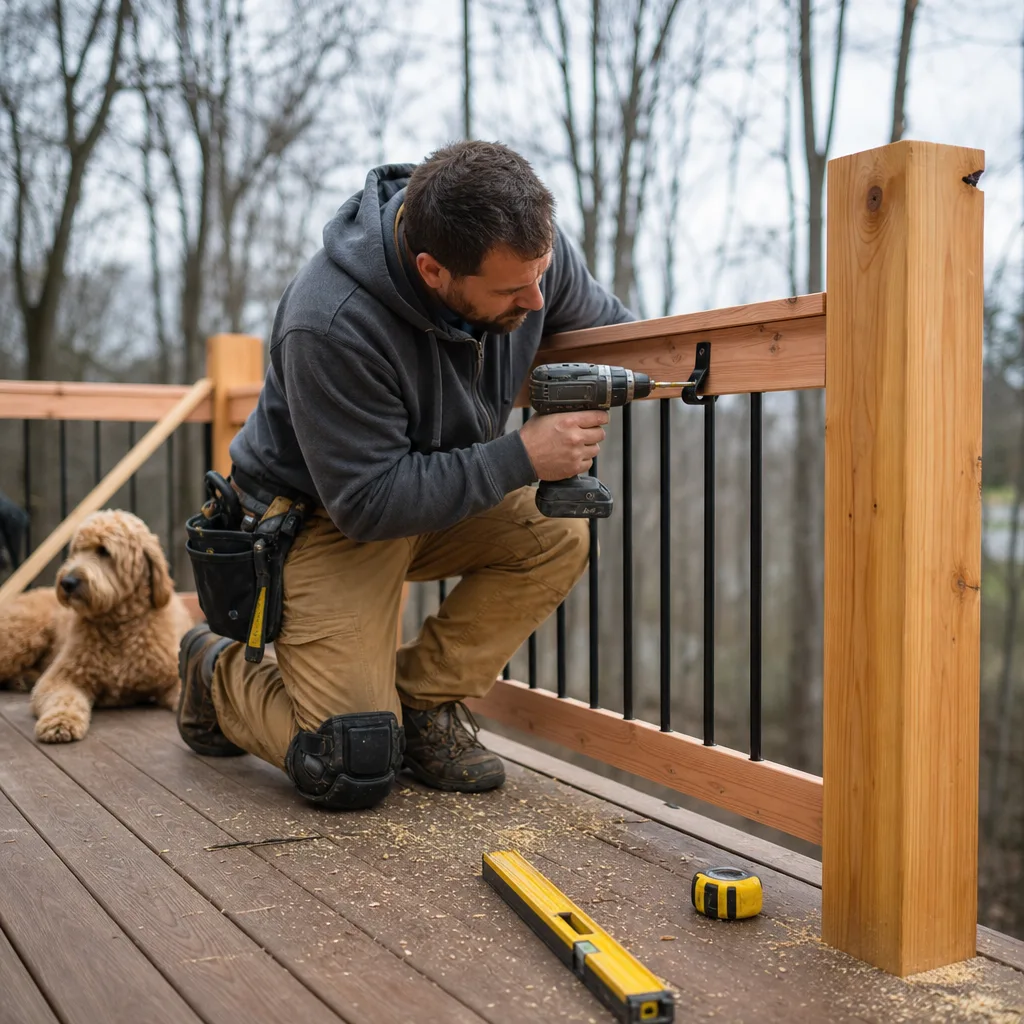
A post moves, but only because the bolts are loose. Not every wobble means rot. Sometimes the hardware has just worked loose over time, and the wood around it is still solid. If snugging up the bolts makes the post feel tight again and the wood doesn't crumble when you press on it, you've fixed the problem. If the post loosens again within a few weeks, that tells you something is wrong deeper down.
Your deck sits close to the ground. As we covered in the code section, a deck that's only a step or two up may not need a guard at all. You can still add a railing for looks or peace of mind, but you don't have to replace a low railing in decent shape just because it's older. Loudoun County can confirm where your deck falls.
Your railing is older but still solid. A railing built years ago isn't automatically unsafe. If the posts are tight, the top rail feels sturdy when you lean on it, and the gaps look small, it may have plenty of life left. The current code becomes your target when you rebuild, so there's no reason to rush a rebuild that isn't needed.
Bigger deck plans are coming soon. If you're thinking about new boards, a bigger deck, or a full deck replacement in the next year or two, wait and do the railing at the same time. New posts often tie into the frame, so building the railing twice wastes money. A small repair can keep you safe until then.
You're still waiting on your HOA. Hold off until the board approves your style and color. Starting early can mean redoing work you've already paid for.
If any of these sound like your deck, a small fix or a little patience may be all you need right now. That's a fine answer, and it's one we'll give you if it's the right one.
Understand What Happens During Installation
A railing job has two halves: the part you'll see and the part you won't. The rails and balusters go up fast and look great. The real work happens at the posts, where they meet the deck frame. That hidden connection decides whether your railing passes the push test for years or starts to wobble in a few seasons.
Here's how a typical deck railing installation goes, start to finish:
- Planning and paperwork. The railing is measured, the material is picked, and parts are ordered. If your project needs a permit from Loudoun County, or a sign-off from your HOA, that comes before anyone picks up a tool.
- Taking out the old railing. The old rails, balusters, and posts are removed and hauled away. This is often the moment of truth, because pulling a post shows the wood that has been hidden behind it for years.
- Checking the frame. With the old posts gone, the rim board and joists at each post spot can be looked at up close. Soft or rotted wood gets dealt with here, before new posts go on. Skipping this step is how a brand-new railing ends up loose.
- Setting the posts. New posts are fastened to the frame with bolts and added wood blocking behind them, not just a few screws. This is what lets the railing hold up when someone leans hard on the top rail.
- Adding rails and balusters. Top and bottom rails go between the posts, then the balusters or cables. Spacing is checked as it goes so the gaps stay small enough for the code.
- Stairs and finishing touches. Stair handrails, post caps, and any lights go on last.
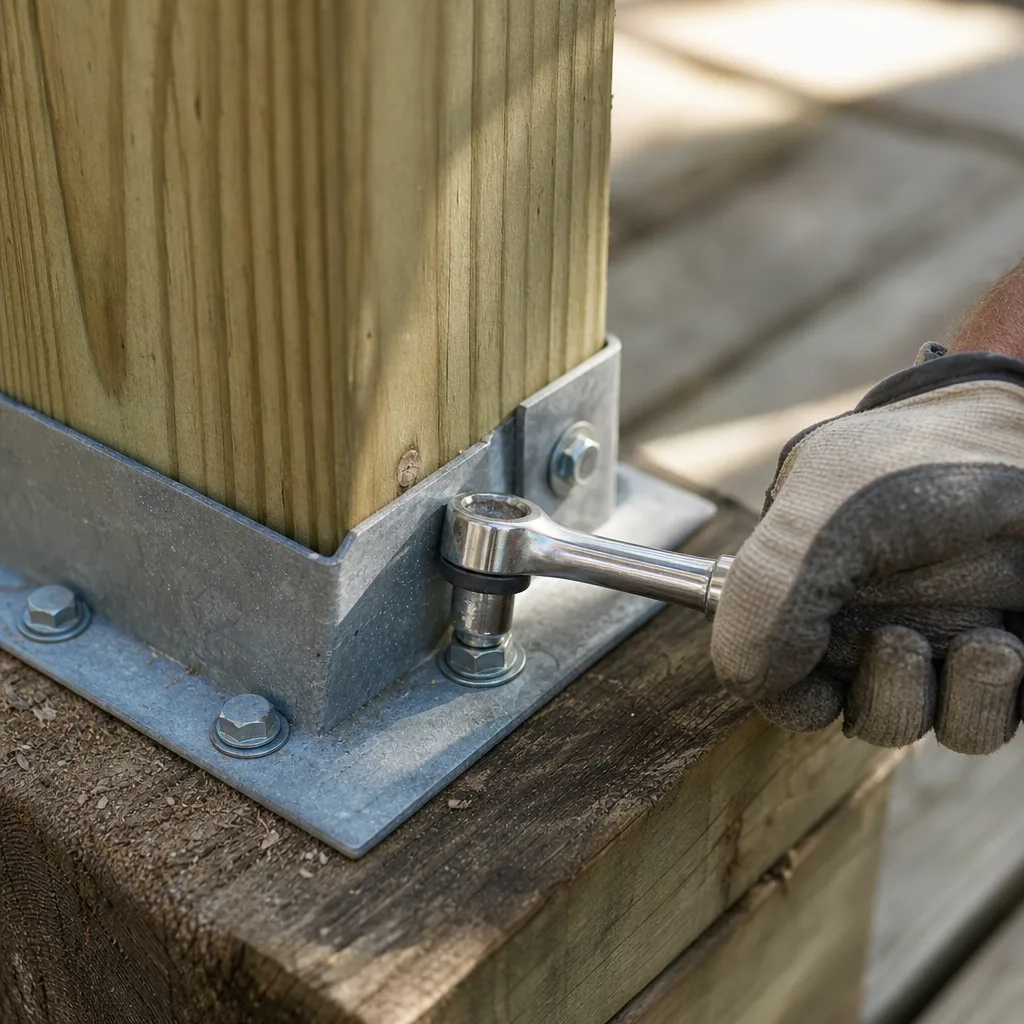
Once it's built, the railing gets a hands-on check. Every post gets a firm push and pull, the top rail height is measured, and the gaps are checked again. If a permit was pulled, the county inspector comes out to look it over too.
How long does it take? It depends on how many feet of railing you have, whether there are stairs, and what turns up when the old posts come out. A straight run on a sound deck goes faster than a wraparound deck with stairs and rotted rim boards. Weather plays a part too. A rainy week in spring can slow things down, and new pressure-treated wood often needs time to dry before it can be stained.
A few things you can do to get ready:
- Clear off furniture, grills, and planters so there's room to work.
- Plan to keep kids and pets off the deck until the railing is fully done, since there will be open edges for a while.
- Let your neighbors know if work will happen near a shared fence line or driveway.
- Have your HOA approval letter handy if your community needs one.
Because Salty Dog Remodeling also handles deck repair, deck staining, and other exterior work, you won't need to find a second company if the frame needs attention or you'd like the finish to match. It's all part of being your home's best friend, inside and out.
Professional home remodeling in Leesburg
Frequently Asked Questions
What can I use instead of a traditional railing if I want to see the yard better?
Are vinyl deck railings a good choice for my home?
How can I upgrade my deck railing without replacing the whole structure?
Sources
[1] Loudoun County, Virginia. Decks. https://www.loudoun.gov/1166/Decks