
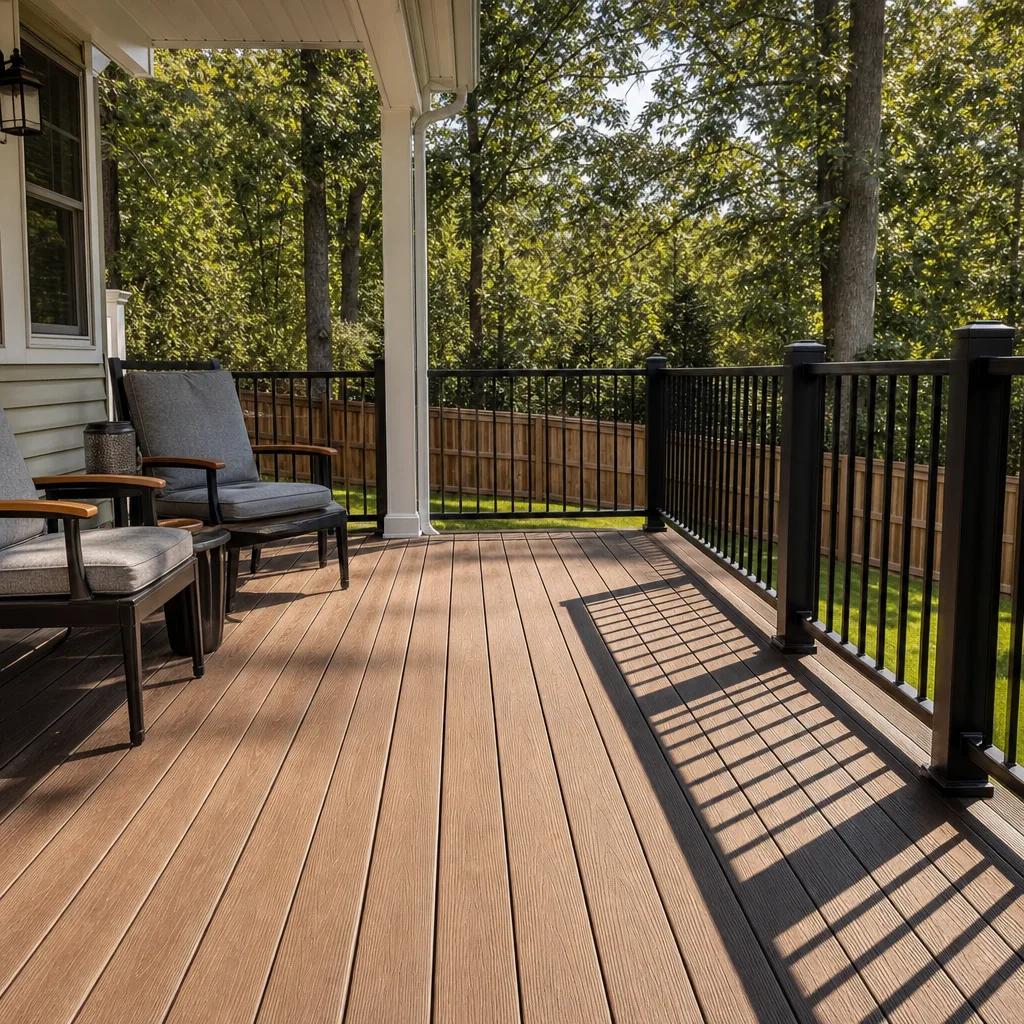
Decide Between Repair, Refinishing, or Full Composite Replacement
If only a few boards are bad and the frame is solid, a repair makes sense. If the boards are sound but faded or rough, refinishing can bring them back. If problems are spread across the deck and you're tired of yearly upkeep, composite decking replacement is usually the better long-term choice, as long as the frame underneath is healthy.
Not every worn-out deck needs to be torn up. The right move depends on two things: how much of the surface is damaged, and what shape the frame is underneath. Here's how we'd walk you through it if we were standing on your deck together.
A repair is the right call when the trouble is limited. Think a couple of cracked boards near the steps, a loose railing post, or a few popped nails. If the rest of the deck feels solid when you walk on it, swapping out the bad pieces is the simple, budget-friendly fix. There's no reason to replace a whole deck over three boards.
Refinishing fits a wood deck that's sound but looks tired. Gray, faded, or slightly rough boards often just need a good cleaning and fresh stain to look cared-for again. The catch is that wood needs this kind of attention over and over. Sun, rain, and freezing winters in Ashburn all wear down a finish, so refinishing buys you time but doesn't end the routine.
Full replacement starts to make sense when you notice any of these:
- Splinters, soft spots, or rot showing up in many boards, not just one or two
- You've stained or sealed the deck again and again and it still looks worn within a season or two
- Boards are warping, cupping, or pulling away from their fasteners across large areas
- You'd rather spend weekends enjoying the deck than sanding and staining it
Here's the part a lot of homeowners don't think about. Composite boards are made to last a long time with very little upkeep. That's the whole point of choosing them. But they're only as good as the frame they sit on. If the joists and beams under your old deck are soft or sagging, putting new composite on top means the new surface could outlast the structure holding it up.
So before deciding, it helps to check what's underneath. Look at the joists from below if you can. Press a screwdriver into the wood in a few spots. If it sinks in easily, or you see dark, crumbly patches, the frame needs attention too. A solid frame may let you resurface with composite boards. A weak one means rebuilding the structure along with the new decking.
Because we handle deck repair, deck staining, and full deck replacement, we don't need to steer you toward any one answer. We'd rather tell you the truth about your deck and help you pick the option that fits your home and your budget. That's what being your home's best friend looks like to us.
Spot the Warning Signs of an Aging Wood Deck
Most wood decks don't fail all at once. They give you small hints for years. You might see a little graying here, a wobble there, or a board that creaks more than it used to. The trick is knowing which hints are just about looks and which ones are about the deck's health.
Ashburn weather is hard on wood. Humid summers keep boards damp, and winter freeze and thaw cycles push water into small cracks and pry them wider. That's why a deck can look fine one spring and noticeably rougher the next.
These signs are mostly cosmetic, at least for now:
- Silver or gray boards. This is the sun fading the surface. It's normal, but it means the finish has worn off and the wood is open to water.
- Fine surface cracks, called checking. Small cracks along the grain are common as wood dries and swells. Long, deep cracks are a bigger deal.
- Green or black patches. Mildew and algae grow in shady, damp spots, often near trees or on the north side of the house. They make boards slick and hold moisture against the wood.
- Stain that won't last. If a fresh coat looks blotchy or peels within a year, the wood may be too worn to hold a finish well.
These signs deserve a closer look soon, because they can affect safety:
- A railing that moves when you lean on it. Railings are there to stop a fall. If a post shifts or the top rail flexes, don't wait on it.
- Rusty nails, screws, or metal brackets. Rust streaks running down the wood, or hardware that's flaking, mean the parts holding the deck together are wearing away.
- Stairs that bounce or lean. Check where the stairs meet the deck and the ground. Soft wood at the bottom of the stair supports is common, since that's where water sits.
- Gaps or stains where the deck meets your house. The board that attaches the deck to your home carries a lot of the load. Dark streaks, rot, or a gap opening up there is a warning sign worth taking seriously.
- Boards that feel springy underfoot in one area. That often points to a problem in the framing below, not just the board on top.
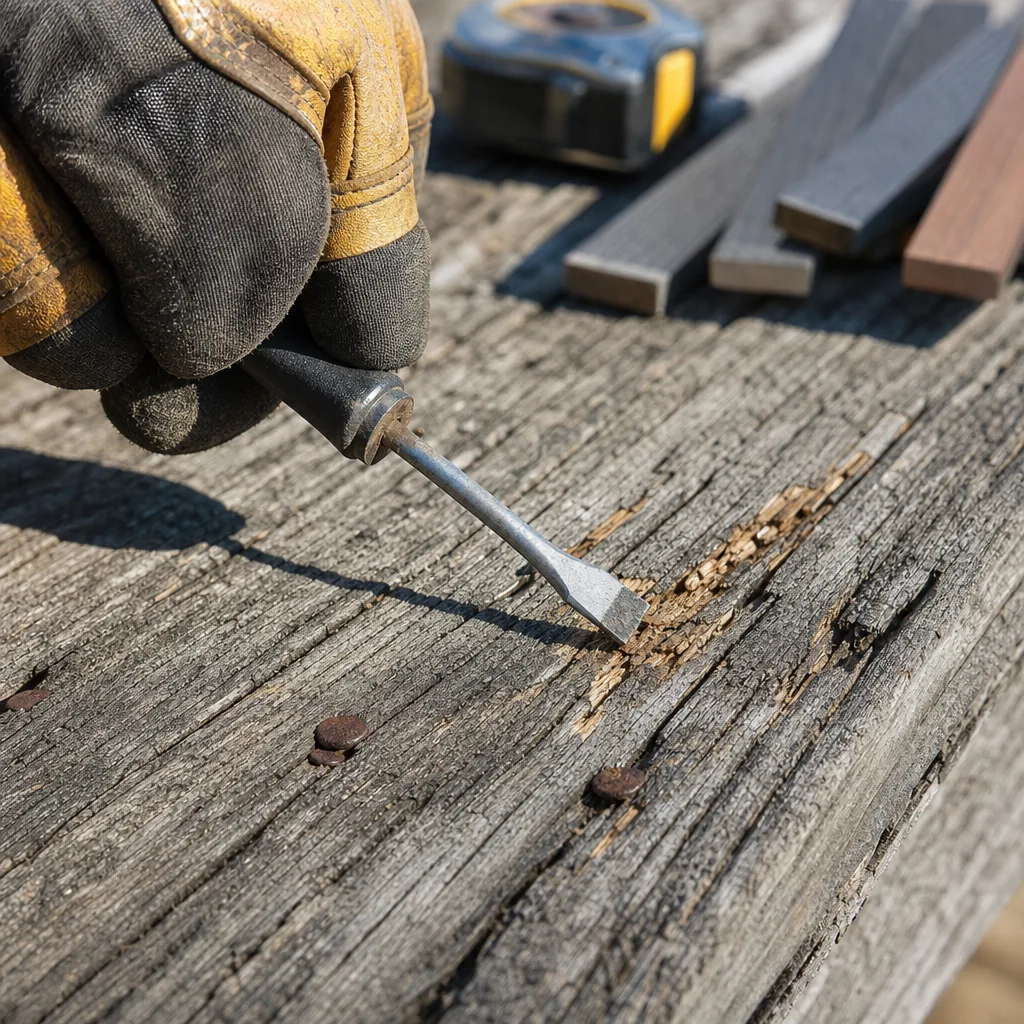
Here's a simple way to check. Walk the whole deck slowly in socks or soft shoes. Notice any spot that dips, creaks loudly, or feels different. Then grab each railing post and give it a firm push. Last, look underneath with a flashlight, especially near the house and around the stair bases.
If what you find is mostly fading, mildew, and light cracking, your frame is likely still in decent shape. That's a good place to be if you're thinking about composite, because new boards can go on a structure that's ready for them. If you find wobbly railings, rusted connectors, or rot near the house, the frame needs attention first. New composite boards look great, but they can't fix what's happening underneath them.
Catching these signs early gives you more choices and usually a smaller project. Waiting tends to turn a resurfacing job into a rebuild.
Review interior remodeling options in Leesburg.
Check the Substructure Before Choosing New Composite Boards
You've already seen why a weak frame can let you down. Now let's talk about what makes a frame ready for composite, because it isn't only about rot. A frame can be solid and still not be a good fit for composite boards. Knowing the difference before you pick colors and styles saves you from surprises once the old boards come up.
Composite boards behave differently than wood. They're heavier, and they can bend more between supports. A lot of older wood decks have joists spaced farther apart than many composite boards allow. If you want boards laid at an angle, the joists usually need to be even closer together. So a frame that held wood boards just fine for years might need extra joists added before composite can go on. Each board maker lists its own spacing rules, and good installers follow them.
Here's what a careful substructure check should cover:
- Joist spacing. Is it close enough for the boards you want and the pattern you like?
- Flat, even joist tops. Composite shows every dip and hump, so joists that have twisted or crowned over time may need to be planed, shimmed, or replaced.
- The ledger connection. The board tied to your house should be bolted properly and have flashing above it so water runs away from your home, not behind the siding.
- Footings and posts. Ashburn winters freeze and thaw the ground over and over. Footings that weren't set deep enough can shift, and that movement shows up as a deck that slopes or pulls away from the house.
- Beams and hardware. Beams should be sized for the span, and metal connectors should be the right kind for treated lumber so they don't corrode early.
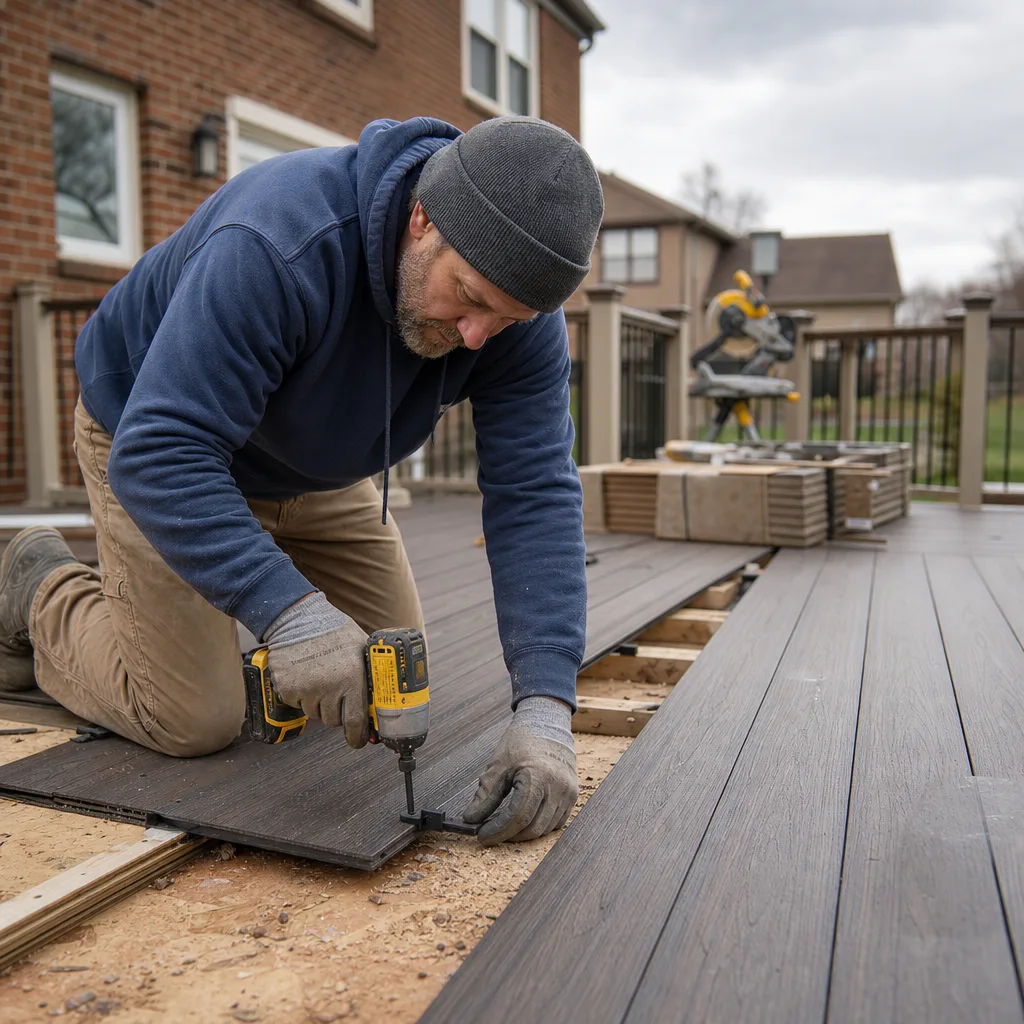
Once the old boards are off, the check usually lands on one of three outcomes. The frame is ready, and the new composite goes right on top. The frame is mostly good but needs extra joists, a new ledger, or a few posts replaced. Or the frame has too many problems, and rebuilding it costs less over time than patching it. All three are normal. The point is to know which one you've got before you're halfway into the job.
This step also affects your budget more than almost anything else. Two decks the same size can end up at very different totals because one frame was ready and the other wasn't. That's why it's smart to ask any contractor how they'll check the frame and how they'll handle it if they find something once the boards are up.
A few good questions to ask before you hire anyone:
- Will you check joist spacing against the board maker's rules for the pattern I want?
- How will you handle the ledger and flashing where the deck meets my house?
- If you find framing problems after demolition, how will you explain them and price the change?
- Will this project need a permit, and who takes care of it?
On that last question, adding joists, replacing a ledger, or rebuilding a frame can bring a permit and inspection into the picture. Our team offers permitting assistance, so that paperwork doesn't land on your kitchen table. A deck that looks great on top and is built right underneath is one you can enjoy without worry for a long time.
Understand Permit Requirements for Deck Replacement in Loudoun County
Short answer: if your project touches the structure, plan on a permit. Swapping old boards for new composite on a healthy frame is a lighter job. Replacing joists, the ledger, posts, footings, or stairs is structural work, and that's the kind Loudoun County usually wants to review and inspect.[1] Rules can change, and every project is a little different, so it's always worth confirming with the county before work starts.
Some homeowners see a permit as red tape. It's really a second set of eyes on your deck. An inspector checks the work at key stages, often before footings are filled, while the framing is still exposed, and once the job is done. That matters most for the parts you'll never see again after the composite goes down.
Here's when a permit is most likely to come up on a deck replacement:
- You're rebuilding or adding to the frame, including extra joists for composite spacing
- The ledger board where the deck attaches to your house is being replaced
- New footings or posts are going in, or the deck is getting bigger
- Stairs or railings are being rebuilt, since both are tied to safety
- The deck sits well above the ground, which raises the stakes if something fails
There's a second approval many Ashburn homeowners forget about. If your home is part of a homeowners association, you may need its sign-off before any work begins. HOAs often care about things the county doesn't, like board color, railing style, and how the deck looks from the street. Their review can take a few weeks, so it helps to start that request early, ideally while you're still choosing your composite colors.
Skipping a permit can come back to bite you. When you sell your home, a buyer's inspector or the county's records may flag deck work that was never approved. That can mean delays, a lower offer, or even opening up a finished deck so it can be inspected. Insurance questions can come up too if something goes wrong on a deck that was built without approval. A permitted deck is simply easier to live with and easier to sell.
It also helps to know who's pulling the permit. Ask any contractor directly. If they suggest you pull it in your own name, that puts the responsibility for the work on you. Salty Dog Remodeling is a Virginia Class A Contractor, license number 2705175838, and our team offers permitting assistance. We can help sort out what your project needs, prepare the paperwork, and keep inspections on track, so you're not left guessing at the county's website late at night.
Build a little extra time into your plan for approvals. A spring or summer deck goes much smoother when the permit and HOA steps start in late winter, before the busy season fills up.
Know What Drives Composite Decking Cost
Composite costs more up front than a basic wood deck. You make that back over time because you're not buying stains, renting a sander, or giving up a weekend every year or two. What you'll pay to get there depends on a handful of choices. Some are yours to make, and some depend on what your current deck looks like.
We've already covered the biggest wild card, which is the frame under your old boards, along with permits and HOA approval. Here's what else moves the number:
- The board line you pick. Composite comes in good, better, and premium tiers. Higher tiers usually have a tougher outer shell, deeper wood-grain texture, and colors that hold up better in strong sun. Entry-level boards still skip the staining, but they may show scratches or fading sooner.
- Size and shape. Square footage matters, but shape matters too. A plain rectangle is the simplest to build. Angles, curves, multiple levels, and built-in steps all add cutting, framing, and labor time.
- Board pattern and borders. Laying boards on a diagonal or adding a picture-frame border looks sharp. It also takes more material, more cuts, and often extra joists underneath.
- Railings. Railings can be a big share of the total. Composite, aluminum, and cable railings each cost different amounts, and the longer your deck's open edge, the more railing you'll need.
- Stairs. Every set of steps needs stringers, treads, risers, and railing. A deck that's high off the ground or has two staircases costs more than a low deck with a single step down.
- Tearing out the old deck. Removing and hauling away old boards, railings, and sometimes the frame is real labor. Quotes don't always include it, so check.
- Finishing details. Hidden fasteners give a clean, screw-free surface but take longer to install. Fascia boards that cover the rim joists, matching stair risers, and built-in lighting all add polish and some cost.
Timing can play a part too. Spring and early summer are the busiest deck months around Ashburn, so planning ahead often gives you more flexibility on your schedule.
When you're comparing quotes, it helps to look at what each one includes, not just the total. One price might look lower because it leaves out demolition or railings, or because it assumes the frame needs no work. Ask each contractor to break the quote into parts so you can line them up side by side:
- Which board line and color is this priced with?
- Does it include tearing out and hauling away the old deck?
- What railing style is included, and how many feet?
- Are hidden fasteners, fascia, and stair risers part of the price?
- How will framing repairs be handled and priced if you find problems once the boards come up?
A clear, itemized quote is a good sign. It shows the contractor has thought through your deck and isn't saving surprises for later. That kind of honesty is how we like to work, and it's part of being your home's best friend. We'd rather help you choose where to spend and where to save than hand you a single number with no explanation.
Frequently Asked Questions
How long does a composite decking replacement take?
Can composite boards go over an old wood deck frame without tearing it up?
What's the best time of year to start a composite decking project in Ashburn?
Sources
[1] Loudoun County, Virginia. Decks. https://www.loudoun.gov/1166/Decks