Signs Your Tub Needs Replacing, Not Repair
Surface problems like stains, dull finish, and small chips are usually fixable without pulling the tub. Structural problems are different. If the floor flexes, if water is getting behind the walls, or if the tub is cracked through, a refinish just hides the issue while the damage keeps spreading underneath.
The easiest way to think about it is this: can you fix it from the top, or does the problem live underneath? Examples include a chip in the enamel, a ring of hard water stain, a faucet that drips, or a finish that's gone chalky after twenty years. Those are top-side problems. They don't mean the tub is failing. They mean the tub looks tired.
Underneath problems are the ones that cost you if you ignore them. Water that's been sneaking past a bad seal for a few years doesn't stay in the bathroom. It soaks the subfloor. In a lot of older Leesburg homes near the historic district, that subfloor sits on original framing you really don't want wet.
Here's what we'd call a replacement conversation instead of a repair conversation:
- The floor moves when you step into the tub. A little give in a fiberglass unit can be normal, but a spongy spot or a flex you can feel through your feet usually means the support under the tub has rotted or the tub shell has cracked.
- You can see a crack that goes all the way through, not just a surface chip. Hold a flashlight against it. If light passes or water weeps out, patching it buys you months, not years.
- The ceiling or wall below the bathroom has a stain, a bubble in the paint, or a soft spot. That's water leaving the tub area and landing somewhere it shouldn't.
- Caulk and grout keep failing in the same spot no matter how many times it's redone. Repeated failure in one place usually means something is shifting or the tub isn't sitting level anymore.
- There's a musty smell that doesn't go away with cleaning or a running fan. Old moisture behind the wall board smells like old moisture.
- The tub is the wrong tub for who's using it now. A high step-over wall is a real hazard for someone with bad knees or balance trouble, and no amount of refinishing changes the height of that wall.
That last one catches people off guard. Nothing is broken. The tub works fine. But if getting in and out has become the scary part of the day, the tub has already failed at its actual job. That's when folks start asking about a walk-in shower conversion or a lower-threshold unit instead of a like-for-like swap.
We'll say the opposite just as plainly. If your tub is solid underfoot, holds water, and the only complaint is a dull finish or a chip near the drain, don't replace it. Refinishing or a spot repair is the honest answer, and it'll hold up fine for years. Tearing out a good tub to fix a cosmetic problem is money you could spend on the rest of the bathroom.
If you're not sure which camp you're in, the tell is almost always water. Dry damage is cosmetic. Wet damage spreads.
Explore interior home services in Leesburg.
When Reglazing or Repair Makes More Sense Than Replacement
Plenty of the tubs we look at don't need to come out. They need a weekend, not a project. If the shell is solid and the water is staying where it belongs, reglazing or a targeted repair is the right call. We'll tell you that even though it's the smaller job.
Reglazing is a coating. A pro strips the old finish, etches the surface, patches chips, and sprays a new topcoat over the existing tub. It changes the color and the feel of the surface. It doesn't change anything structural. So it's a great answer for a cast iron tub from the 1950s that's heavy, level, watertight, and just ugly. It's a bad answer for a tub that's already leaking, because you're sealing a problem in instead of fixing it.
Here's where we'd steer you toward the smaller fix:
- The tub is cast iron or solid porcelain-on-steel and the only complaint is the color or the dullness. These tubs outlast the houses they're in. Coating one is usually smarter than hauling out three hundred pounds of iron.
- You've got chips and scratches but no cracks. Chips are patchable during a reglaze. Cracks that go through the shell aren't.
- The bathroom layout is staying exactly the same and you're happy with it. Reglazing never touches your plumbing or your walls.
- You're selling in the next year or two and want the bathroom to show well without opening walls.
- You need a usable tub again fast. A reglaze is typically a one-day job with a cure period, versus days of demo, plumbing, and tile work.
- It's a rental or a guest bath that gets light use. Spending a full remodel budget on a tub nobody sits in doesn't make sense.
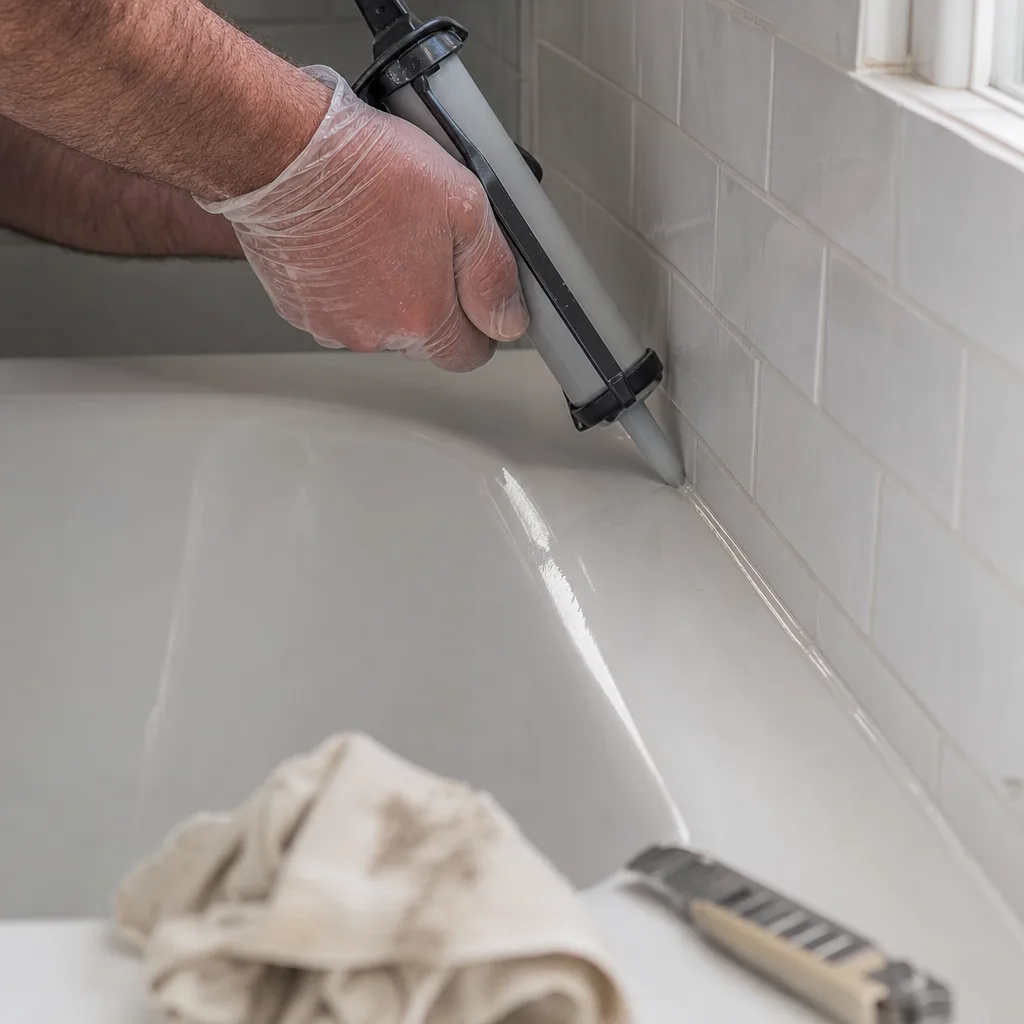
There's also a middle option people forget about. You can replace nothing and still fix a lot. Re-caulking a failed joint, swapping a tired faucet and drain trim, regrouting the surround, and replacing a cracked overflow plate are small dollars against a remodel, and they solve the specific thing that's bugging you. A lot of bathrooms that feel worn out are really just a bad caulk line and old chrome.
The trade-off worth knowing: a reglaze is a finish with a lifespan. It's not the original enamel. Abrasive cleaners, bath mats with suction cups, and standing water will shorten it. Most refinishers will tell you it holds up well for years with gentle cleaning, then eventually needs to be redone. If you want a surface you'll never think about again, that's the argument for replacement. If you want a tub that looks new and you're fine maintaining it, that's the argument for coating.
One more thing on older Leesburg homes. If your bathroom still has the original tile surround and that tile is in good shape, think twice before tearing it out. Old tile is often set in mortar. It comes out hard, and you can't match it. Sometimes the right move is keeping what's there and fixing the one thing that's wrong.
If you're on the fence, get eyes on it before you commit to anything. A look at the tub, the floor around it, and the ceiling below will usually settle the question in about ten minutes.
Bathtub Replacement Versus Tub-to-Shower Conversion
Once the old tub is coming out, you've got a real choice to make. Put a new tub in the same footprint, or use that space for a walk-in shower. Both start with the same demo. Where they split is the plumbing, the floor, and who's going to be using that bathroom five years from now.
A like-for-like tub swap is the simpler job. The drain and supply lines are already where they need to be, the opening in the wall is already the right size, and a standard 60-inch alcove tub drops into the space a standard 60-inch alcove tub came out of. You still need new wall board, new waterproofing, and new tile or a surround, but nothing has to move.
A tub-to-shower conversion changes the floor of the space. The drain usually has to shift position, the slope has to be built correctly so water runs where it should, and the waterproofing carries more responsibility because there's no deep basin catching the spray. It's more work under the surface. It also gives you a wide-open entry instead of a wall you have to lift a leg over.
Here's how we'd help you sort it out:
- Keep a tub if you bathe small kids or wash a dog. There's no substitute, and parents who convert their only tub usually regret it within a year.
- Keep a tub if this is the only tub in the house. Real estate agents in Loudoun County will tell you a home with zero bathtubs narrows your buyer pool, especially with families.
- Convert to a shower if there's already a tub in another bathroom. A second tub nobody uses is just a hard-to-clean box taking up floor space.
- Convert if getting in and out is the problem. A curbless or low-threshold shower solves the step-over issue a new tub can't.
- Convert if the bathroom is tight. Losing the tub wall often buys you enough room for a glass panel and a bench, and the space reads twice as big.
- Consider a soaking tub if you soak. If a bath is part of how you unwind, say so early. It changes the tub we'd look at and sometimes the framing.
The one that surprises people is that a shower conversion isn't automatically the aging-in-place answer. A poorly built curbless shower with a slick tile floor is more dangerous than a tub with a grab bar. What makes it safe is the slope, the tile texture, blocking in the walls for grab bars, and a bench set at the right height. Those decisions get made before the tile goes on, not after.
In a lot of Leesburg homes built in the seventies and eighties, the hall bath has a standard alcove tub and the primary bath has a second one. That's the clearest case for converting the primary and leaving the hall tub alone. You get the shower you want and keep the tub the next buyer will ask about.
What Drives the Cost of a New Tub Up or Down
Almost nobody's tub quote is really about the tub. The tub itself is usually one of the smaller line items. What moves the number is everything around it: what's behind the wall, how the drain sits, and how much has to be rebuilt once the old unit is out.
Most bathroom contractors price a job the same basic way. Demo and haul-away, the new fixture, plumbing work, framing and wall repair, waterproofing, tile or surround, then trim and finish. When a quote feels high compared to a friend's, it's usually because two of those buckets are much bigger on your job.
Here's what pushes a replacement toward the higher end:
- Rot under the tub. If the subfloor is soft or a joist is damaged, that gets repaired before anything new goes in. This is the single biggest surprise on older homes, and it's the one item nobody can price accurately until the tub is out.
- Moving the drain. A same-size tub in the same spot keeps the plumbing where it is. Change the length, the type, or the side the drain sits on, and a plumber is cutting and rerouting.
- Tile instead of a one-piece surround. A tiled surround costs more in labor and materials than an acrylic wall kit, and the waterproofing behind it is a separate step you're paying for either way.
- Cast iron coming out. A heavy old tub often has to be broken up in place to get it through the door. That's labor and disposal.
- Tight access. Second-floor baths, narrow hallways, and old doorways that won't clear a 60-inch tub all add time.
- Upgrading the fixture class. A basic alcove tub, a deep soaker, and a freestanding tub are three very different price points, and freestanding units usually need a floor-mount filler and sometimes extra floor support.
- Old galvanized or mixed plumbing. If the supply lines are at the end of their life, replacing them while the wall is open is smart, but it's an added scope.
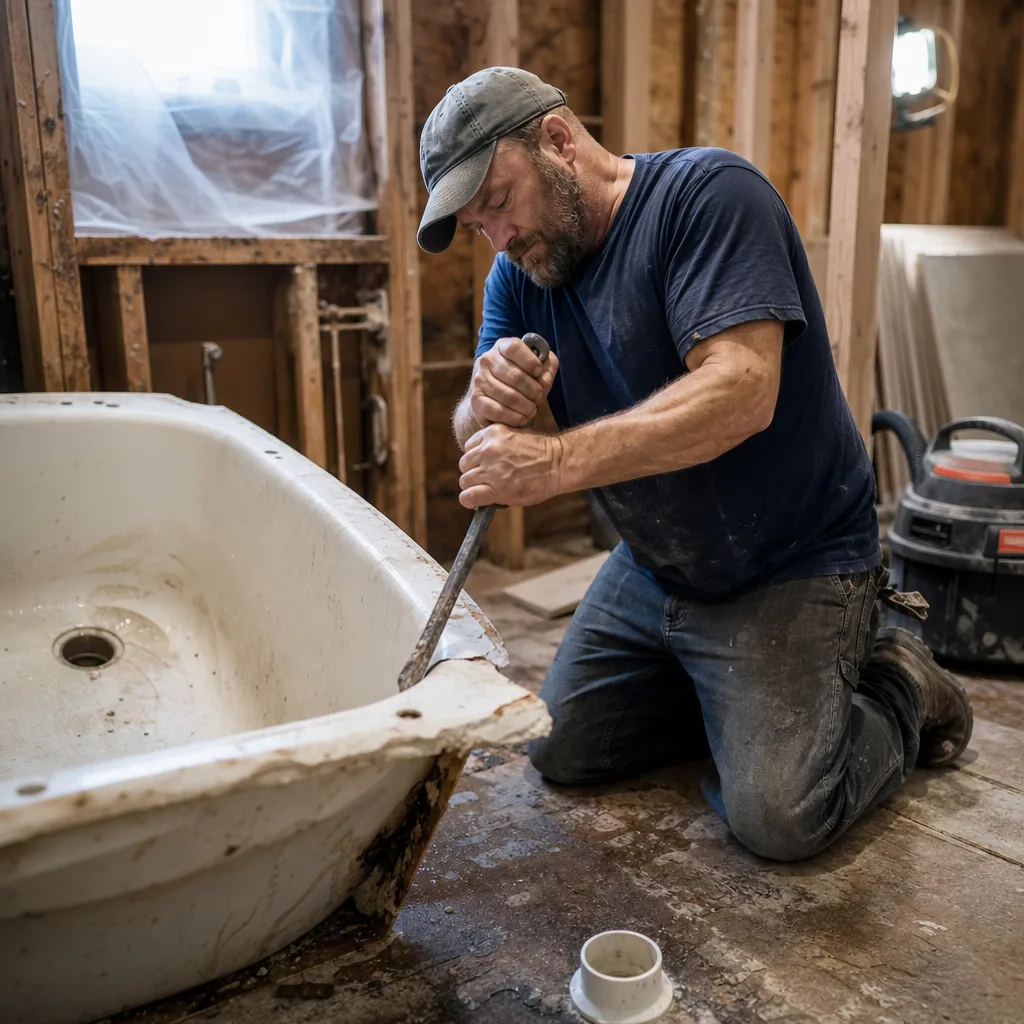
Here's what keeps it lower. Same size, same spot, same drain location. A standard acrylic or porcelain-on-steel alcove tub. A surround kit instead of custom tile. Dry, solid framing underneath. Keeping your existing faucet if it's in good shape. A first-floor bathroom with an easy path to the door.
Two things are worth asking any contractor before you sign. First: what happens if you find rot? A good answer tells you how it gets priced and who decides, not just "we'll let you know." Second: who's handling the permit and inspection? Plumbing changes in Loudoun County generally need one, and that's not a corner worth cutting on a wet room.[1]
The honest version is that no one can hand you a firm number for a tub replacement over the phone. They can give you a range for the visible work and a plan for what's hidden. That's what a real estimate looks like.
Bathtub replacement in Leesburg.
Older Leesburg Homes and Outdated Tubs
The age of your tub matters less than the age of the house around it. A 1990s builder tub in a 1990s house is a straightforward swap. That same tub sitting in a home added onto twice since the 1940s is a different job, because what's behind the wall doesn't match what's in front of it.
Leesburg has a wide spread of housing stock, and each era leaves its own fingerprints in the bathroom:
- Pre-war homes in and around the historic district. Original cast iron tubs set on plank subfloor, plaster and lath walls, and tile set in a thick mortar bed. None of that comes out clean. The plaster crumbles past the opening, and the mortar bed has to be chipped out rather than pried.
- Postwar and mid-century houses. Porcelain-on-steel tubs, thin wall board, and sometimes galvanized supply lines that have narrowed from the inside. If your hot water pressure has slowly gotten worse over the years, that's a clue worth mentioning before we open anything.
- Seventies and eighties homes. Standard 60-inch alcove tubs, fiberglass units, and the first generation of plastic drain assemblies. The tubs themselves are usually easy to remove. The surprise is often a floor that was never sealed properly at the tub apron.
- Homes that were flipped or DIY-updated at some point. This is the one that hides the most. A tub set without proper support, a surround glued over old tile, no waterproofing membrane behind the board. It looked fine on the day it was finished.
There's also a size problem people don't expect. Older tubs weren't always built to today's standard dimensions. A tub from the forties might be shorter, narrower, or sit higher than anything on a supplier's shelf today. When a new standard unit goes into that opening, there's a gap to close. That means framing work, sometimes a small extension of the wall, and tile or surround planned around a space that isn't square anymore. Old houses settle. The opening you're working with is rarely a perfect rectangle.
Access is its own line item. A cast iron tub in a second-floor bath at the top of a narrow staircase doesn't walk out on its own. It usually gets broken up in place, wrapped, and carried down in pieces. That's slower and messier than most people picture, and it's why we'd rather see the bathroom and the path to the front door before saying how long the job takes.
None of this is a reason to leave an old tub alone. It's a reason to plan with the house you have instead of a generic one. Once the tub is out, the framing, the subfloor, and the plumbing are all visible at the same time, and that's the only moment you get to fix them without opening a wall twice. If your bathroom is original to the house, treat this as your one good shot at everything behind it, not just the tub in front of it.
Frequently Asked Questions
How long does a bathtub replacement take?
Can I replace just the tub without redoing the whole bathroom?
What happens if you find rot or damage once the old tub is out?
Do I need a permit to replace a bathtub in Leesburg?
Sources
[1] Loudoun County, Virginia. Residential Construction Permits. https://www.loudoun.gov/4265/Residential-Construction-Permits