Cracked Grout, Water Stains, and Other Signs Your Bathroom Needs New Tile
Most tile problems show up on the surface long after the trouble started behind it. Cracked grout, loose tiles, a soft spot in the floor, or a musty smell all point to water getting past the tile and sitting where it shouldn't. Catching those signs early is the difference between a tile job and a tile job plus framing repair.
Grout is the first thing to give you a warning. A few hairline cracks in one corner might just be normal settling. But if grout is crumbling along a whole seam, falling out in chunks when you run a fingernail across it, or turning dark in a line that never lightens, water is already moving through it. Grout isn't waterproof. It never was. It's a filler between tiles, and the waterproofing lives behind everything. Once the grout opens up, the layer underneath does all the work.
Here's the test we'd tell any homeowner to try before calling anybody. Tap along your shower wall and floor with your knuckle. Solid tile sounds tight and dull. Tile that's lost its bond sounds hollow, almost like knocking on a cabinet door. One hollow tile can be a bad spot in the thinset. A whole hollow section usually means the substrate behind it has gotten wet and moved.
Other things worth paying attention to:
- Tiles that rock, shift, or click when you step on them
- A shower floor that feels spongy or gives slightly under your weight
- Caulk at the wall-to-floor joint that keeps splitting or peeling back no matter how many times it's replaced
- Dark staining on the ceiling of the room below a second-floor bathroom
- A musty smell that comes back after cleaning, especially near the shower base
- Paint bubbling or baseboard swelling on the other side of a shower wall
- Efflorescence, that chalky white powder that shows up on grout lines when water is wicking through the tile assembly
Age matters too. Many Leesburg bathrooms built through the eighties and nineties were tiled over regular drywall or plain cement board with no waterproof membrane at all. That was standard practice then. It works fine until the grout and caulk stop holding. After twenty or thirty years of daily showers, they stop holding. If your bathroom hasn't been touched since the house was built and you're seeing any of the signs above, the substrate is the real question, not the tile.
Not everything on this list means demolition. A single cracked grout line in a dry area, or caulk that's just gone dingy, is maintenance. The signs that mean the tile has to come out are tied to movement and moisture: hollow sound, rocking tile, soft floors, staining below. Those tell you water has been sitting behind the tile long enough to soften what the tile was glued to. Patching over that buys you a season, maybe two, and you pay for the same repair twice.
If you're not sure which camp you're in, take a few photos of the worst spots and of the joint where the wall meets the floor. That corner tells an honest story about how the shower was built.
Discover interior remodeling services.
Regrouting or Spot Repair Might Be Enough—Full Retile Isn't Always Necessary
Plenty of tired-looking bathrooms don't need new tile. They need cleaning, fresh caulk, or a few feet of grout replaced. If the tile is tight, the floor is solid, and nothing below is stained, the tile is doing its job. It just looks bad. Those are two different problems, and only one of them costs real money.
Here's when a repair is the honest answer:
- Grout that's discolored but still hard and tight. That's usually soap film and mineral buildup from hard water, not failure. A deep clean and a grout sealer after it dries get you a long way.
- Caulk that's cracked or moldy in the corners and along the tub edge. Caulk is a wear item. It's supposed to be replaced every few years because it flexes while the tile doesn't.
- One or two cracked grout lines in a dry area, like a bathroom floor away from the shower. Rake those out and refill them.
- A single loose tile on a wall with no hollow sound around it and no soft spot nearby. That's often just a thin spot in the original thinset.
- Tile you simply don't like. Dated color, dated pattern, nothing wrong structurally. That's a want, not a need, and it's fine to wait until you're ready to do the whole bathroom at once.
Regrouting is real work, but it's not demolition. The old grout gets cut out to a consistent depth, the joints get vacuumed clean, and new grout goes in. A careful homeowner with a grout saw and a weekend can handle a small area. The part people get wrong is not cutting deep enough. If you smear new grout over a thin scrape of the old, it cracks out within a few months. You've just bought yourself the same Saturday twice.
One caution matters more than most people realize. Regrouting a shower that's already leaking behind the tile doesn't stop the leak. Grout isn't waterproof. If you've got a hollow section, a spongy shower floor, or staining on a ceiling below, new grout just hides the evidence while the framing keeps getting wet. That's the case where a small fix now leads to a much larger repair later, because you've added rot and possibly subfloor replacement to a job that was only tile.
There's also a timing question worth thinking through. If your tile is sound but you know you want a different layout, a curbless entry, or a tub-to-shower conversion in the next couple of years, don't spend money on grout work in the meantime. Clean it, caulk it, and save the budget for the real project. Doing the same wall twice is the most avoidable expense in this whole trade.
If you've run the knuckle test and you're still not sure what you're looking at, that's a reasonable thing to have a second set of eyes on before you commit to anything.
What Drives the Price of a Bathroom Tile Job
People usually shop for tile first and get surprised by the estimate. The tile is rarely the big number. Most of what you pay for in a bathroom is labor, prep, and waterproofing. Those three things are decided by what's behind the old tile, not by what you picked out at the showroom.
Here's the honest order of what moves a price, from biggest to smallest:
- Condition of the substrate. If the backer board and framing are dry and sound, we tile over new waterproofing and move on. If water has been sitting behind that shower, somebody has to cut out the wet board, check the studs, and sometimes replace the subfloor. That's carpentry hours added to a tile job, and no contractor can price it accurately before the old tile is off.
- How much has to come out. A shower surround only is one job. A shower plus floor plus a tub removal is a different job with a different disposal and demo cost.
- Waterproofing method. A sheet or liquid membrane over a backer board costs less than a full mud bed with a sloped shower pan. Both work. The mud bed takes more skill and more days, and it's what a lot of custom or curbless showers require.
- Tile size and format. Small mosaics and hex have far more grout lines per square foot, so they take longer to set and grout. Large-format tile is faster to place but needs a flatter wall, and getting a wall flat enough often means extra prep time before the first tile goes up.
- Pattern and cuts. A straight stack is the fastest. Herringbone, chevron, and anything running diagonal adds cuts, waste, and layout time. Niches, benches, and curbs are hand-built details priced separately for a reason.
- Whether plumbing or the layout changes. Moving a drain or a valve brings a plumber in, and in Loudoun County that work runs through permits and inspection. Keeping fixtures where they are keeps the job simpler.
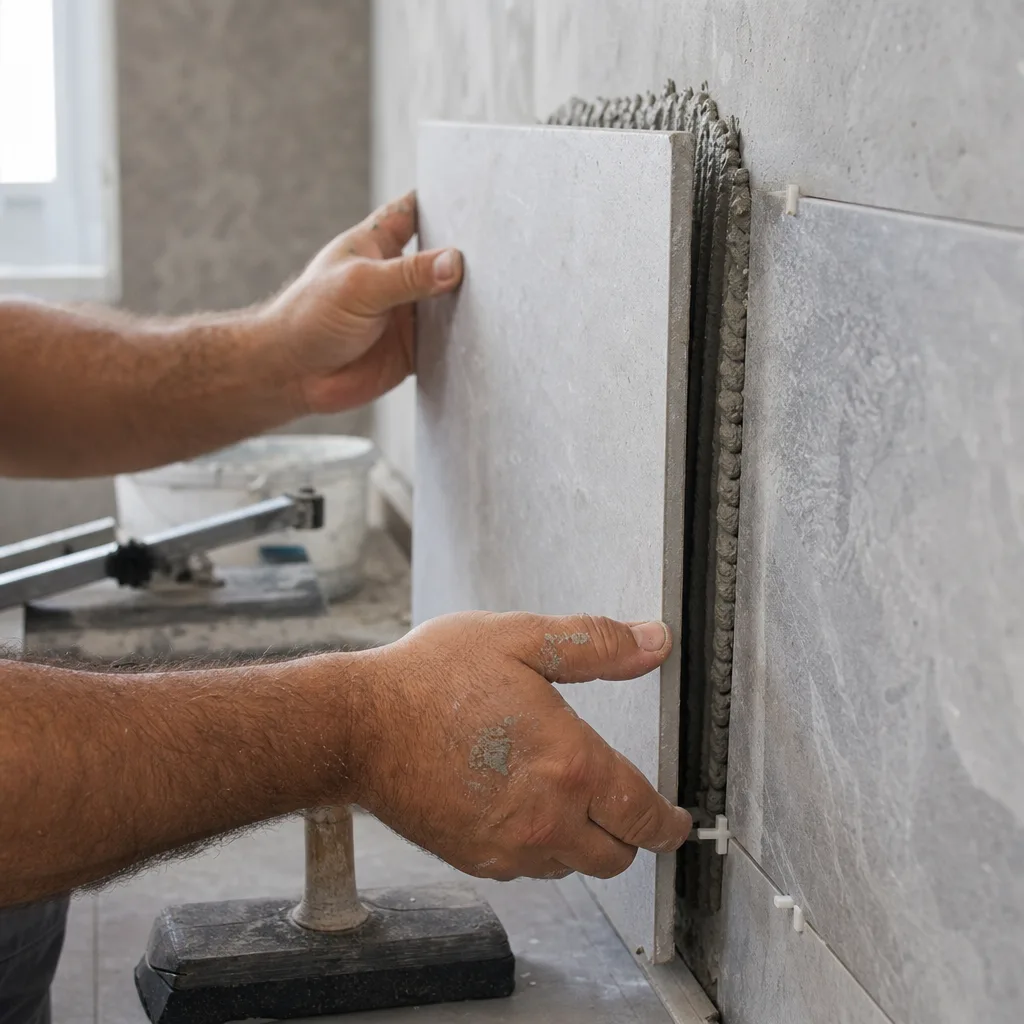
Most tile work in this trade is quoted either as a flat project price or as a square-foot price with prep and waterproofing listed as separate lines. Neither is better. What matters is that you can see which one you're reading.
So when you compare bids, compare what's included, not the bottom number. Ask each contractor these four questions and the gap between quotes usually explains itself:
- What waterproofing system are you using behind the tile, and is it included in this price?
- What happens if you find rot or wet framing after a demo? How is that billed?
- Is demo and debris removal included, or is that on me?
- Does the price include the tile itself, or is that an allowance I'll pick against?
A quote that's far under the others is usually skipping waterproofing, skipping prep, or assuming nothing is wrong behind the wall. That's fine right up until the day it isn't.
Why the Waterproofing Underneath Matters More Than the Tile on Top
According to Schluter, tile doesn't keep water out of your house.[1] That surprises people, but it's true. Ceramic and porcelain are hard and dense. Grout is porous by nature, and the seams between them will always move a little with temperature and use. Water gets through. It's supposed to. The job of the tile is to take abuse and look good. The job of keeping water out of your framing belongs to the layer nobody ever sees.
That hidden layer is the whole ballgame. In a shower, it's a waterproof assembly that starts at the wall studs and wraps down into the drain. Done right, any water that sneaks past a grout line hits that barrier, runs down, and exits through the drain like it's supposed to. Done wrong, or skipped, that same water soaks into the backer board and studs and sits there in the dark.
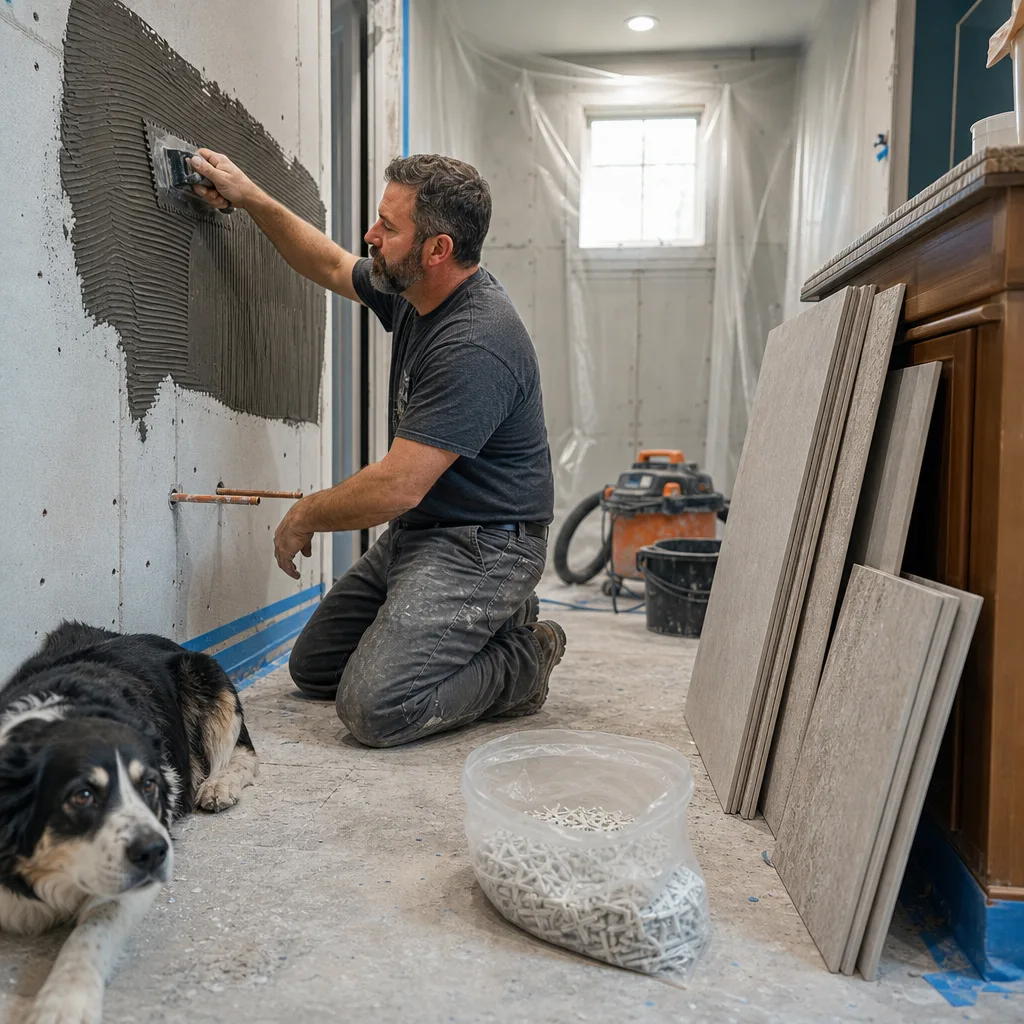
Here's what a sound shower is made of, from the studs out:
- Framing that's straight and solid, with blocking where a bench, niche, or grab bar needs backing
- A cement or foam backer board rated for wet areas, not regular drywall and not greenboard
- A waterproof membrane, either a sheet product or a liquid coating rolled on in layers, covering the walls and floor
- Seams, corners, and pipe penetrations sealed with banding or fabric, because that's where leaks start
- A shower floor sloped toward the drain, either with a pre-sloped pan or a hand-packed mud bed
- A drain assembly that ties into the waterproofing so water at the membrane level has somewhere to go
The corners and the drain connection are where most failures begin. A flat wall is easy to waterproof. An inside corner flexes, a curb has three planes meeting at once, and a bench collects standing water on a horizontal surface. Those details take time and they don't photograph well, so they're the first things a cheap bid quietly leaves out.
Slope matters as much as the membrane. A shower floor needs consistent fall to the drain across the whole pan. If it's flat in one spot, water pools there, sits on the grout, and works at it every single day. You'll see that show up as one dark section of grout that never fully dries out. On a curbless or roll-in shower, the slope work gets more demanding, because the water has to be controlled without a curb holding it in.
There's one step worth asking any contractor about directly: the flood test. Before a single tile goes on, the drain gets plugged and the pan gets filled with water and left to sit so you can confirm it holds. It costs a day. It's the only way to know the waterproofing works before it's buried under a lot of tile. If someone tells you it isn't necessary, that tells you something.
This is also why two estimates for the same bathroom can be far apart. Same tile, same square footage, completely different assembly underneath. One bid includes a real membrane, sealed corners, a proper pan, and a test. The other sets the tile on the backer board and trusts the grout. Both look identical the day they're finished. Only one of them still looks that way in ten years.
Questions to Ask Before You Sign a Tile Installation Contract
By the time you're holding written quotes, the tile decision is mostly made. What's left is figuring out which contractor is telling you the whole story. A tile contract should read like a plan, not a receipt. If you can't tell from the paperwork what's going behind your shower wall and who pays when something unexpected turns up, that's worth clearing up before anybody signs.
Start with scope. The quote should say exactly which surfaces are being tiled and where the work stops. "Master bath tile" isn't a scope. "Shower walls to ceiling, shower pan, bathroom floor, new curb, one recessed niche" is a scope. Niches, benches, curbs, and thresholds are hand-built, and if they aren't written down they aren't priced.
Then ask the questions that decide whether the job goes smoothly:
- Who does the actual tile setting, your own crew or a sub? Will the same person be there from start to finish?
- How many days will my bathroom be out of service, and does that include cure time for mortar and grout before the shower can be used?
- If I'm down to one bathroom, are you sequencing the work so I'm not without a shower longer than necessary?
- What's your plan for dust and debris? Floor protection in the hallway, plastic on the doorway, where the demo material goes?
- Who's buying the tile, and how much overage are you ordering for cuts and breakage? Who keeps the leftovers?
- Is the trim covered? Bullnose, edge profiles, and inside corners are where a job either looks finished or looks unfinished.
- Does anything here need a permit, and who pulls it? Plumbing relocation and structural changes in Loudoun County run through inspection, and that's the contractor's lane, not yours.
- How are change orders handled? Written and signed before the work happens, or added to the final bill?
- What's the payment schedule tied to, calendar dates or completed milestones?
That last one tells you a lot. Payments tied to real milestones (demo complete, waterproofing done and tested, tile set) mean the money follows the work. A schedule that asks for most of the total before a tile goes up should give you pause.
Ask to see photos of a shower mid-build, not just finished bathrooms. Anyone can photograph a clean tile wall. Pictures of banded corners, a sloped pan, and a sealed drain connection show you how somebody works. A contractor who's proud of what's underneath will have those photos on their phone.
One more thing to confirm in writing: what happens to your budget if demo uncovers rot. Nobody can price that sight unseen, but a good contract says how it gets handled: hourly rate plus materials, a written change order, and your approval before the work goes forward. Vague language is where surprise bills come from.
Bathroom Tile Installation in Leesburg.
Frequently Asked Questions
How long does a bathroom tile installation take?
Can I tile over my existing bathroom tile?
Do I need a permit for bathroom tile work in Leesburg?
What should I do if my bathroom floor feels soft or spongy?
Sources
[1] Schluter Systems. Shower Brochure. https://assets.schluter.com/asset/570120892212/document_me3dpjl89t113104bjsoi1uf4d/Shower%20Brochure.pdf?content-disposition=inline