Why Leesburg Basements Fail Before Their Time
Most basement floors don't fail because of bad luck. They fail because of what's happening underneath them, and nobody caught it in time.
Leesburg sits on clay-heavy soil. That matters more than most homeowners realize. According to the Virginia Department of Energy, clay expands when it gets wet and contracts when it dries out. That constant movement puts pressure on your slab from below, and over time, it cracks, shifts, and heaves.[1] We see this constantly in neighborhoods like Lansdowne on the Potomac, where homes were built fast during the big growth years and the soil prep wasn't always what it should've been.
Here's what actually causes basement floors to break down early:
- Poor drainage around the foundation that lets water pool against the slab
- No vapor barrier installed during original construction
- Sump pump failures that go unnoticed until the damage is done
- Temperature swings that cause concrete to expand and contract repeatedly
A floor can look totally fine on the surface while moisture is already working its way up through the concrete. You might notice a musty smell before you ever see a crack. That's your first warning.
Leesburg gets real winters and humid summers. That combination is rough on below-grade spaces. Moisture doesn't need a flood to cause problems — it just needs time and a slab with no protection on top of it.
When someone calls us about a ruined basement floor, the original install didn't account for moisture at all. No waterproof flooring, no subfloor system, nothing between the concrete and whatever they put down. Carpet straight on slab. Laminate with no underlayment. It's a setup for failure.
Once you understand why it failed, fixing it the right way isn't complicated. The right basement flooring solutions address the moisture first, then the floor goes in on top of a system that's actually built for this environment. That's the difference between a floor that lasts and one you're replacing again in three years.
Stop basement flooring failures early in Leesburg.
Choosing the Right Flooring for Below-Grade Spaces
Not every floor works underground. That's the first thing we tell every Leesburg homeowner who calls us about their basement.
Below-grade spaces sit against soil, and soil holds moisture. Even when you can't see water, vapor moves through concrete slabs constantly. Put the wrong material down there and you're looking at warped boards, mold underneath, and a floor you'll be ripping out in two years. We get calls about this every week.
So what actually works? Here's how we think about it:
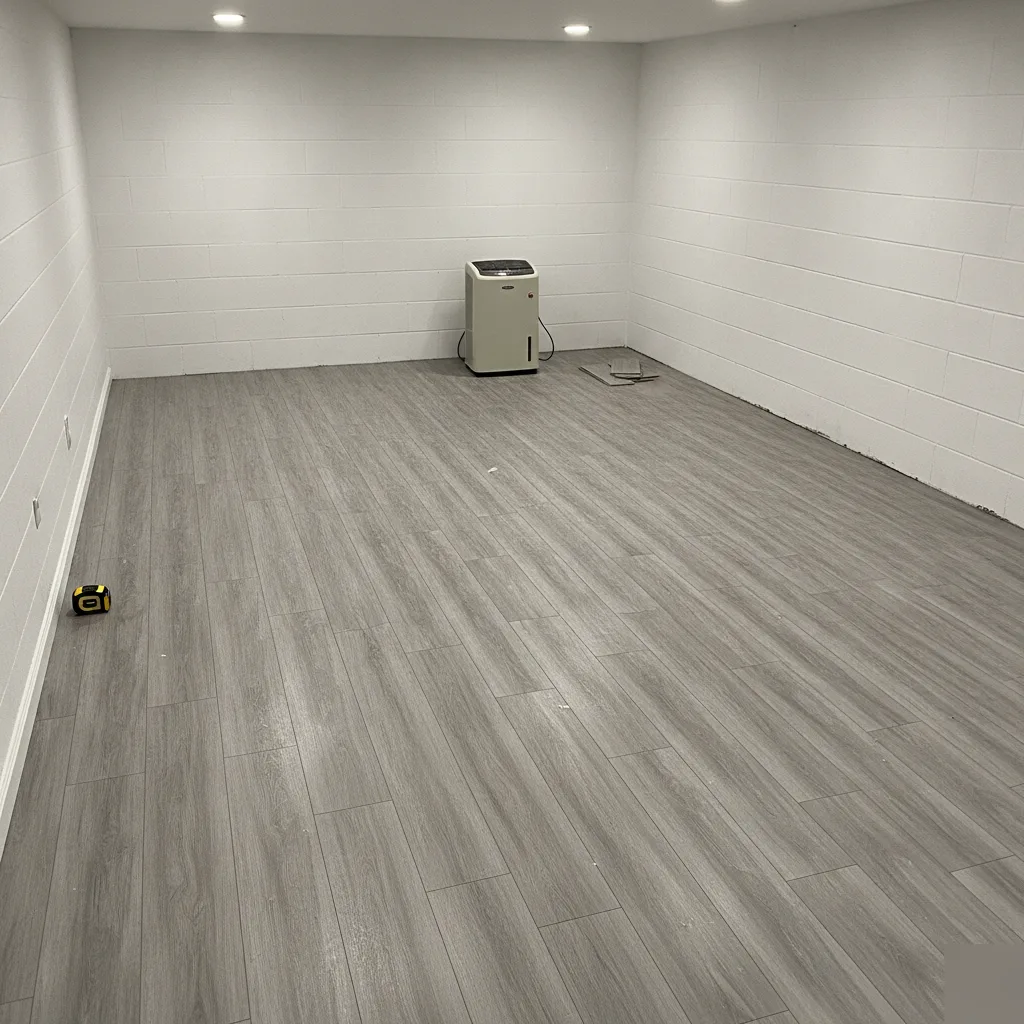
- Luxury vinyl plank installation is our most requested option down here. It's 100% waterproof, it sits flat without glue on most slabs, and it handles humidity swings without buckling.
- Tile floor installation is another rock-solid choice. Ceramic tile especially. There's nothing moisture can do to ceramic, and it cleans up fast.
- Engineered hardwood flooring can work in a basement, but only if the space is consistently dry and climate-controlled. We'll test your slab moisture levels before we ever recommend it.
- Carpet installation is fine for finished basements that stay dry, but it's the first thing to go when there's any water event at all.
- Waterproof flooring covers a range of products built specifically for below-grade use. These are worth the conversation if you want something that holds up long-term.
The neighborhoods around Balls Bluff and the older subdivisions near downtown Leesburg tend to have basements with higher moisture readings. Older poured concrete, less drainage infrastructure. We always do a moisture test before we recommend anything specific, because the wrong call costs you real money.
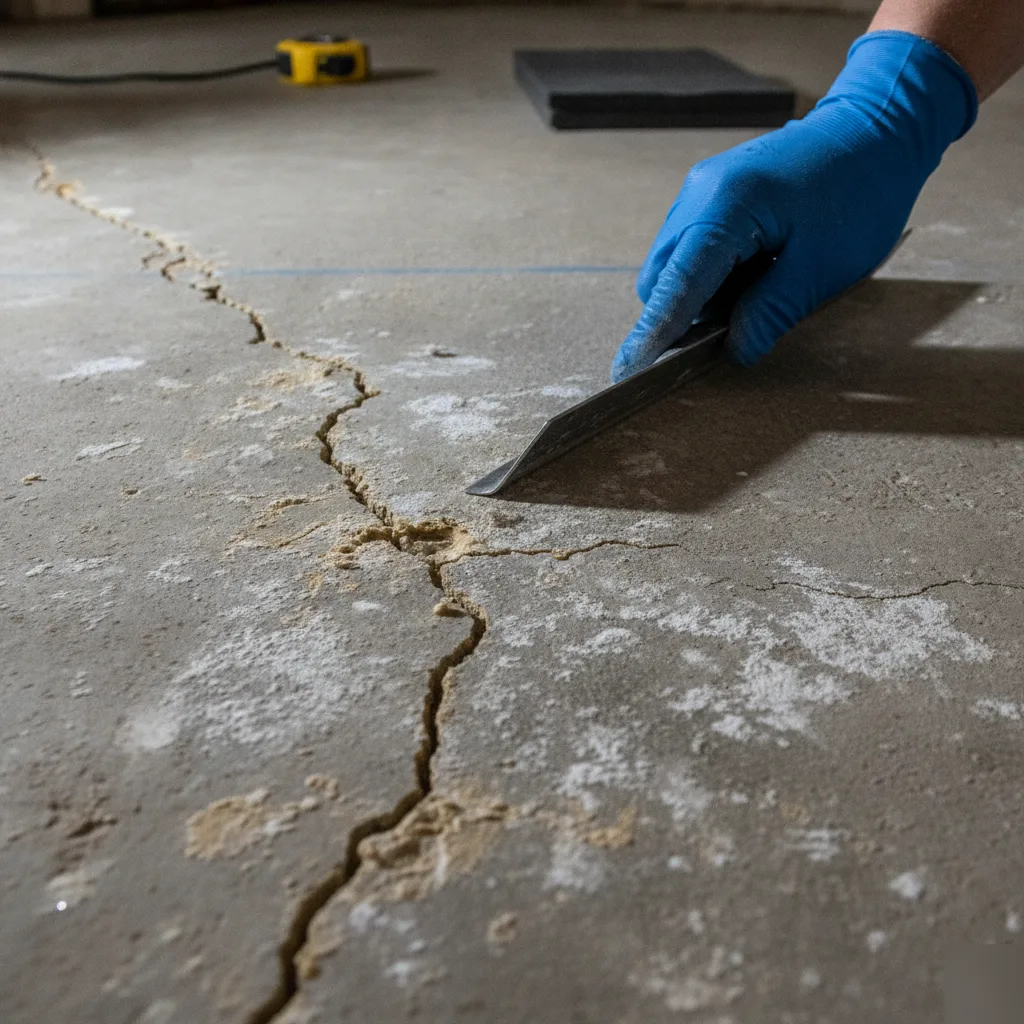
The subfloor matters as much as the finish floor. A concrete slab with even minor cracks or high vapor readings needs prep work before any flooring goes down. Skip that step and it doesn't matter how good your material is.
Need help figuring out what's right for your space? Give us a call and we'll take a look. The choice gets easier once we're standing in the room together. We can read a slab, read the space, and tell you straight what's going to last down there.
Moisture Testing and Subfloor Prep Come First
Skip this step and you'll regret it. Every time.
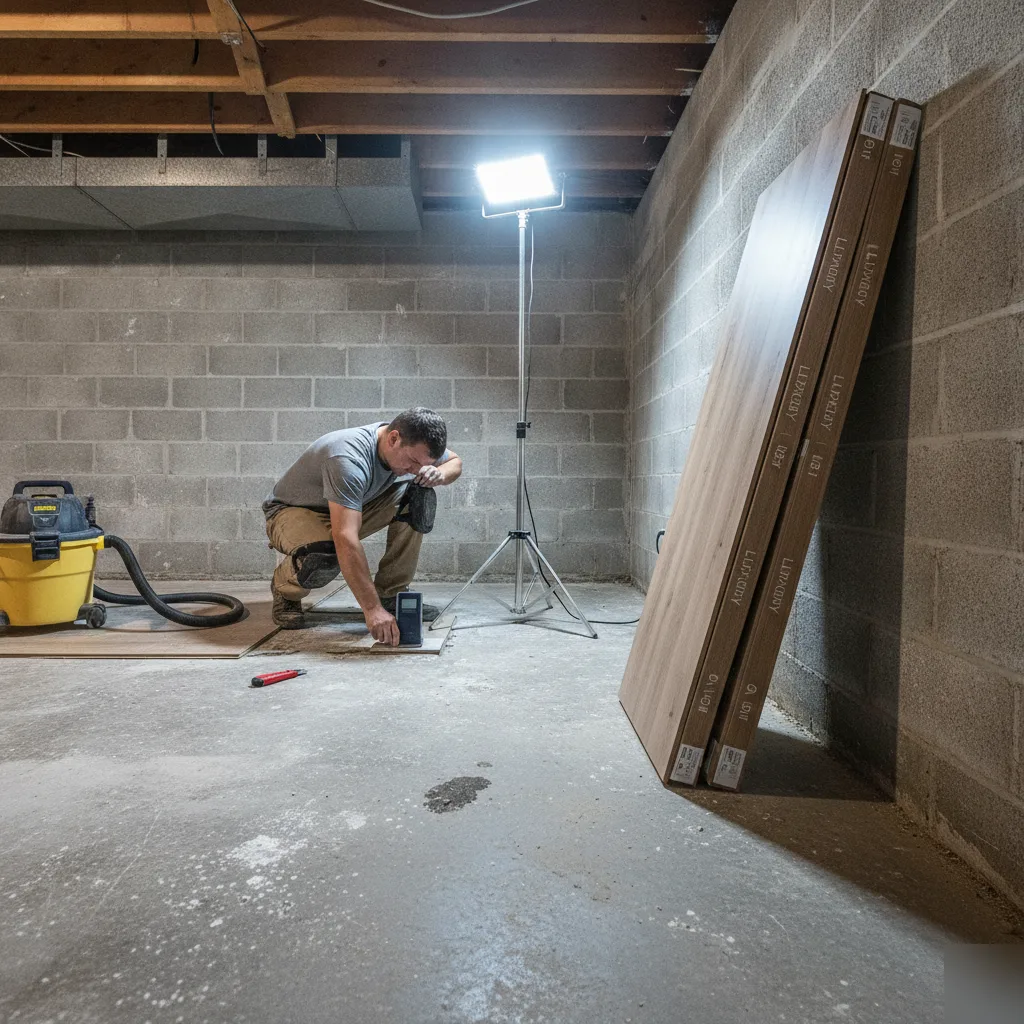
Before we put one plank, tile, or panel down in a Leesburg basement, we test for moisture. Not because it sounds professional. Because basements in this area hold moisture in ways that aren't always visible. You can have a bone-dry-looking concrete slab that's actively pushing vapor up through the surface. We've seen it in homes near Tuscarora Creek, we see it in newer builds, and we see it everywhere. The floor looks fine. The readings tell a different story.
Here's what the testing actually involves. We use a calcium chloride test or a relative humidity probe to measure how much moisture vapor is moving through your slab. The National Wood Flooring Association (NWFA) recommends specific thresholds before any flooring goes down, and we follow those numbers strictly. If the moisture level is too high and you install anyway, the adhesive fails, the planks buckle, and you're tearing everything out six months later.[2] That's not a hypothetical. We see it when homeowners call us to fix someone else's work.
Once moisture levels are acceptable, subfloor prep starts. This is where most of the real work happens.
A concrete slab that's been sitting for years isn't flat. It has high spots, low spots, cracks, and sometimes old adhesive from a previous floor. All of that has to be addressed before anything goes down. Here's what that process looks like:
- Grind down high spots using a concrete grinder
- Fill low spots and cracks with a floor leveling compound
- Allow the compound to cure completely
- Re-check moisture readings after any patching
- Clean the surface thoroughly before installation begins
Yes, that takes time. But a flat, dry slab is the only foundation that gives your new floor a real chance.
One thing we tell every homeowner in Leesburg: the prep work isn't glamorous, but it's what separates a floor that lasts 20 years from one that starts failing before winter's over. We're licensed and have done this long enough to know that cutting corners here costs you more later. Every dollar spent on proper prep is a dollar you don't spend on repairs.
Ready to Get Started?
We test your slab before recommending anything. Get a straight answer about what's going to last in your basement. Get your free consultation today.
Call (703) 956-8610What the Installation Process Looks Like
A lot of homeowners in Leesburg are surprised by how much prep work goes into a basement floor before a single plank or tile ever gets laid. The installation itself is the last step, not the first.
Here's how we walk through it every time:
- Moisture assessment. We test the concrete slab before anything else. Basements trap moisture, and skipping this step is exactly how floors bubble, warp, or peel six months later. We use a calcium chloride test or a plastic sheet test depending on what the slab looks like.
- Surface prep. The slab gets ground down, patched, and leveled. Any cracks get filled. High spots get shaved. You can't put a flat floor on an uneven surface and expect it to hold.
- Vapor barrier or underlayment installation. Depending on the flooring type and your moisture readings, we'll install a vapor barrier, a foam underlayment, or both. This layer does a lot of the heavy lifting.
- Flooring installation. Now the actual material goes in. Luxury vinyl plank, waterproof flooring, engineered hardwood, laminate, tile, whatever we agreed on. We work from the center of the room out so the layout looks intentional, not crooked.
- Trim and transitions. Baseboards, quarter round, and threshold strips get installed last. This is what makes the finished space look clean instead of like a DIY project.
Homeowners call us regularly after a big box store crew left gaps at the walls or skipped the moisture test entirely. Then we're fixing it instead of doing it right the first time.
Down in neighborhoods like Tuscarora or near the Village at Leesburg, a lot of these basements are sitting on slabs that have never been tested. That doesn't mean there's a problem. But you don't know until you check.
The whole process from prep to trim usually takes one to three days depending on square footage and what the slab needs. We don't rush the prep stage, not ever. That's the part nobody sees, and it's the part that determines whether your floor lasts five years or twenty.
When Flooding or Water Damage Forces a Replacement
Water doesn't ask permission. One heavy rain, one slow pipe leak behind the wall, and suddenly you're standing in your Leesburg basement with ruined flooring and a decision to make.
We get calls about this constantly. Homeowners come to us after a sump pump failed during a storm, or after they finally tracked down a musty smell and found the subfloor had been wet for months. The damage is almost always worse than it looks from the surface.
Here's what you need to know before you replace anything.
Dry It First. Completely.
This sounds obvious, but it's where most mistakes happen. Replacing basement flooring over a subfloor that still holds moisture is like painting over rust. You'll be back in six months with the same problem and a bigger bill. The subfloor needs to read below 75% relative humidity before any new material goes down. We use moisture meters on every job, not guesswork.
After drying, we assess what's underneath. Sometimes the subfloor is solid and you're just replacing the surface. But in older homes around Lansdowne or Stratford Club, we often find deteriorated OSB or damaged concrete that needs attention first.
Not Every Floor Survives a Flood
Some materials handle water better than others. After a water event, here's what typically happens to common basement floors:
- Laminate swells and buckles. It almost never recovers once it's wet through.
- The carpet holds moisture deep in the pad, which breeds mold fast.
- Engineered hardwood can sometimes be dried and saved, but only if caught early.
- Luxury vinyl plank flooring usually survives if the subfloor underneath is dry and intact.
That last point is why so many Leesburg homeowners are switching to waterproof flooring after a flood. It's not just about the current damage. It's about not going through this again.
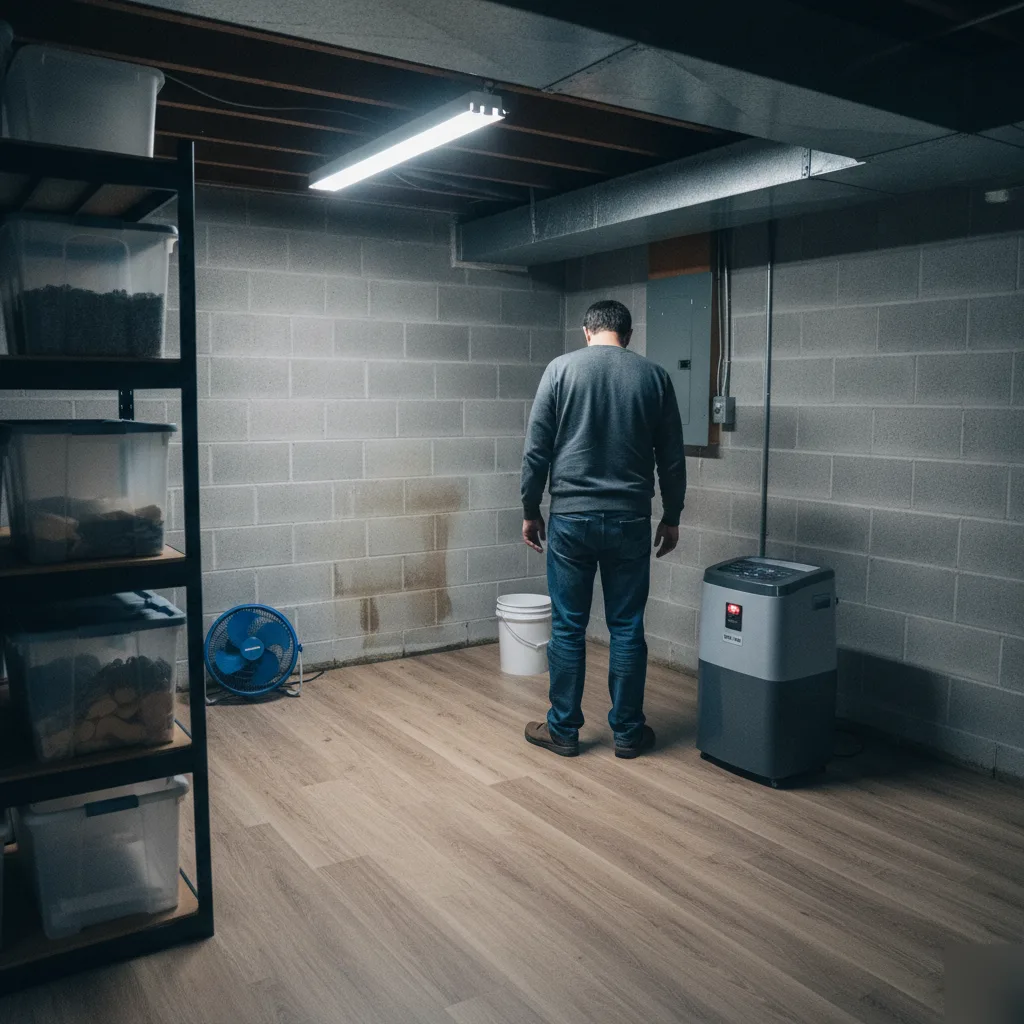
If your insurance adjuster is involved, document everything before anything gets pulled up. Photos, moisture readings, the whole picture. We work alongside that process regularly and can help you understand what's actually damaged versus what's still good.
Need help figuring out what's salvageable and what needs to go? Give us a call and we'll take a look.
Salty Dog: remodeling built for Leesburg.
Frequently Asked Questions
Why does basement flooring in Leesburg fail so quickly compared to other rooms?
What flooring actually holds up in a basement with moisture issues?
Do I really need a moisture test before installing new basement flooring?
How long does subfloor prep take before the new floor can go in?
What should I watch for in my Leesburg home that signals my basement floor is failing?
Sources
[1] Virginia Department of Energy. (2024). Expansive soils. https://energy.virginia.gov/geology/ExpansiveSoils.shtml
[2] National Wood Flooring Association. (2025). Wood flooring installation guidelines. https://nwfa.org/wp-content/uploads/2026/02/NWFA-Installation-Guidelines.pdf